

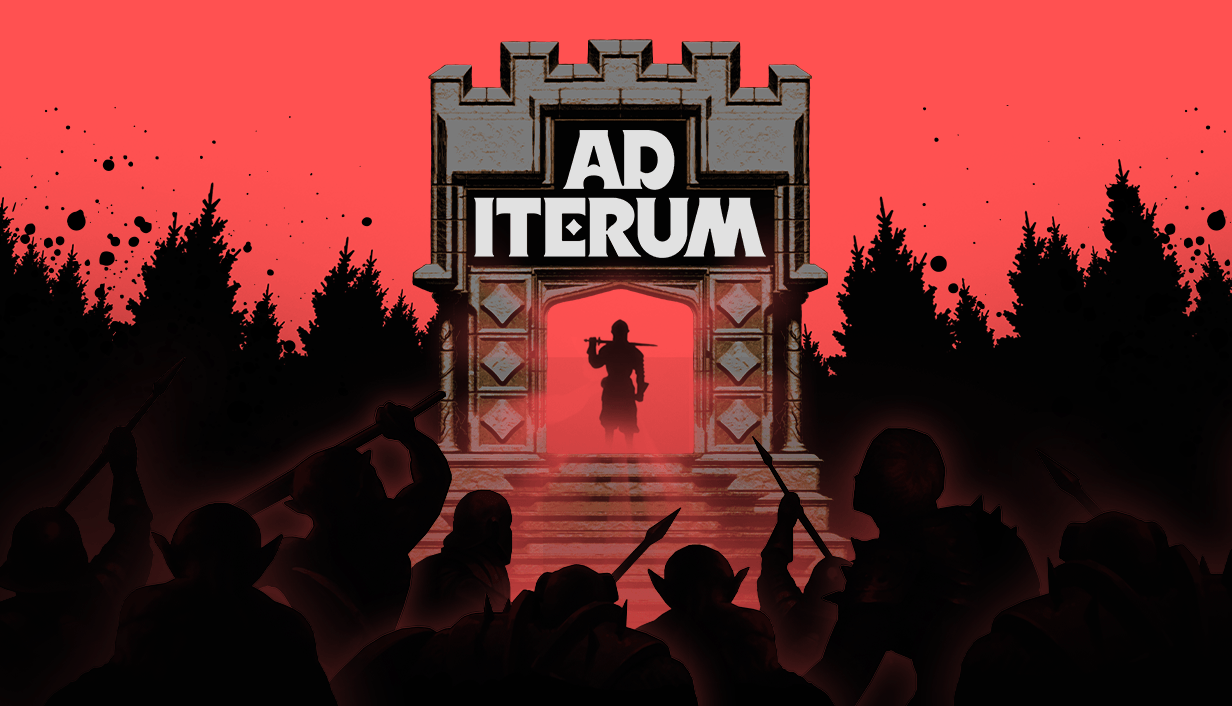
I’m already hyped by the premise of this new traditional roguelike RPG that just came onto my radar. It’s called Ad Iterum, and it basically puts us in the shoes, or rather, the bones, of an unfortunate, feeble pile of walking bones in a world that’s in even worse shape. Little by little, by recovering human remains and body parts, we’ll regain an ever-changing range of powers.
So, if I’ve piqued your interest, here are all the details on Ad Iterum and its development by indie developer Gabriel Maldonado.
Your Body Is Part of the Build
Ad Iterum follows many of the principles associated with traditional roguelikes: turn-based movement, procedural generation, resource management, dangerous exploration, and permadeath. Its main twist comes from how character progression works.
Defeated creatures can be eaten to obtain mutations, changing your body and introducing new abilities. You might grow claws, defensive quills, additional eyes, or even develop photosynthesis.
These changes are not always straightforward upgrades. Mutations can introduce disadvantages alongside their benefits, so improving one aspect of your character may create another problem to manage later.
Genetic grafts and crafted mutagens give you more control over the process, but progression does not follow a conventional skill tree. Your character gradually becomes the result of what you discover, consume, implant, and survive during a particular run.
That makes experimentation a major part of the experience. Equipment still matters, but your anatomy can become just as important as the weapon in your hands.
The Environment Can Be Just as Dangerous
Combat is only part of what can kill you. Floors can collapse, gas vents contaminate nearby areas, toxic traps restrict movement, and alarms may attract additional enemies. Oil can catch fire, flames can spread, and deep water may hide threats that are difficult to identify before entering.

A manageable encounter can quickly become dangerous if a trap activates behind you or fire cuts off your escape route. At the same time, environmental hazards can potentially be turned against enemies if you understand how they interact.
Different biomes introduce their own hazards, creatures, hidden areas, and possible mutations, giving each part of the dungeon its own set of problems.
Enemies Come With Their Own Complications
Creatures can also spawn with randomized modifiers that change how they behave. Enemies may appear as Berserk, Poisonous, Infested, Oversized, Immortal, Elite, and more. Some explode when killed, others create additional monsters, while certain opponents can steal equipment and attempt to flee.

Hunger adds another pressure point. Food can be cooked, while eating raw meat involves additional risks. Cannibalism is also possible as a desperate survival measure, although it comes with permanent consequences.
I like how these systems appear to feed into one another. Eating creatures is not simply an unusual way to unlock abilities; it is tied directly to survival, hunger, progression, and the risks you are willing to accept during a run.
Permadeath and Daily Runs
The full version of Ad Iterum is planned to include standard permadeath, an Adventure mode, Daily Runs, multiple biomes, melee and ranged combat, and more than 200 items.
Knowledge gained between attempts should become increasingly important even when your character does not survive. Like many traditional roguelikes, learning how enemies, hazards, items, and mutations work is part of the broader progression.
The developer is also embracing unpredictability. Some runs may give you powerful combinations early, while others may force you to work with considerably less useful resources.
A Free Demo Is Available Now
The current Steam demo provides a fairly substantial look at the underlying systems. It includes one procedurally generated dungeon biome, a boss encounter, two endings, 20 mutations, 20 genetic grafts, ten base enemy types, around 200 items, and a basic crafting system. Enemy modifiers add further variation between encounters.
Ad Iterum is currently expected to launch before the end of 2026, with the developer planning to move directly toward the full release instead of using Early Access.

