

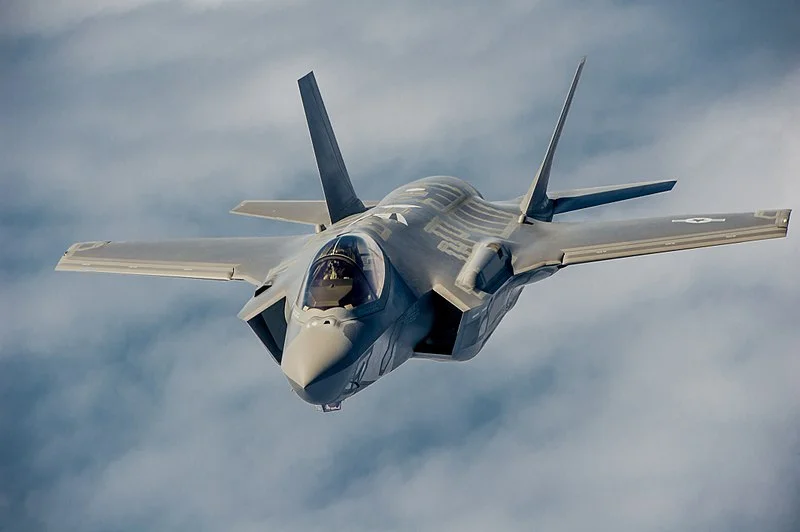
The F-35A Lightning II has a strange problem for such an advanced fighter: keeping it ready can be harder than building it.
On paper, the aircraft looks formidable. It combines low-observable design, sensor fusion, advanced radar, electronic warfare systems and a helmet-mounted display inside one fighter. The U.S. Air Force built it to replace older aircraft such as the F-16 and A-10, while giving pilots a much clearer picture of the fight around them.
But capability on paper is only half the story.
In fiscal year 2025, the F-35A Lightning II’s mission-capable rate fell to 38.6%. Its full-mission-capable rate was even lower, at 28.5%. In plain English, fewer than four out of every ten F-35As were available to perform at least one assigned mission when needed.
That’s the uncomfortable part.
The problem isn’t that the F-35A Lightning II suddenly became a bad fighter. Its sensors and stealth still give it advantages older aircraft struggle to match. The problem is the machinery behind the aircraft: spare parts, maintenance, software, support systems and the rising cost of keeping a large fleet flying.
GAO says the wider F-35A Lightning II fleet’s mission-capable rate dropped from 67% in 2021 to 44% in 2025. The same report says the program needs another $13.7 billion through fiscal 2031 under its updated sustainment plan.
So the real question isn’t whether the F-35A Lightning II is powerful.
It is.
The harder question is whether the United States and its allies can keep enough of that power available when it matters.
What Is the F-35A Lightning II?
The F-35A Lightning II is built around a simple idea: see the fight first, then act before the opponent can react.
That sounds familiar, but the F-35A Lightning II approaches it differently from older fighters. Instead of relying mainly on one radar and the pilot’s eyes, it pulls information from several onboard systems and turns that data into a single picture inside the cockpit.
The aircraft uses an AN/APG-81 AESA radar, an electro-optical targeting system and the Distributed Aperture System, which gives the pilot coverage around the aircraft. Its electronic warfare system also helps detect and identify threats. The helmet-mounted display then puts key information directly in front of the pilot’s view.
That changes how the pilot flies.
A pilot in an older fighter may need to manage several displays while building a mental picture of what is happening. The F-35A Lightning II is designed to do more of that work through sensor fusion. The goal isn’t simply to collect more data. It’s to reduce the time needed to understand it.
The F-35A Lightning II is also the conventional takeoff and landing version of the family. Unlike the F-35B, it doesn’t need a short runway or vertical landing system. That gives it more room for internal fuel and keeps the design focused on conventional air-base operations.
The F-35A Lightning II was also designed as a multirole fighter, not a pure air-superiority aircraft. It can carry weapons internally to preserve its low-observable profile, while external stations allow a larger load when stealth is less important.
That’s where the common description of the F-35 as simply a “stealth fighter” falls short.
Its real advantage comes from combining stealth with sensors, communications and data processing. The aircraft is supposed to give the pilot a better picture of the fight before the first weapon is even launched.
And that brings us back to the F-35A Lightning II’s real problem.
Building that level of capability into one aircraft makes the support system much more complicated, too.
F-35A Lightning II Specifications
| Specification | F-35A Lightning II |
| Crew | 1 |
| Engine | 1 × Pratt & Whitney F135 |
| Maximum speed | Mach 1.6 |
| Maximum altitude | 50,000+ ft |
| Internal fuel | Approx. 18,500 lb |
| Maximum g-load | 9g |
| Takeoff type | Conventional |
| Primary role | Multirole fighter |
| Radar | AN/APG-81 AESA |
These numbers show what the F-35A Lightning II was built to do.
Its Mach 1.6 top speed isn’t remarkable compared with fighters such as the F-15 or F-22. The F-35A Lightning II was never designed to win by being the fastest aircraft in the sky.
Its strengths sit elsewhere.
The aircraft carries about 18,500 pounds of internal fuel, helping it maintain useful range without relying on external fuel tanks that can increase its radar signature. Its internal weapons bays serve the same basic purpose, allowing the aircraft to carry weapons while preserving its low-observable shape.

The F135 engine also gives the F-35A Lightning II the power needed to operate as a 9g fighter while supporting a large electrical and thermal load. That last part matters more than it sounds.
Modern sensors, computers and electronic warfare systems generate heat. The F-35A Lightning II needs to manage that heat while also powering increasingly demanding systems.
And this is where the specification sheet stops telling the whole story.
A number such as Mach 1.6 tells us how fast the aircraft can fly. It doesn’t tell us how much maintenance is required after repeated missions, how quickly spare parts arrive, or how many aircraft are actually ready on a given day.
Those questions become much more important later in the F-35A Lightning II story.
Why Is the F-35A Considered So Advanced?
The F-35A Lightning II’s biggest advantage isn’t stealth alone. It is what the aircraft does with the information its sensors collect.
Start with the AN/APG-81 AESA radar. It can search for airborne and surface targets while supporting tracking and other functions. But the radar is only one part of the picture.
The F-35A Lightning II also carries the Distributed Aperture System, which uses multiple sensors around the aircraft to give the pilot a near-360-degree view of the surrounding environment. Its electro-optical system adds another source of target information, while the electronic warfare suite can detect and identify emissions from threats.
The aircraft then combines these inputs through sensor fusion.
That sounds like a software feature. It isn’t.
It changes the pilot’s workload.
Instead of treating radar, electronic warfare and infrared data as separate pieces, the F-35A Lightning II is designed to turn them into a more usable tactical picture. The pilot can then spend less time asking, “What am I looking at?” and more time deciding what to do about it.
That matters most when several things are happening at once.
Imagine an aircraft detecting a radar signal while another sensor spots a heat source from a different direction. In a conventional cockpit, the pilot may have to compare those clues manually. The F-35A Lightning II is designed to correlate information from its sensors and present the result through the cockpit and helmet-mounted display.
The helmet is another important piece.

Instead of forcing the pilot to keep looking through a fixed head-up display, the Helmet Mounted Display System can place flight and targeting information within the pilot’s field of view. The aircraft’s Distributed Aperture System can also support the helmet’s ability to display information from around the aircraft.
This is why calling the F-35A Lightning II merely a stealth aircraft misses the point.
Stealth helps it stay harder to detect. Sensor fusion helps the pilot understand what is happening.
Put those together, and the F-35A Lightning II can potentially make decisions before an older fighter has built the same picture.
But there’s a trade-off.
All those sensors, computers and software systems have to work together reliably. When the aircraft’s advantage depends heavily on complex systems, maintenance and software problems can become combat problems too.
And that’s where the F-35A Lightning II’s biggest weakness starts to emerge.
What Is the F-35A’s Big Problem?
The F-35A Lightning II’s biggest problem isn’t stealth, weapons, or even speed. It is readiness.
That distinction matters.
A fighter can be extremely capable and still be a poor military investment if too few aircraft are ready when commanders need them. The latest numbers show why the F-35A Lightning II is under pressure.
In fiscal year 2025, the Air Force’s F-35A Lightning II fleet had a 38.6% mission-capable rate. Its full-mission-capable rate was just 28.5%. The first figure means an aircraft could perform at least one assigned mission. The second means it could perform all of its assigned missions.
Those numbers are far below the Air Force’s stated readiness targets.
And the decline has been sharp. The F-35A Lightning II’s mission-capable rate was 68.8% in fiscal 2021. Four years later, it had dropped to 38.6%.
So what’s going wrong?

There isn’t one broken component causing all of this. GAO points to a mix of spare-parts shortages, software problems, corrosion issues, maintenance delays, and dependence on contractors. Some aircraft simply wait for parts instead of returning to the flight line. Others need work that takes longer than planned.
The size of the fleet makes that problem harder to ignore.
The U.S. fleet grew from roughly 450 F-35s in fiscal 2021 to more than 800 in fiscal 2025. Yet readiness moved in the opposite direction.
That’s the part I would watch most closely.
The F-35A Lightning II isn’t failing because the aircraft cannot perform its job. Recent combat operations have shown what it can do when properly supplied and supported. Air Combat Command officials said the aircraft performed strongly during Operation Epic Fury, with spare-parts flow playing a major role in keeping jets available.
The uncomfortable lesson is simple: the F-35A Lightning II’s combat power depends heavily on the system behind the aircraft.
And right now, that system is struggling to keep pace.
Why Is the F-35A Lightning II So Expensive to Maintain?
Buying an F-35A Lightning II is only the start of the bill.
The harder financial problem comes afterward. Every aircraft needs engines, spare parts, software support, maintenance crews, special equipment and facilities. With the F-35A Lightning II, those demands are tied to a fighter built around stealth and a large network of complex systems.
GAO estimates that the U.S. F-35 fleet could require about $1.6 trillion in sustainment costs over its lifetime. That figure covers the long period after procurement, when the aircraft must be kept operational through decades of maintenance and upgrades.
The problem isn’t simply that the F-35A Lightning II is expensive.
It’s that the support system has struggled to keep up with the size of the fleet.
One example is spare parts. An aircraft can be mechanically sound and still remain on the ground if a required component isn’t available. That sounds mundane, but it can have a direct effect on readiness. A fighter sitting in a hangar waiting for a part contributes nothing to the number of aircraft available for a squadron.

The F-35 program has also relied heavily on contractors for sustainment work. GAO has repeatedly pointed to weaknesses in technical data, spare-parts management and the government’s ability to take greater control of sustainment.
That creates an awkward cycle.
The fleet gets larger, which should spread fixed costs across more aircraft. But more aircraft also means more engines, more parts, more software updates and more maintenance demand.
The Pentagon’s revised sustainment plan reflects how serious the issue has become. GAO says the Department of Defense estimates it needs another $13.7 billion through fiscal year 2031 to support the updated sustainment approach.
And there is another complication.
The F-35A Lightning II is still being upgraded. New computing power, sensors and weapons can make the aircraft more capable, but they also add demands on cooling, power and maintenance.
So the question isn’t whether the F-35A Lightning II is worth maintaining.
The real question is whether its support system can become efficient enough to keep hundreds of increasingly complex fighters ready without letting the sustainment bill spiral.
How Will Block 4 and the F135 Upgrade Change the F-35A?
The F-35A Lightning II isn’t standing still. Its next major upgrade could make the aircraft much more capable, but it also exposes one of the program’s biggest engineering challenges.
That upgrade path centers on Block 4.
Block 4 is not one simple software patch. It is a broad modernization effort that adds new weapons, improves sensors and electronic warfare functions, and increases the aircraft’s ability to process and manage information. The program also depends on Technology Refresh 3, or TR-3, which provides the computing hardware needed for many of these new capabilities.
This is where things get complicated.
More computing power creates more heat. More sensors and electronic systems demand more electrical power. The aircraft’s thermal-management system therefore becomes a major constraint, especially as Block 4 capabilities are added.
The F-35A Lightning II’s Pratt & Whitney F135 engine is central to that problem.

The engine already provides the aircraft with enough thrust for its 9g design while supporting a large electrical and thermal load. Pratt & Whitney’s F135 Engine Core Upgrade is intended to provide more power and improve thermal capacity for future Block 4 demands.
In September 2026, Pratt & Whitney completed a Risk Reduction Design Review for the upgrade, moving the effort into its next development phase.
That doesn’t mean the F-35A Lightning II suddenly gets a new engine.
The core upgrade focuses on the engine’s internal design rather than replacing the entire F135 with a completely different powerplant.
And this matters because the F-35A Lightning II is becoming a classic case of engineering trade-offs.
Add better sensors, more computing and new weapons, and the fighter becomes more useful. But every new system adds demands somewhere else. More power means more heat. More heat means greater demands on cooling. Greater demands can mean more maintenance.
Block 4 should make the F-35A Lightning II a better fighter.
The harder job is making sure those improvements don’t create another readiness problem behind the hangar doors.
Is the F-35A Lightning II Still Worth It Despite These Problems?
The F-35A Lightning II is still worth having. But calling the program a success simply because the aircraft is technically impressive misses the harder question.
Can enough of them stay ready?
That is where the debate gets interesting.
The F-35A Lightning II brings capabilities older fighters cannot easily reproduce in one package. Its low-observable design makes detection harder, while sensor fusion can give the pilot a more complete picture of the battlespace. The aircraft can also share information with other platforms, turning it into more than a single-seat weapons carrier.
Its growing international fleet adds another advantage.
The United States is no longer the only major operator building infrastructure around the F-35. European users such as the United Kingdom, Italy, Norway, the Netherlands and Denmark are already operating the aircraft, while Germany, Switzerland and other customers are adding F-35As to their future fleets.
That creates a large user base for upgrades, training and shared support.
But scale doesn’t automatically solve the readiness problem.
If spare parts remain difficult to obtain or maintenance takes too long, adding more aircraft can simply increase the number of jets waiting for support. A fleet of 1,000 aircraft means little if too many are sitting on the ground.

This is where I think the usual F-35 debate gets it wrong.
People often ask whether the F-35A Lightning II is a good fighter. That’s almost too easy a question. The answer is clearly yes.
The harder test is operational availability.
A squadron commander doesn’t care how impressive the aircraft’s sensor fusion looks in a brochure if half the jets cannot generate the required mission on schedule.
The F-35A Lightning II has also shown that readiness can improve when the support chain works properly. Recent operations demonstrated the value of strong spare-parts flow and focused maintenance support. That suggests the aircraft’s problems are not simply baked into the design.
They can be fixed.
But fixing them will require money, better logistics, stronger government control of sustainment data and a support system that can keep pace with Block 4 modernization.
The F-35A Lightning II’s real test is therefore not whether it can dominate on paper.
It’s whether the fighter can turn its extraordinary technology into reliable combat power, day after day, across a fleet large enough to matter.
