

A year after making major cuts to its workforce, the Department of Health and Human Services is on track to exceed its previous headcount.
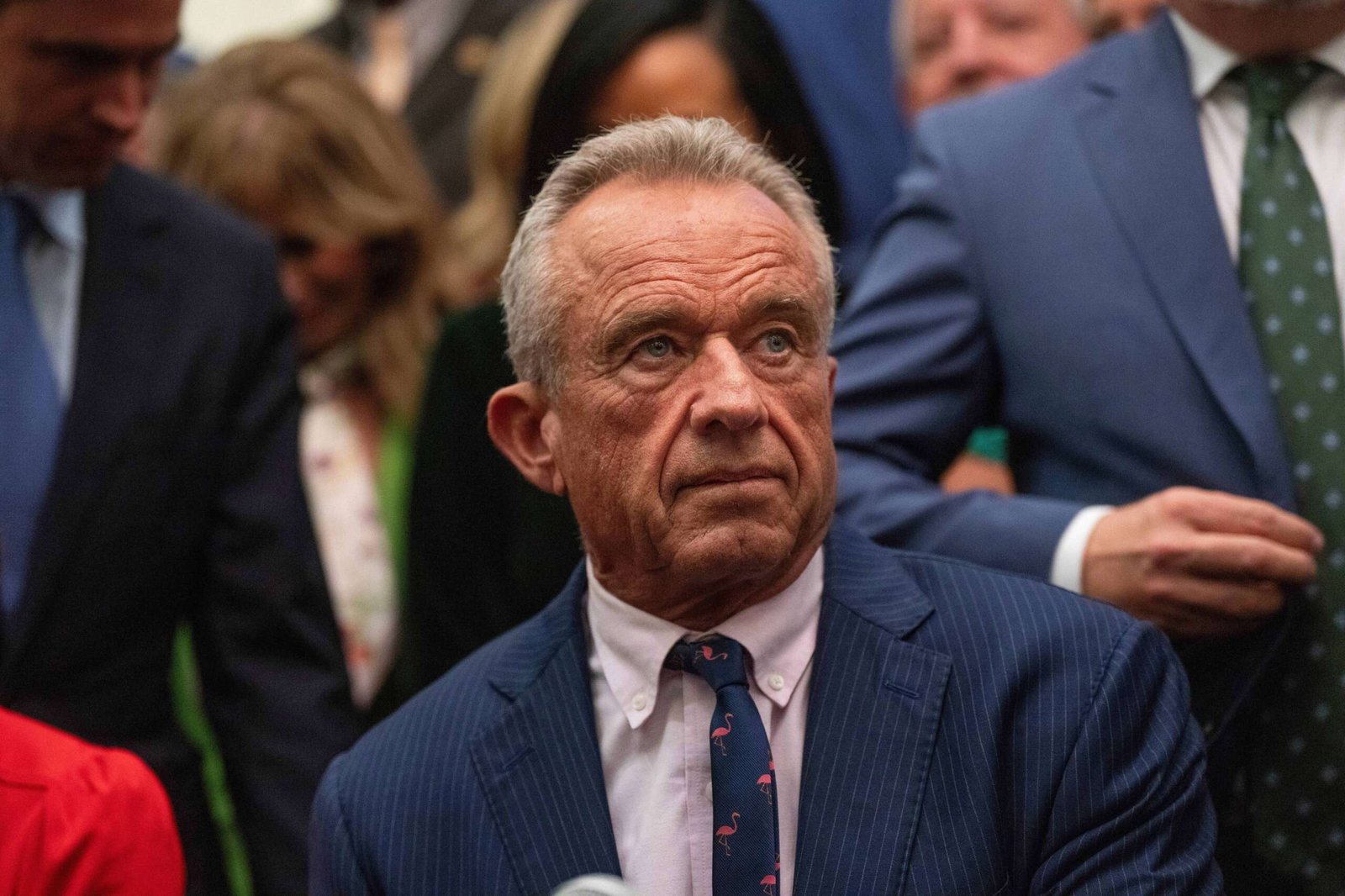
HHS Secretary Robert F. Kennedy, Jr. told members of the House Appropriations Committee that the department now has a headcount of 72,000 employees and plans to hire 12,000 new staff.
Last year, HHS laid off 10,000 employees. Another 10,000 employees accepted the deferred resignation program or early retirement offers. After these cuts, the department shrank down to 62,000 total full-time employees.
Kennedy said the department was ineffective in meeting its goals before the workforce reductions, and new hires are more aligned with the Trump administration’s priorities.
“We will have made up all the employees that we lost, and we’ve replaced them with a better group of people who are actually going to address chronic health,” he told the subcommittee on labor, health and human services, education and related agencies on Thursday.
HHS, however, rescinded layoffs for many of the employees it laid off last year. The Centers for Disease Control and Prevention reinstated 1,000 employees who were laid off from the National Institute for Occupational Safety and Health (NIOSH), which focuses on workplace safety and health standards.
Last month, acting CDC Director Jay Bhattacharya, who also serves as the Senate-confirmed director of the National Institutes of Health, told employees at an all-hands meeting that the agency is looking to “shore up some of the gaps” in its workforce stemming from widespread layoffs.
Bhattacharya said HHS leadership is specifically looking to resume hiring in the CDC’s chronic disease operations.
“They’re going to make this a priority, because they understand, and I’ve made it very clear that it’s vital that the CDC be able to make it a priority to bring back or to fill so many of those functions with people,” he told employees at a CDC town hall on March 25.
CDC leadership told staff last summer that they had reinstated about a third of the 2,400 CDC employees who were laid off as part of the HHS-wide downsizing.
About a month after the widespread reduction in force, the National Institutes of Health brought back 150 laid-off human resources employees to help process the paperwork for the thousands of other HHS employees leaving the agency. HHS also rehired about 60 acquisition employees working in the Office of the Chief Information Officer and told them to return to work “immediately.”
Kennedy conceded that after laying off many employees last year, “many of them were recalled.”
“Morale is much better than it was a year ago. It was really at a nadir, during all the RIFs,” he added.
Despite all this, Kennedy told lawmakers that last year’s workforce cuts were necessary “to change the culture at these agencies.” He said employees working at HHS were not aligned with his Make America Healthy Again agenda.
“They weren’t looking at chronic disease. They were focused on other things, and they did nothing to prevent food dyes, the bad food, all the things that are making us sick. It was their job to protect us and they did not do it. They failed at their job. If this was private industry, they would have all been fired,” he said.
Rep. Steny Hoyer (D-Md.) said HHS employees laid off last year “were removed to get to a number, not to affect a result.”
“Your judgment is that the 20,000 [employees] that were reduced were not capable, were not motivated?” Hoyer asked Kennedy.
“It’s not my judgment. It’s the record,” Kennedy responded. “They presided over the biggest decline in health in the history of the world. You now have the sickest generation in history. We have the sickest population on the face of the earth. That is a failure of government,” he said.
Kennedy said HHS grew staffing by 38% under the Biden administration in response to the COVID-19 pandemic.
“We had, at the end, 10 people doing one job. We cut that down to five people doing the same job. I can talk about the duplication that happened at my agency, which is just insane,” he said.
Kennedy said HHS had duplicative programs and offices serving women and minority populations, as well as several programs addressing HIV and opioids.
“I’m not saying the people who lost their jobs were bad actors. They weren’t. Many of them were doing jobs they were hired to do. We needed to do something drastic to change the institutional culture of this agency and realign it with a new trajectory,” he said.
Other Democrats on the committee pushed HHS to reinstate more terminated employees.
Committee Ranking Member Rosa DeLauro (D-Conn.) said about 300 CDC employees working on a range of issues — including tobacco prevention, maternal morality and disabilities — have been on paid administrative leave for more than a year, costing the agency about $38 million.
“For more than one year, public health experts are being paid not to work. You can bring the staff back from administrative leave, just as you brought back the CDC employees focused on occupational health,” DeLauro said.
Kennedy said “we lost a lot of employees at CDC,” and that any decision to reinstate employees will be up to its leadership
“That decision will be in their hands,” he said.
President Donald Trump announced Thursday he would nominate Erica Schwartz to serve as the CDC’s next permanent director. The position requires Senate confirmation.
Bhattacharya, who has officially exceeded his term as acting CDC director under the Federal Vacancies Reform Act, will still carry out the duties of CDC director on an interim basis until a successor is confirmed.
Congress rejected the Trump administration’s calls for deep HHS spending cuts in a comprehensive spending deal for fiscal 2026.
The administration’s FY 2027 budget request once again asks Congress to consolidate several major agencies and programs into a new Administration for a Healthy America (AHA) championed by Kennedy, cutting billions of dollars of spending in the process.
“Like last year, I doubt we will be able to agree on areas for reduction,” said Subcommittee Chairman Robert Aderholt (R-Ala.).
“I’m a strong supporter of investments for NIH and believe extreme swings in funding supporting biomedical research are counterproductive. I respect that to fit the president’s objective, you’ve had to make some hard decisions,” Aderholt told Kennedy.
If you would like to contact this reporter about recent changes in the federal government, please email jheckman@federalnewsnetwork.com, or reach out on Signal at jheckman.29
Copyright
© 2026 Federal News Network. All rights reserved. This website is not intended for users located within the European Economic Area.
