

The Defense Logistics Agency has just crossed the finish line in what’s been an eight-year effort to modernize the IT systems that track and manage the inventory in its global network of warehouses.
Officials at DLA Distribution turned on the Warehouse Management System (WMS) at Hill Air Force Base, Utah, in August, capping a huge IT deployment effort that first started at a pilot site in Corpus Christi, Texas, in June 2018, and has since expanded to 24 DLA Distribution locations.
“Our personnel at the distribution centers welcomed this fielding. They were very excited to get off the legacy system and onto the new warehouse management system,” Joseph Faris, DLA Distribution’s deputy commander, said in an interview with Federal News Network.
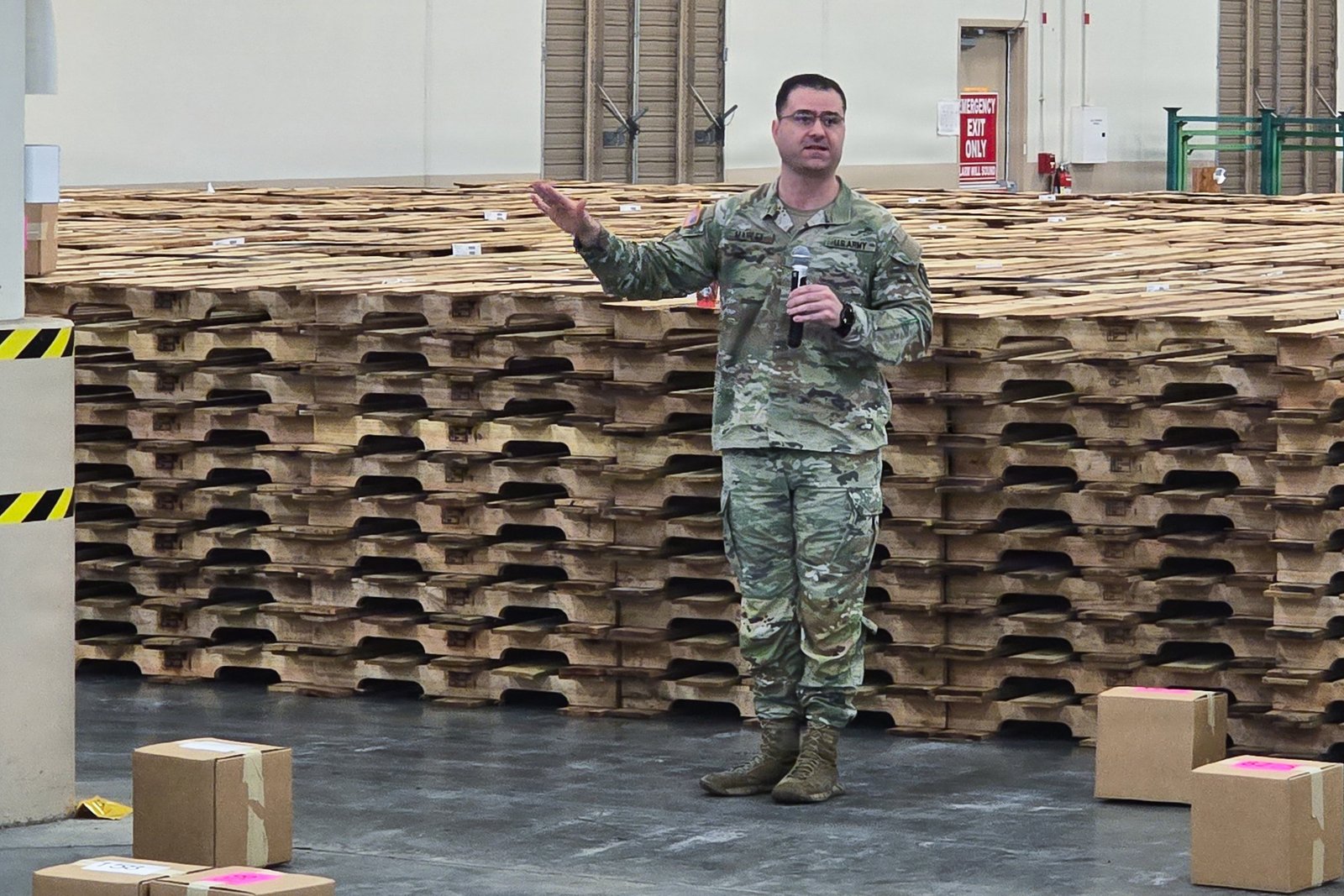
(DoD courtesy photo, released)
“If you think of processing receipts, putting the material away, picking the material off the shelf, then packaging the material and offering it to transportation, all of those functions are provided by the Warehouse Management System. It’s been a significant systems upgrade, significant change management for our workforce. We have not only DLA civilians that operate our distribution centers, but our industry partners also operate in the Warehouse Management System. And at our overseas sites, we have local nationals like in Japan and Germany that work in WMS.”
Replacing legacy IT
WMS takes the place of the Distribution Standard System, the legacy IT system for DLA’s warehouses that has been in use since the early 1990s, when the agency took on the former materiel distribution missions that had been performed by the individual military services. Although it’s been modernized over the years to continue to serve each of those services’ needs, eventually DLA officials decided they needed to move to a more modern system based on a commercial platform developed by SAP.
One driving factor was that the legacy system wasn’t compatible with the Defense Department’s financial audit requirements.
“The prior DSS system served its nation and DLA and the department well, but it was not a system that we could use to get the audit opinion,” Faris said. “And we knew from a legacy standpoint, the platform had to be upgraded. It was somewhat customized for all the military services. So in order to get to the audit opinion, we knew we had to modernize the system and get to the new warehouse management system. So that was kind of dual purpose. It gets us auditable, most importantly on the audit readiness journey, and it also upgrades the platform for our network that then ties into each of the owners of the inventory.”
The final pieces of the transition came into place over the past year at four of DLA Distribution’s largest warehouse sites: Susquehanna, Pa., Warner Robins, Ga., Oklahoma City, Okla., and finally last month at Hill in Utah.
“Leapfrogging”

Faris said the implementation used a task force concept that included SAP subject matter experts who worked directly in production areas alongside distribution center personnel during the initial startup period. Staffing levels were increased to account for the productivity learning curve that comes with any major system transition, and government personnel moved from site to site as the transition took place at each one.
“We did a leapfrogging concept where the personnel from Warner Robins came to Susquehanna and were on the floor with us when we were doing the fielding at Susquehanna so they could start the immersion before it came to Warner Robins,” he said. “But if you think about the warehouse management system, the system not only talks to our DLA buying commands, it has to talk to the Navy through their Navy ERP system. It has to talk to the Army through the Army [Logistics Modernization Program]. For the Air Force, it was the D035 system. So truly, you could add the word ‘joint’ in front of Warehouse Management System.”
Millions of items, billions of dollars in inventory
Faris said the new system is responsible for helping the agency manage about 14 million items that move in and out of its warehouses each year as part of about $140 billion worth of inventory.
“But we can also cross-dock material. So if the agency decides it’s doing a more just-in-time inventory process, we can enable that from a physical distribution standpoint and support that,” he said. “And the WMS is critical to that because we have cross-docking capability that’s provided by the new warehouse management system to facilitate that type of move.”
And, he said, the new system should give the military services and other DoD components more visibility into the inventory DLA holds on their behalf.
“That will allow the various buying commands to determine how they set inventory levels, what is their concept of support, how frequently they’re buying from our industrial base,” he said. “I think there’s definitely upside and savings for that. It also will allow visibility of repair parts that are procured, stocked, stored, and issued by DLA to the services, and potentially in the future see that same item on a shelf in an Army, Navy, Air Force, or Marine Corps warehouse. So the department will be able to see: Here are the various levels of inventory from factory all the way to foxhole because of the new WMS.”
Copyright
© 2026 Federal News Network. All rights reserved. This website is not intended for users located within the European Economic Area.
