

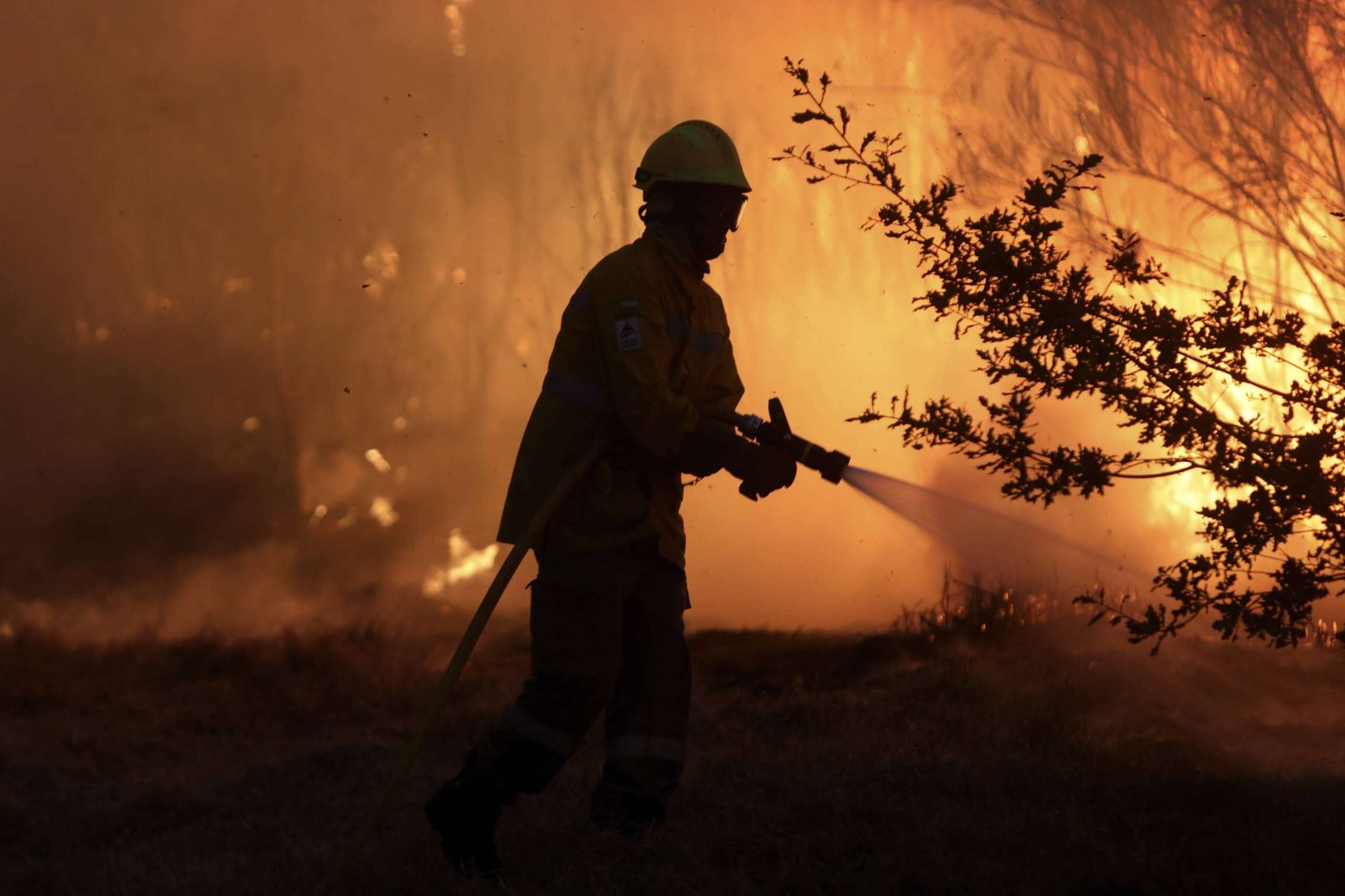
The consequences of wildfires can no longer be measured by acres burned alone. A recent review of wildfire activity found that 2025 was the costliest wildfire year on record, even though the total area burned worldwide was 16% below the long-term average. This finding underscores a critical reality: Where a fire occurs – and which communities, infrastructure and natural resources stand in its path – can matter as much as its size. Research into global wildfire disasters reinforces that even relatively small fires can cause extraordinary damage when they reach densely populated communities or critical assets.
That danger has continued into 2026, with destructive wildfires affecting communities across the United States, Canada and Europe. Smoke from Canadian wildfires has also repeatedly crossed the U.S. border, triggering air-quality alerts. Wildfires are not an isolated emergency confined to one region or season. They are a recurring and escalating threat.
Our wildfire strategy must therefore extend beyond responding after flames appear by helping communities identify, model, and mitigate risks before a fire becomes a catastrophe.
The federal government should invest now in the development and deployment of technologies that can provide that critical capability. Artificial intelligence-enabled cameras can help detect ignitions earlier. Drones can map changing conditions and provide responders with information from difficult or dangerous terrain. Advanced modeling can anticipate how a fire may spread. Quantum computing can help decision-makers optimize fuelbreak placement, evaluate complex scenarios, and deploy limited personnel and equipment more effectively. These technologies will not replace firefighters, land managers or proven mitigation practices, but they can make them more effective, providing precious additional time when every minute matters.
The Trump administration and Congress have both recognized the need for an enhanced technology-enabled approach. In June 2025, President Donald Trump issued an executive order on wildfires directing federal agencies to use technology to improve wildfire detection and response.
Congress has also considered legislation that could accelerate the transition from promising research to operational capability. In January 2025, the House of Representatives passed the Wildfire Technology Demonstration, Evaluation, Modernization and Optimization (DEMO) Act as part of the bipartisan Fix Our Forests Act, which has since stalled in the Senate. The legislation would help enable private companies to work with federal land management agencies to test and deploy emerging technologies in real-world scenarios, including ongoing hazardous fuels mitigation projects and training exercises.
That kind of collaboration is essential. Technologies cannot prove their value solely in laboratories or controlled demonstrations. Agencies and first responders must be able to test them in realistic environments, measure their performance, and create pathways for successful solutions to be deployed at scale.
The need is especially urgent because one of a wildfire’s most dangerous characteristics is its speed.
Under extreme conditions, a fast-moving fire can advance with little warning, rapidly changing evacuation routes, threatening infrastructure and overwhelming available resources. During the 2017 Thomas Fire, flames reportedly advanced at a pace equivalent to approximately one football field per second.
Traditional measures remain indispensable, but drought, intense winds, prolonged heat and low humidity are increasing the difficulty of determining where and when those measures will have the greatest impact.
Emerging technologies can help planners make those decisions with greater precision.
Quantum computing, for example, is well suited to certain optimization problems involving enormous numbers of variables, constraints and possible solutions. In wildfire management, it could help determine where limited fuelbreaks would provide the greatest protective benefit, examine possible fire-spread scenarios, and improve the allocation of aircraft, equipment, crews and other scarce resources.
The U.S. Army Engineer Research and Development Center (ERDC) is already exploring this opportunity. ERDC researchers developed a quantum-powered approach to prevent cascading by applying quantum computing to optimize the placement of fuelbreaks. This method was tested in a forested region in California and compared with conventional techniques.
In the study, the quantum-powered method outperformed the traditional approaches across key forest protection measures. It also gave land managers greater flexibility to balance competing priorities, including minimizing the area devoted to fuelbreaks while maintaining protective coverage.
That flexibility is important because wildfire planning rarely involves a single objective. Decision-makers must weigh community safety, ecological preservation, cost, land use, available personnel and many other considerations simultaneously. Technology can help them evaluate those trade-offs more systematically and identify options that might otherwise be missed.
Wildfires are a bipartisan challenge that demands a sustained, bipartisan response. Federal investment and congressional passage of the Fix Our Forests Act would help advance critical technologies that could make a lasting difference on the ground by improving how we detect, map, predict, and respond to wildfire threats in the years ahead.
We must build and test these solutions today, so they are ready to deploy when tomorrow’s emergencies strike. Now is the time to prepare for the future.
Allison Schwartz is senior vice president of global government relations and public affairs at D-Wave.
Copyright
© 2026 Federal News Network. All rights reserved. This website is not intended for users located within the European Economic Area.
