

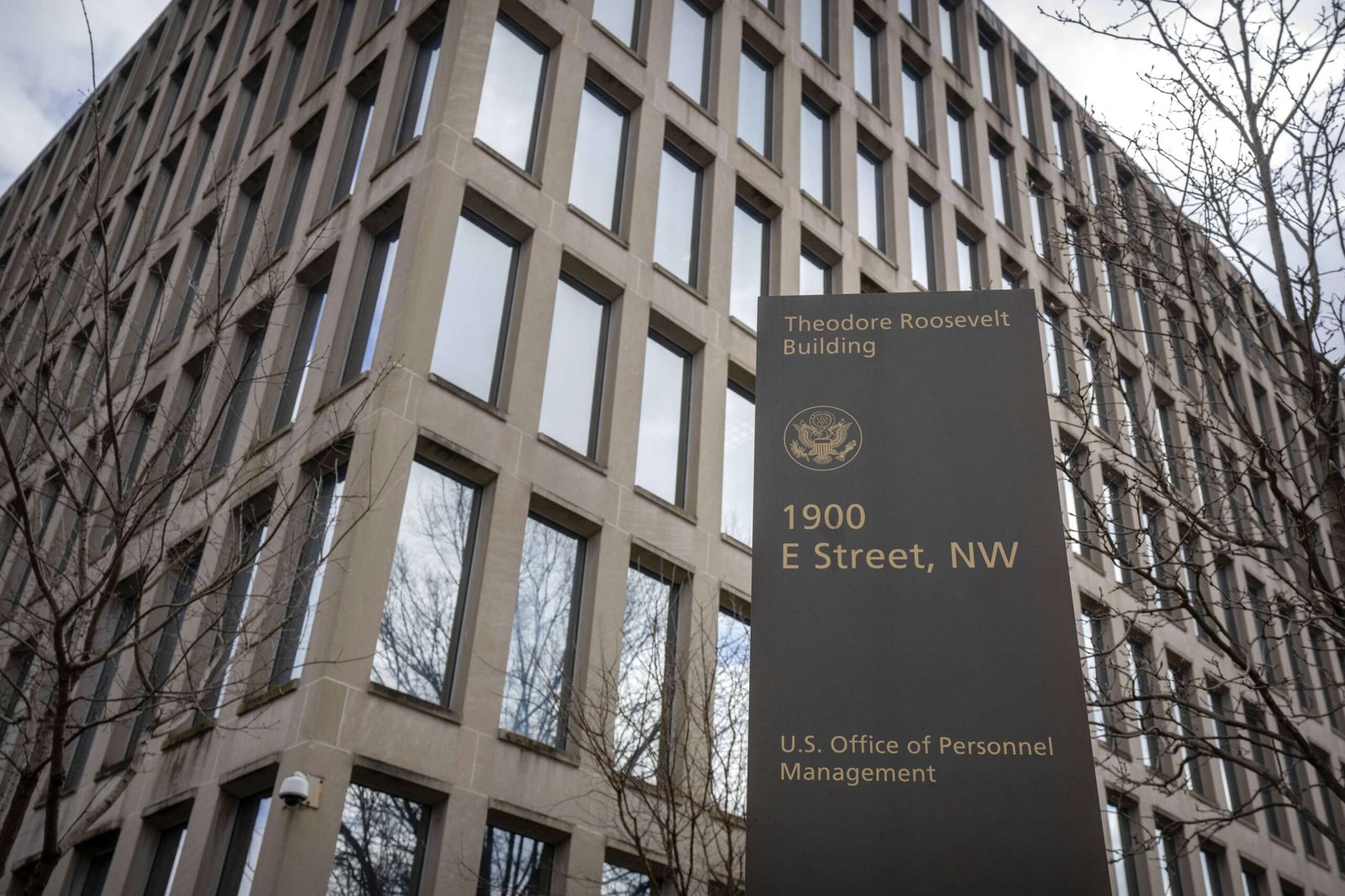
Agencies have a few months left to survey their employees before the required end-of-year deadline — and for most, it will be their first time distributing the Federal Employee Viewpoint Survey on their own.
The change comes in the wake of the Office of Personnel Management’s proposal to decentralize the governmentwide employee engagement survey, which OPM has run for more than 20 years. Starting this year, however, OPM intends to leave the survey creation and distribution to individual agencies.
“Agencies have flexibility in determining the approach, timing and methodology that best meets their needs, provided their survey addresses all required elements,” OPM wrote in a July guidance document.
For some federal workforce experts, moving FEVS to an agency-specific survey has been a welcome change. The opportunity for agencies to now add in questions tailored specifically to their own workforces is “exactly how it should be,” said Sydney Heimbrock, public sector chief industry advisor at Qualtrics.
“That’s the place where engagement matters and where meaningful action can be taken to improve it. That’s really where FEVS belongs and has always belonged,” Heimbrock, a former career executive at OPM, said in an interview. “Agencies are where the action happens, so they need to be able to define what’s important to them.”
Peter Bonner, a senior fellow at the Federation of American Scientists, said decentralizing FEVS is a “long overdue” move that will lead to greater specificity in the survey questions. But at the same time, he raised concerns about agencies’ capability to execute.
“The human capital data analysts that agencies have hired over the years have now been drawn down through the deferred resignation program and reductions in force,” said Bonner, former OPM associate director of HR solutions. “A few who have been doing this for the past couple of years have the institutional knowledge and capacity to bring this in and make it happen, because they’re already doing it or moving toward that. But there’s a whole host of agencies that do not have the resources and are out in the wilderness.”
“I hope they’re able to pull this off and get something meaningful for managers to be able to take action,” he added.
In addition to decentralizing the distribution of FEVS, OPM also plans to revise and pare down the required core questions for agencies to ask their employees each year. The proposed changes would add in two survey questions asking about poor performers, but remove questions about employees’ workload, job satisfaction and if they would recommend their organization as a good place to work.
“Frankly, how can you have an employee satisfaction survey without asking the question of overall, how are you satisfied in the job? How can you have an employee satisfaction survey and not use the question of whether you would be willing to refer other people to the agency as a good place to work?” Bonner said. “If it’s about employee satisfaction, ask the employee satisfaction questions. I’m not sure what we’re after.”
OPM’s changes to the governmentwide employee engagement survey come after the Trump administration fully canceled the distribution of FEVS during 2025. Since then, OPM Director Scott Kupor has previewed many expected plans for the survey in the current cycle.
“What you really want to get out of these surveys is: Do people understand the organizational objectives, and how that ties to their own individual objectives? Do they feel like the organization communicates effectively? Are their managers holding people accountable? Are they differentiating performance? Are they helping people from a career development perspective?” Kupor said in a recent interview with Federal News Network. “None of this, to be quite honest, is rocket science. But it’s really valuable, I think, to have an ongoing directional sense of if we are addressing the things that ultimately will determine whether the agency itself can achieve its objectives.”
But some workforce experts questioned if agencies have the resources and experience to launch a successful survey, especially considering they have just a few months to do so.
“It seems like it’s going to be challenging for agencies if they don’t have that expertise in survey structure in-house already,” said Gabe Menchaca, a senior policy analyst at the Niskanen Center. “If they only end up asking the baseline 10 questions that OPM wants them to ask — because they don’t have enough time to design a new survey — that cuts against the intended purpose.”
Menchaca, formerly an Office of Management and Budget official during the Biden administration, pointed to longstanding resource constraints facing agency human capital offices, which may make it harder to run a successful survey, as well as turn results into actionable information for managers.
“I do worry that the calendar and lack of resources will box agencies into a pretty suboptimal survey experience, especially this first year,” Menchaca said. “OPM, I would hope, learns some lessons about how this year goes, and maybe makes adjustments for next year. But I expect that it may be bumpy down the stretch here.”
Menchaca acknowledged that decentralizing the survey could be beneficial, if agencies can manage to “stick the landing” by better investing in organizational health and employee engagement.
“But I haven’t personally seen a lot of evidence of that happening in response to OPM’s FEVS decentralization, which gives me some degree of pause,” he said. “At least with FEVS, we could be assured there was a baseline below which even the most disengaged agencies couldn’t fall.”
Alongside the changes to the annual survey requirements, Kupor has also been encouraging agencies to look at options for administering more frequent employee surveys.
“We want to make this more of a regular, ongoing implementation among agencies to answer the questions that are most relevant to the agencies and to drive actionable changes in behavior, and I just don’t think a once-a-year survey does that,” Kupor said. “And something as a one-size-fits-all is less valuable in these days than something that’s more customizable to the particular needs of an agency.”
In a recent blog post, Kupor detailed the latest results of OPM’s own pulse survey — an internal, quarterly assessment to gauge how employees are feeling in their jobs and at the workplace.
“The goals of the survey are to help us understand whether everyone understands how what they do ties into our organizational objectives, whether we are creating an accountable culture that also rewards outstanding performance, whether we are following our cultural values and overall whether the organization is on track,” Kupor wrote.
OPM also recently issued an employee survey playbook to help agencies plan for and assemble their survey plans for the current cycle. The playbook outlines a roughly three-month timeframe for issuing an employee survey from start to finish.
“Agencies already conducting internal surveys or working with existing infrastructure may compress some phases,” OPM wrote. “Agencies should not need to procure outside vendors to complete the survey.”
Even if they haven’t done so before, Heimbrock said most agencies already have options for distributing the survey, as well as collecting and reviewing results.
“Many agencies do pulse surveys, they do touchpoint surveys across the employee life cycle, but they just haven’t been able to do the engagement survey,” she said. “Now they can add that in — or they can look at this as an opportunity also to take a fresh look at the technology stack that they use.”
For the current survey cycle, agencies that were more reliant on FEVS and had limited capacity for internally collecting employee feedback will likely struggle to adapt to the change, according to Camille Lloyd, a senior consultant and director at Gallup.
“A gap might be created because the challenge might be big — too big for some agencies who really didn’t build up their own internal survey infrastructure,” Lloyd said in an interview.
At the same time, Lloyd said she sees a lot of potential for agencies that have, over time, developed in-house capabilities to ask questions of their employees.
“I think that there’s some opportunity there, but I do feel like it’s going to create a gap for agencies that have none of those capabilities and have not been building or resourcing capabilities to be able to have and continue to have a robust employee listening strategy to drive organizational change,” Lloyd said.
Within a tight timeframe this year, Lloyd recommended that agencies start by focusing on the issues and priorities most important for garnering employee viewpoints and then build out the survey from there.
“Don’t just ask survey questions just because you have a survey,” she said. “If there is no real intention or strategy behind what it is that you’re going to ask about to act on, then we will say you are likely to do more harm than good by doing that survey.”
If you would like to contact this reporter about recent changes in the federal government, please email drew.friedman@federalnewsnetwork.com or reach out on Signal at drewfriedman.11
Copyright
© 2026 Federal News Network. All rights reserved. This website is not intended for users located within the European Economic Area.
