

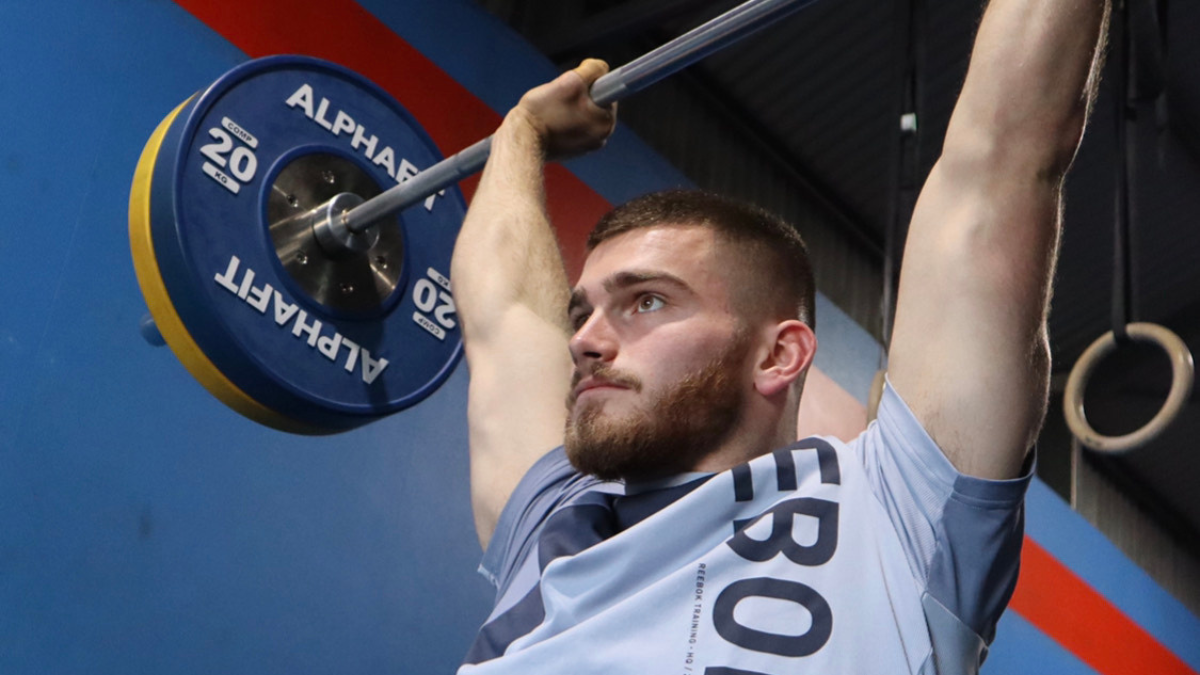
A bigger chest does not require a complicated workout full of machines, cables, and endless exercise variations. For beginners, a barbell and a stable bench can provide nearly everything needed to build stronger, more muscular pecs. The key is choosing movements that allow you to train hard, learn good technique, and progressively add weight or repetitions over time.
The pectoralis major is the large muscle that creates most of the chest’s visible size. It has fibers that run in different directions, including an upper portion near the collarbone and a larger middle and lower portion that attaches to the breastbone and upper arm. You cannot completely isolate one small section of the chest, but changing the angle of pressing can alter which fibers are emphasized. This is why combining flat, incline, and decline barbell pressing is such an effective approach.
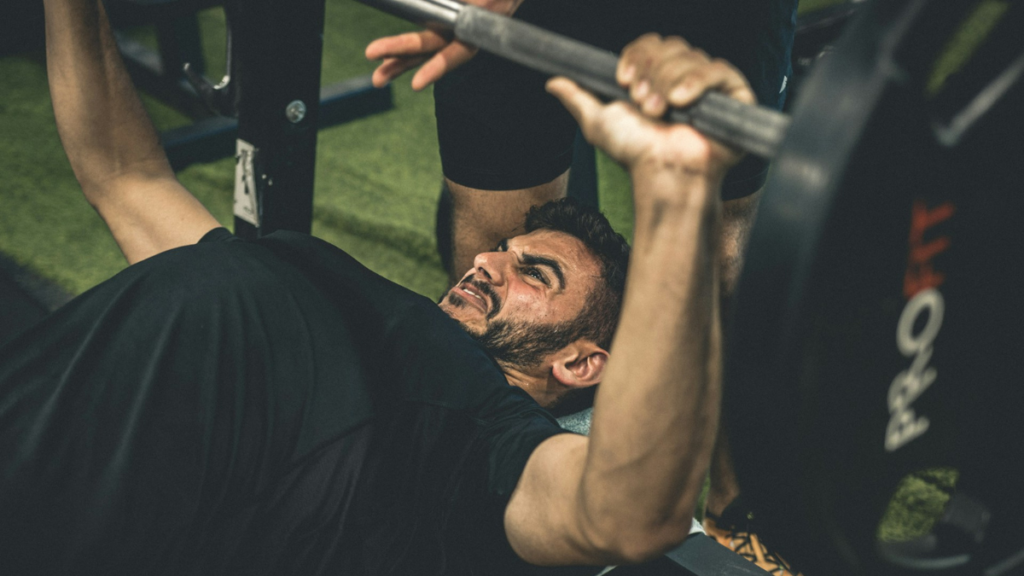
Barbell chest exercises are especially valuable for beginners because they make it easy to measure progress. You can use the same movement each week, improve your control, and gradually increase the challenge. Research consistently shows that progressive resistance training builds muscle and strength, especially when people perform enough hard sets with good technique and increase the training stimulus over time.
The three exercises below give you a practical foundation for developing a fuller chest. The flat bench press should be your main strength builder, the incline bench press gives extra attention to the upper chest, and the decline bench press provides a useful way to load the larger lower and middle chest fibers.
Why Barbell Pressing Builds a Bigger Chest
The chest produces horizontal adduction of the shoulder, which means it helps bring your upper arm across the front of your body. It also contributes strongly when you press a load away from your chest. Barbell pressing trains this function while also involving the triceps and front deltoids.
The advantage of a barbell is stability. Unlike dumbbells, a barbell moves along one shared path, so beginners can focus on building strength and learning the basic movement pattern. That does not mean the barbell is automatically safer or easier. You still need to use the right setup, choose a sensible load, and avoid lifting without safety pins or a spotter when the weight becomes challenging.
Research on resistance training shows that muscle growth can occur with a range of loads, provided the working sets are performed with sufficient effort. Moderate loads are particularly practical for beginners because they allow repeated practice of the movement while still creating a useful hypertrophy stimulus. Multiple hard sets per muscle group each week are generally more effective for muscle growth than doing only a minimal amount of work.
For chest training, that means you do not need to test your maximum bench press. Instead, build confidence with controlled repetitions, keep the bar path consistent, and finish most sets with one to three good repetitions still available. This approach lets you train hard enough to improve without constantly sacrificing technique.
1. Flat Barbell Bench Press
The flat barbell bench press is the central exercise in this program. It trains the entire pectoralis major while allowing you to use more load than most other chest movements. It also develops the triceps and front deltoids, making it a highly efficient upper body strength exercise.
For beginners who want a jacked chest, the flat bench press should usually be the first chest exercise in the workout. You are freshest at the start, which makes it easier to use good technique and produce more force. As your strength improves, you can gradually add small amounts of weight or perform more repetitions with the same load.
How to Perform the Flat Barbell Bench Press
Set the barbell in a rack at a height that allows you to remove it with nearly straight arms. Lie on the bench with your eyes roughly underneath the bar. Place your feet firmly on the floor and keep them there throughout the set. Pull your shoulder blades gently back and down against the bench, creating a stable upper back position.
Grip the bar slightly wider than shoulder width. Your forearms should be close to vertical when the bar reaches your chest. Remove the bar from the rack with straight arms, then lower it under control toward the lower part of your chest. Keep your elbows angled slightly toward your torso rather than flared directly to the sides.
Press the bar back up and slightly toward the rack. Think about driving your upper back into the bench while pushing the bar away. Your chest should stay proud, your wrists should remain stacked over your forearms, and your feet should continue pressing into the floor.
Why It Works
The flat bench press provides strong activation of the pectoralis major and allows substantial loading. Research comparing bench press variations has shown that the traditional flat bench press is highly effective for activating the chest, while also training the supporting shoulder and arm muscles.
It is also a useful movement for tracking progress. A beginner might start with an empty barbell, a light training bar, or a load that allows eight to twelve controlled repetitions. Over weeks and months, modest increases in weight can produce a large improvement in strength. This measurable progression is one reason barbell training remains so effective.
Common Mistakes to Avoid
Do not bounce the barbell off your chest. Lower it with control, pause very briefly if needed, then press smoothly. Avoid lifting your hips high off the bench, since this can turn the movement into a less controlled and more shoulder dominant press.
Another common mistake is gripping the bar too wide. An extremely wide grip may shorten the range of motion, but it can also place the shoulders in an uncomfortable position. A moderate grip that allows vertical forearms near the bottom is a practical starting point.
2. Incline Barbell Bench Press
The incline barbell bench press is your main upper chest exercise. It shifts the pressing angle so that the clavicular portion of the pectoralis major, often called the upper chest, has a greater role. It also involves the front deltoids, so technique and bench angle matter.
A fuller upper chest can make the torso look more athletic and muscular. Many beginners spend most of their effort on flat pressing, then wonder why their chest lacks development near the collarbones. Adding incline work gives the upper portion of the pecs a consistent training stimulus.
How to Perform the Incline Barbell Bench Press
Set the bench to a low or moderate incline. An angle around 30 degrees is a sensible place to start. Very steep angles can make the movement feel more like a shoulder press, reducing the emphasis on the chest.
Lie back with your feet planted and your shoulder blades pulled into the bench. Grip the bar at a similar width to your flat bench press, then unrack it carefully. Lower the bar toward the upper chest, around the area below the collarbones. Keep your wrists straight and lower the bar with control.
Press the bar upward until your elbows are straight, without aggressively locking or shifting your shoulders forward. The bar path will usually move slightly back toward the rack as you press. Keep your ribs stable and avoid turning the movement into an exaggerated backbend.
Why It Works
Research examining different chest press angles has found that incline pressing can increase activation in the clavicular portion of the pectoralis major compared with flatter pressing positions. The exact response varies between individuals, but a low to moderate incline is a useful option for people seeking more upper chest development.
The incline barbell bench press is also a useful reminder that more angle is not always better. If the bench is too steep, the front deltoids can take over much of the work. A moderate incline allows you to load the movement effectively while keeping the chest involved.
Common Mistakes to Avoid
The biggest mistake is setting the bench too upright. If the movement feels almost identical to an overhead press, lower the bench angle. You should still feel your chest working strongly through the movement.
Avoid lowering the bar too high toward your neck. Aim for the upper chest, not the throat. Keep the bar controlled, and use a weight that allows you to maintain the same bar path on every repetition.
3. Decline Barbell Bench Press
The decline barbell bench press is a powerful exercise for emphasizing the larger middle and lower portion of the chest. It often allows lifters to press relatively heavy loads because the pressing angle can reduce the challenge to the front deltoids and place the chest in a strong position.
It is important to be accurate here. The chest is one large muscle with multiple fiber directions, not separate muscles that can be fully isolated. Still, a decline press changes the direction of resistance and can place more emphasis on the fibers that contribute to the fuller lower chest appearance many lifters want.
How to Perform the Decline Barbell Bench Press
Use a decline bench with secure leg supports. Set the safety pins at an appropriate height if you are training in a rack. Lie back securely, brace your body, and keep your shoulder blades pulled together against the bench.
Grip the bar with a moderate width and remove it from the rack with straight arms. Lower the bar under control toward the lower chest. Your elbows should remain slightly tucked rather than pointing directly sideways. Press the bar back to the starting position while keeping your body stable against the bench.
Because decline bench setups can be awkward, beginners should start light and take time to learn the movement. If the exercise feels uncomfortable or unsafe in your gym setup, use the flat and incline press as your main barbell exercises until you have more experience.
Why It Works
Studies comparing bench press variations have found that altering the bench angle changes muscle activation patterns around the shoulder and chest. The decline press remains a strong pectoral exercise and can be a useful addition when the goal is complete chest development.
It can also provide variety without abandoning progressive overload. Some people find that decline pressing is more comfortable for their shoulders than flat pressing, while others prefer the flat bench. Individual comfort matters. The best chest exercise is one you can perform consistently, progressively, and without pain.
Common Mistakes to Avoid
Do not rush the setup. Secure your legs, check the rack height, and make sure you can safely return the barbell after the set. A spotter is particularly useful when learning this exercise.
Avoid using excessive weight simply because the movement may feel stronger than flat pressing. The goal is chest development, not proving how much you can lift. Lower the bar slowly, maintain your position, and use a full comfortable range of motion.
How to Program These Exercises
A beginner does not need to perform all three movements heavily in every workout. Two chest focused sessions per week is a practical starting point. For example, perform the flat barbell bench press and incline barbell bench press in one session, then use the decline barbell bench press and lighter flat bench press work later in the week.
Start with two or three working sets of each exercise. A useful repetition range is six to twelve repetitions for most sets. Choose a load that challenges you while allowing smooth, repeatable technique. When you can complete the top end of your target repetition range for every set, add a small amount of weight the next time.
Rest long enough to maintain performance. For demanding barbell presses, two to three minutes between hard sets is often useful. Longer rest can help you maintain repetition quality and total training volume, both of which matter when your goal is muscle growth.
You also need enough recovery. Chest muscles grow between sessions, not while you are lifting. Eat sufficient protein, sleep consistently, and avoid turning every set into a grinding maximum effort attempt. Building a jacked chest is the result of many productive training sessions, not one dramatic workout.
Final Thoughts
The flat, incline, and decline barbell bench press give beginners a complete and practical chest training foundation. The flat press builds overall strength and chest size, the incline press helps develop the upper chest, and the decline press adds productive work for the middle and lower chest.

Focus on stable technique, controlled repetitions, and gradual progression. You do not need endless exercises or advanced methods. If you train these three presses consistently, add weight or repetitions over time, and support your training with recovery and nutrition, your chest can become noticeably stronger and more muscular.
References
- American College of Sports Medicine (2009) ‘American College of Sports Medicine position stand. Progression models in resistance training for healthy adults’, Medicine and Science in Sports and Exercise, 41(3), pp. 687 to 708.
- Barnett, C., Kippers, V. and Turner, P. (1995) ‘Effects of variations of the bench press exercise on the EMG activity of five shoulder muscles’, Journal of Strength and Conditioning Research, 9(4), pp. 222 to 227.
- Coratella, G., Tornatore, G., Longo, S., Esposito, F. and Cè, E. (2023) ‘Electromyographic activity of the pectoralis major muscle during traditional bench press and other variants of pectoral exercises: A systematic review and meta analysis’, Applied Sciences, 13(8), 5203.
- Schoenfeld, B.J., Ogborn, D. and Krieger, J.W. (2017) ‘Dose response relationship between weekly resistance training volume and increases in muscle mass: A systematic review and meta analysis’, Journal of Sports Sciences, 35(11), pp. 1073 to 1082.
- Trebs, A.A., Brandenburg, J.P. and Pitney, W.A. (2010) ‘An electromyography analysis of three muscles surrounding the shoulder joint during the performance of a chest press exercise at several angles’, Journal of Strength and Conditioning Research, 24(7), pp. 1925 to 1930.
Key takeaways
| Exercise | Main emphasis | Beginner focus |
|---|---|---|
| Flat barbell bench press | Overall chest size and pressing strength | Make this your primary chest lift and progress gradually |
| Incline barbell bench press | Upper chest near the collarbones | Use a low to moderate bench angle and controlled repetitions |
| Decline barbell bench press | Middle and lower chest emphasis | Start light, secure your setup, and prioritize safe technique |
| Weekly approach | Full chest development | Train chest twice weekly with two or three quality working sets per exercise |
