

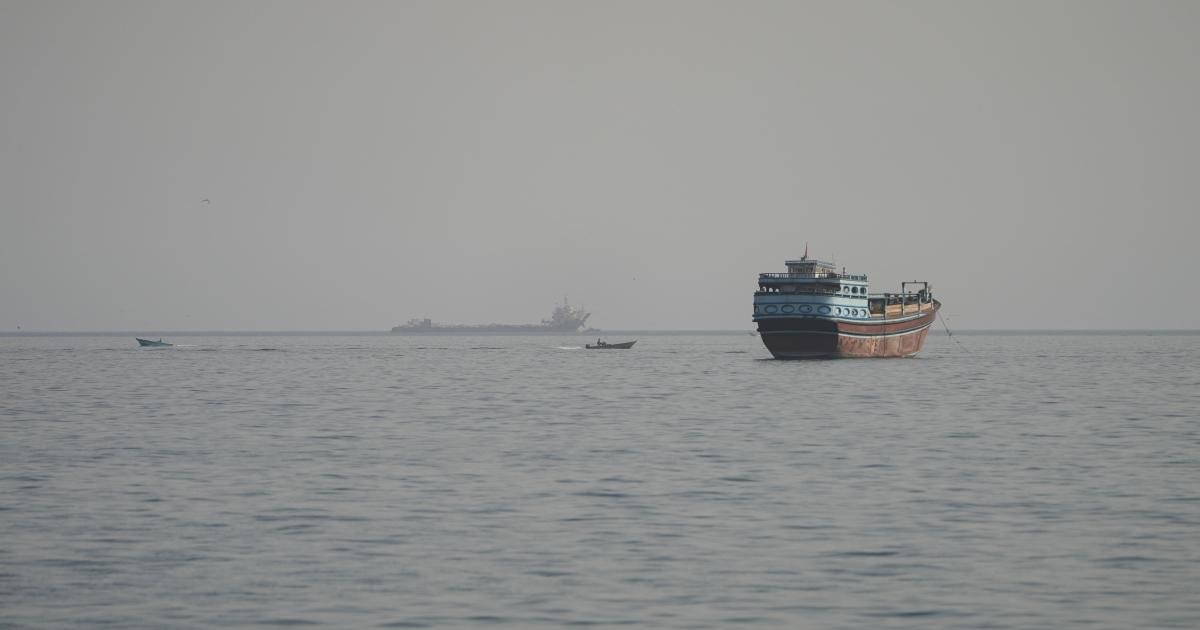
By almost any measure, the world should be suffering a far more severe energy crisis. The Strait of Hormuz, through which roughly one-fifth of global oil and liquefied natural gas supplies normally passes, has been largely closed for months. Yet when considered against the nightmare scenarios contemplated at the war’s outset, oil prices have remained low and natural gas markets have proved resilient. The global economy has so far avoided the kind of recession that many past energy shocks produced.
It would be tempting to conclude that the dangers of energy supply disruptions have been overstated, but such complacency would be misguided. The Hormuz crisis has so far led to only modest oil price spikes thanks to an unusual combination of favorable market conditions and years of investment in energy security measures. Before the war began, oil markets were oversupplied, inventories were relatively high, Saudi Arabia and the United Arab Emirates had built pipelines around the strait, and governments and companies had amassed emergency and commercial stocks. In addition, China helped stabilize the global oil balance by reducing its imports, drawing on its immense capacity to curb how much oil it buys for stocks, holds in inventory, refines for export, and consumes domestically.
These conditions may not endure. If the conflict enters a new phase of intense fighting that threatens to spill across borders and continues to block the strait, oil markets, now stressed by shortages of refined products such as diesel and jet fuel, could see crude oil prices surge higher. But even if hostilities in the region de-escalate, a persistent risk to traffic through the strait will likely remain, with passage either outright controlled by Iran or, at the very least, subject to Iranian disruption at any time. A more optimistic scenario in the next several months seems a chimera, barring major and unlikely change in Tehran.
In preparing for these scenarios, as well as new crises in the more distant future, the world should not take solace in the relatively benign outcome of the last five months for energy markets. The cushions that helped the world manage those months are now more threadbare: inventories have been depleted, demand is recovering, alternative routes are becoming more vulnerable, and infrastructure continues to come under fire and, in some cases, will take years to repair. A second phase of the Hormuz crisis could prove substantially more damaging than the first.
Moreover, the first phase of the crisis was not as painless as headline global oil prices suggested. The relatively modest movement in global benchmark prices concealed a strikingly uneven distribution of pain, as countries in Asia and Europe endured high prices, shortages, rationing, fiscal strain, and forced reductions in consumption, while the United States and China demonstrated newfound levels of insulation and influence. Delayed effects also loom on the horizon. Because of the crunch in refining, diesel and other crude products are priced much higher than they normally would be at current headline oil prices. And the shock is making it harder and more costly for Europe to replenish its natural gas inventories, leaving the continent with lower-than-usual storage levels and more vulnerable to energy and geopolitical coercion in the coming winter.
The past five months have revealed not that the world has become immune to energy crises but that market forces, policy, and government investments in energy security have paid off. Without renewed efforts to rebuild, in today’s geopolitically fractured world that resilience will quickly erode. Before a next phase of this crisis unfolds, therefore, policymakers must analyze how this resilience came to be. Moreover, they must acknowledge that, as the energy system has changed since the 1970s, so too has the way energy shocks reverberate around the world, and the measures needed to safeguard against them. Understanding these dynamics will better position the world for the next inevitable energy shock.
WHAT COULD HAVE BEEN
When Tehran closed the Strait of Hormuz days after U.S. and Israeli attacks in late February, the head of the International Energy Agency (IEA) called it the “the largest supply disruption in the history of the global oil market.” But even as the strait remained almost entirely closed for nearly four months—until Washington and Tehran signed a memorandum of understanding in mid-June—Brent crude averaged just over $100 per barrel, up from around $70 per barrel when the war began. The peak of $126 per barrel, in April, was far below the $200 per barrel that veteran analysts had warned was possible. Even after Tehran closed the strait to oil traffic again in July, after the cease-fire collapsed, the barrel price fell into the $80 range.
Many factors contributed to this relatively muted price response. As would be expected, oil demand was forced to decrease, to match available supply. It fell by roughly five million barrels per day in the second quarter of 2026, according to the IEA, as shortages and price spikes led consumers to cut back and many governments imposed emergency measures to ration fuel. But the price-induced demand adjustment was not nearly as severe as might have been expected. This was in part because it was a relatively favorable moment in the oil cycle. Supply was projected to well exceed demand this year, oil inventories were relatively flush, OPEC countries had been boosting supply at a quicker pace than expected, and tighter sanctions on Russia meant that more Russian supply was floating in tankers, ready to be tapped.
Psychology and political rhetoric also played a role in keeping the geopolitical risk premium down. President Donald Trump’s repeated claims, in public statements and social media posts, that a resolution to the conflict was imminent often came at market-sensitive moments and prompted prices to fall. The possibility that millions of barrels per day would suddenly return to a market that had already been oversupplied before the crisis made it riskier for traders to maintain large bets on still higher prices. Those conditions weakened the link, at least temporarily, between prices and the underlying shortage of oil.
More important than these dynamics in dampening the oil crisis that might have ensued was past government investment in infrastructure. Saudi Arabia and the UAE quickly maximized the capacity of pipelines that bypass Hormuz, which they built years ago precisely as insurance against this kind of disruption. These routes collectively moved over five million additional barrels per day to global markets. Combined with Iranian oil exports, which continued through late April, the pipelines reduced the shortfall in Gulf oil exports to around 13 million barrels per day rather than the entire 20 million per day that flowed through the strait before its closure.
The burden of balancing the oil market has shifted toward poorer importing countries.
Effective deployment of oil in storage alleviated the strain, too. Traders and energy firms drew down high levels of commercial oil products they had in stock. Even more important, the IEA, which was created in the aftermath of the 1973 oil crisis, coordinated the largest release ever of its members’ emergency oil stocks. Combined commercial draws and government releases offset roughly five million to six million barrels per day of the supply disruption.
In the United States, increased oil production and commercial and strategic stock draws caused U.S. crude and petroleum product exports to surge to historic levels, transforming the country’s role in the global energy market. During the spring, the United States became the world’s largest oil exporter and briefly became a net exporter of crude oil for the first time since World War II.
Perhaps the most surprising buffer in the crisis was China. Beijing reduced its oil imports by roughly five million barrels per day through June, easing pressure on the global market. Although exact figures are difficult to establish because China doesn’t publish official data on its inventories, Beijing stopped buying oil to fill its strategic reserve and even released some oil from its inventories (more commercial stocks rather than strategic reserves). It restricted exports to neighboring countries of refined petroleum products, such as gasoline, diesel, and jet fuel, thereby reducing the need for crude imports to feed its domestic refineries and shielding the global crude market, even as it imposed pain on East Asian countries reliant on its product exports. Moreover, domestic Chinese oil demand fell in response to higher prices and conservation measures.
Liquefied natural gas followed a similar path to oil despite being a very different commodity. The closure of the Strait of Hormuz and Iranian attacks on LNG facilities cut off most Qatari LNG exports, which account for roughly one-fifth of global LNG supply. But natural gas and power prices rose by less than many had anticipated; European benchmark gas prices doubled from roughly $35 to $70 per megawatt-hour—still far below the peaks above the around $350 per megawatt-hour reached in 2022 in the fallout from Russia’s full-scale invasion of Ukraine. New liquefaction projects, especially in the United States, were ramping up, offsetting an estimated 40 to 50 percent of lost volumes from the Gulf. Established exporters such as Nigeria and Malaysia also delivered more LNG than expected, and Asian demand adjusted; some utilities switched from gas to coal while some industrial users curtailed consumption altogether. Europe benefited from the LNG import capacity it had built since 2022 as well as from more renewable energy sources, although it still had to compete with Asia for scarce cargoes, draw down already low storage, and suffer significant demand destruction as high prices forced businesses to cut output.
A NEW GEOGRAPHY
The events of the last five months have shed light on more than how the global energy system managed to endure the closure of Hormuz. They have also revealed how gradual but real changes in that system have created new geopolitical realities and risks—in particular, how shifts in the sources of energy supply and demand have redrawn the geography of oil shocks. The countries best able to absorb disruptions, and those forced to bear the greatest costs, are no longer the same.
The United States is far more resilient to oil shocks today than it has been in at least a half century. Because oil is priced in a global market, Americans were not insulated from higher gasoline prices. But the United States weathered the disruption far better than it would have a decade ago, both because it uses less oil per unit of economic output and because it produces much more oil. The U.S. economy is nearly four times larger than it was in 1973, but domestic oil demand is only slightly higher than it was in the 1970s. And whereas the country imported 60 percent of its oil use only two decades ago, it is now the world’s largest producer and a major net exporter. This shift means that although higher prices raise costs for American consumers, they also generate income for American producers, workers, and shareholders. Economists at the Dallas Federal Reserve have estimated that an oil shock comparable to this year’s would have reduced U.S. real GDP growth by 5.6 percentage points in 1980, compared with only 0.3 percentage points today.
The elevated prices caused by the Hormuz crisis were, moreover, less pronounced in the United States than in Asia and Europe, where shortages drove the price for the delivery of oil far above the price traded in the futures market for periods of time. In a global market, the United States will eventually face similar pressures, but this episode suggests that abundant domestic production gives the United States a valuable period of insulation from disruptions that more import-dependent economies lack. This contrast with the rest of the world was even more pronounced in natural gas. Disruptions to LNG flows through the Strait of Hormuz pushed prices in Europe and Asia toward $20 per million British thermal units (BTUs), while U.S. benchmark natural gas prices remained below $3 per million BTUs. The United States’ abundant domestic gas production and relatively self-contained market largely shielded it from the global shock. The economist Lucas Davis calculated, earlier this year, that the disconnect between U.S. and global natural gas prices has saved American consumers roughly $5 trillion over the last two decades.
Americans’ greater insulation from global oil and gas shocks creates an uncomfortable dichotomy: a country that is generating significant upheaval in the international system is also comparatively insulated from the consequences of its actions. For decades, Washington’s use of economic and military coercion was constrained, at least in part, by the damage that such actions could inflict on the United States, including through oil shocks. As that constraint weakens, so, too, may an incentive for restraint.
China’s role in global energy crises has also shifted. The country’s dramatic reduction in oil imports demonstrated the central part it now plays in supply shock absorption. As the largest oil importer and by far the largest holder of oil inventories, China can alter the global energy balance by adjusting how much it buys, exports, stores, or releases, an ability that may become even more important in the next phase of this crisis. Whereas inventories in OECD countries have been depleted, China appears to have drawn only modestly from its estimated stock of 1.4 billion barrels. Avoiding a much sharper price spike over the next several months may depend in part on Beijing’s willingness to use those reserves.
This new dynamic gives China a potentially powerful source of geopolitical influence in the future. For decades, U.S. presidents have called Saudi leaders during oil crises to ask them to release spare production capacity, which Riyadh maintains at a cost in part because of the influence it provides. If Chinese inventories become one of the last lines of defense against damaging global price spikes, Beijing may come to occupy a comparable position.
Whereas the new geography of oil shocks improves the strength of the United States and China relative to other countries, the burden of balancing the oil market has now shifted toward poorer importing countries. In past decades, the reductions in demand needed to counterbalance shortages in supply came primarily from advanced economies, which consumed the most oil. Today, however, OECD countries make up less than half of global oil demand, compared with three-quarters in 1970. Now, oil demand is higher in emerging and developing economies, which have thinner fiscal buffers and less capacity to absorb higher prices, meaning that the destruction of demand comes sooner and at lower prices, with rationing and forced reductions in consumption.
This pattern has been especially visible in Asia, where many economies depend heavily on Middle Eastern crude and refined products. Jet fuel became one of the most acute pressure points this year, with spot prices briefly reaching nearly $200 per barrel in some places. Dozens of developing and emerging-market countries adopted nearly 200 emergency measures, including conservation mandates, fuel subsidies to tax suspensions, and emergency efforts to secure alternative supplies. Bangladesh restricted air-conditioning use, Laos shortened the school week, and Sri Lanka declared an additional public holiday. Shortages of liquefied petroleum gas forced households and restaurants in India to cut back; Kenya and Nigeria capped fuel price increases or suspended fuel taxes, transferring the burden from consumers to already strained public budgets.
The relatively muted global price shock, then, is not a result of a more mild disruption to oil supply. The market is rebalancing at a lower price because lower-income countries are disproportionately bearing the brunt of it. Such shocks may appear manageable to Washington or Brussels only because much of the adjustment is happening in more vulnerable countries, where the political and even security implications may not be fully apparent for some time.
CLEAN BREAK?
One possible upside of the war in Iran—and of the renewed concern about energy security it has supercharged—is that it could hasten the shift toward a lower-carbon energy system. As the IEA chief, Fatih Birol, put it in April: “Perception of risk and reliability will change. Governments will review their energy strategies. There will be a significant boost to renewables and nuclear power and a further shift towards a more electrified future.”
There are good reasons to hope that this might be the case. The 1973 oil shock catalyzed investments in nuclear power, renewable energy, and efficiency that reduced the fossil-fuel intensity of the global economy even more rapidly than climate policy did in the years following the 2015 Paris Agreement. In 2022, following Russia’s full-scale invasion of Ukraine, solar generation in Europe rose by 24 percent, more than twice the rate of growth in previous years. Countries exposed to the current oil shock will have powerful incentives to electrify more of their transportation and industry and to generate that electricity from secure domestic sources, including wind, solar, bioenergy, and nuclear power. Even the United States, already relatively secure in its energy prowess, could come to better understand that true energy security is rooted in efficiency as well as adding more energy supply, not just oil and gas but also renewable sources such as solar and wind power.
Such an outcome, however, is far from automatic, and there are reasons to expect that it could even become less likely. The relative resilience of global markets during the first five months of the Hormuz disruption could reinforce confidence in the adaptability of the global oil and gas system rather than exacerbate fears about it. Some importing countries will undoubtedly see the disruption as a reason to reduce their dependence on oil, but many may draw the opposite lesson. If the nightmare scenario of energy security planning proved relatively manageable, governments may conclude that the oil and gas system is quite secure compared with the alternatives and that the most practical course is to continue investing in the resilience of the oil and gas system rather than to move beyond it.
The real hazard of the Hormuz crisis is the overconfidence it may foster.
Initial responses suggest a focus as much on building this resilience as on diversifying away from fossil fuels. Several Gulf countries have already announced plans to expand or build new pipeline capacity to evade the Strait of Hormuz, likely diminishing its importance as a chokepoint within several years. Emerging-market economies such as those of India, South Africa, and in Southeast Asia have announced plans to increase commercial oil inventory requirements, build government strategic oil and gas reserves, and expand domestic refining capacity.
After this crisis, some governments may also be even more hesitant to increase their dependence on China, which dominates clean energy supply chains, particularly for critical minerals, batteries, solar panels, and electric vehicles. Countries will have to decide not whether they are willing to accept import dependence but which forms of dependence they consider least dangerous. Beijing’s response to the Hormuz crisis may make that tradeoff appear less attractive. Whereas the United States has so far resisted calls to restrict oil and gas exports, which are based on a misguided belief that doing so would protect American consumers and businesses, one of China’s first moves was to prioritize Chinese interests, restricting exports of refined petroleum products, which imposed significant costs on countries across Asia. Governments in the region considering greater reliance on Chinese clean energy supply chains may view this episode as a warning, and seek to invest more in the resilience of their oil and gas systems and diversify their oil and gas imports rather than increase their reliance on Chinese energy technologies and products.
Finally, energy security is not synonymous with clean energy. The search for secure and affordable domestic supplies can lead governments toward coal as readily as toward solar, wind, geothermal, or nuclear power. At least in the short term, coal has been a part of the emergency response measures in several Asian countries: Japan allowed greater use of older, less efficient coal plants, South Korea lifted limits on coal-fired generation, China increased coal consumption in its chemical sector, and India accelerated its plan to spend $4 billion to develop a coal-to-chemicals industry. The energy consultancy Rystad has projected that the region’s additional coal demand resulting from the LNG shortfall will be roughly 70 million tons in 2026. According to the IEA, global coal consumption will reach a record this year.
The changes that will come in the wake of this energy crisis will create openings for the transition to greener energy. But it is not inevitable that countries will make the most of them. Governments around the world must steer toward that end with intention, setting policies that create the right incentives, lower the cost of clean energy solutions, and mitigate the new reliability, infrastructure, cybersecurity, and geopolitical risks that accompany a lower-carbon and more electrified energy system.
LESSONS FOR THE FUTURE
Although the Hormuz crisis is far from over, it has already provided lessons for how governments can prepare for the next energy shock. The overarching takeaway, however, is more a warning than a lesson. The complacency that has developed around the huge disruption of oil flows in the last five months should not be carried into the months ahead. If renewed fighting in Iran results in another period of prolonged disruption, the global economy will struggle much more mightily to contain its damage. Escalating threats in the Red Sea could compromise the Saudi pipeline that has been essential in mitigating the Hormuz crisis. Global oil inventories are now significantly depleted, leaving the stockpiled barrels held by China as one of the main defenses against continued supply disruption. The need to refill inventories and build up stronger strategic reserves of oil may also boost demand. Five pillars that proved essential in softening the blow of the Hormuz crisis will be essential to cushioning future shocks, whenever they come: energy efficiency, diversified supply, integrated markets, increased domestic production, and help for countries whose vulnerabilities create risks for all.
The first and surest line of defense against an oil shock is to use less oil in the first place. The world was able to absorb the initial Hormuz disruption partly because it requires far less oil to generate each dollar of economic output than in the past. Measured in constant 2015 dollars, the global economy consumed just under one barrel of oil for every $1,000 of GDP in 1973. By 2019, the final year before pandemic distortion, that figure had fallen by more than half. Because many economies are now less oil-intensive, prices today would have to rise roughly fourfold in inflation-adjusted terms to reproduce the economic shock that followed the Iranian Revolution in 1979, according to the former BP chief economist Christof Ruhl.
Fifty years after the physicist Amory Lovins made the case in Foreign Affairs for a “soft path” to energy security, focused on efficiency and distributed technologies, one of his central insights remains just as true: policymakers seeking to dampen the effects of future shocks should redouble their efforts to reduce the economy’s exposure to oil. The case for reducing oil dependence is not only environmental but also strategic. Stronger efficiency standards, wider adoption of electric vehicles, and better public transportation all reduce vulnerability to oil shocks; the Trump administration’s efforts to roll back these policies weaken long-term U.S. energy security.
Energy security also requires strong buffers against supply disruptions. These instruments come at a cost and function as a sort of insurance policy against energy shocks. Because no single firm bears the cost to society of energy price shocks, the private sector tends to underinvest in these safeguards, making their formation dependent on government action. As geopolitical dangers expand, energy resilience will require additional investment in strategic stockpiles, alternative pipelines and ports, domestic refining capacity, and other redundant investments that may seem inefficient in normal times but become indispensable in a crisis. In the United States, these efforts should begin with a congressional appropriation of funds to refill and modernize the depleted Strategic Petroleum Reserve, now at its lowest level in nearly five decades.
Diversification of markets and supply routes is a similar, necessary buffer. In addition to Saudi and Emirati pipeline expansions around the Strait of Hormuz, Iraq and Kuwait are exploring new routes to exit the Gulf, and other producers are seeking to store oil closer to customers outside Hormuz. As Houthi threats to the Bab el Mandeb Strait increase, so, too, may interest in developing pipeline capacity through the Red Sea. Outside the Middle East, Canada is pressing to expand oil and LNG infrastructure capable of serving markets in both Asia and Europe, in part to reduce dependence on the U.S. market. Asian buyers are seeking greater supply security through new long-term LNG contracts with exporters such as Australia, Malaysia, and the United States.

Integrated energy markets are also a source of security, not a luxury to be suspended when prices climb. Governments should resist pressures to retreat from them, as China did when it moved to curtail its refined product exports. Market forces have cushioned the blow of lost energy flows: when shortages through Hormuz drove up energy prices in certain regions, trading firms and energy companies rerouted their tankers to buyers willing to pay the most. When fears of jet fuel shortages sent prices even higher, refiners adjusted their operations to produce more jet fuel and less gasoline and diesel. In March, for example, European refineries increased jet fuel output by 22 percent year-over-year, according to the IEA, cutting the region’s need for overseas imports by more than half.
Whereas state-driven economies such as China’s may simply order refineries to operate at lower capacity, in market-driven economies, market forces help direct scarce supplies to where they are most valuable, encourage conservation, and shift production toward the fuels consumers need most. If the Hormuz crisis escalates in its next phase and prices soar, Washington may face greater political pressure to restrict oil exports in the belief that doing so will cushion domestic prices. Giving in to such pressures would be a mistake. An export ban would damage U.S. credibility as an apolitical supplier, harm allies, distort price signals, and weaken incentives to invest in U.S. production and refining capacity, which would ultimately raise costs for Americans.
Expanding the base of domestic production is another pillar of resilience. The Hormuz crisis demonstrated the strategic value of the United States’ transformation from a major oil importer into a leading producer and exporter. The lesson for other countries is not simply to produce more oil and gas but to develop a diverse portfolio of reliable domestic energy sources—including oil and gas where appropriate, as well as renewables, nuclear, and other sources—that reduces their exposure to crises and gives governments more options when one occurs.
The benefits of domestic production are already driving some countries to rethink policy. In the United Kingdom, for example, Prime Minister Andy Burnham has begun easing the Labour government’s restrictive approach to oil and gas development in the North Sea. Several European countries, including Belgium, Denmark, and Italy, have also begun revisiting their long-standing resistance to nuclear power.
Finally, a system that relies on the most vulnerable to absorb the worst consequences cannot be resilient in the long term. Instead, it leads to political and economic instability. Strengthening lower-income countries’ ability to endure energy shocks will require assistance in the clean energy domain—including financial and technical support to accelerate electrification, to improve energy efficiency, and to expand secure, lower-carbon domestic sources of energy. The Hormuz crisis also demonstrates why these countries would benefit from carefully targeted assistance in oil and gas development and infrastructure. Even though multilateral development banks have largely retreated from fossil fuel financing, that system will persist for decades. Selective support for storage, refining, pipelines, and ports can reduce vulnerabilities and provide a more stable foundation for the decades-long transition to cleaner energy.
KNOWLEDGE IS POWER
The real hazard of the Hormuz crisis is not the shock that the world endured but the overconfidence it may foster. The closure of the world’s most important oil chokepoint should have tipped the global economy into recession, and that it did not will tempt many to conclude that energy security risks no longer matter. The opposite is true. The buffers that have minimized the disruption so far will hold for only so long and must be reinforced if the world is to endure future shocks. Moreover, fears around energy security alone will not be enough to push the transition to clean energy forward; doing so will require concerted effort and intention.
The crisis has also exposed a new balance of power in energy politics. A disruption that a generation ago would have humbled Washington instead left the United States more insulated than any major economy, as costs overwhelmed the countries least able to bear them. Whereas energy shocks once disciplined the powerful, they now increasingly punish the vulnerable and spare the strong. A superpower shielded from the consequences of the turmoil it helps create has fewer reasons for restraint, and a country that can steady or shake the market at will—be it the United States or China—has a lever difficult to counter.
The next energy shock will not look exactly like the crisis of Hormuz. But that shock offers important lessons for how to prepare for the next battle. Now that the energy weapon is back, that moment may come sooner than we think.
Loading…
