

The clean energy transition has entered a new phase. Ambitious net-zero emission pledges made over the past decade have fallen glaringly short of their goals. But the rise of artificial intelligence—and the proliferation of data centers to power it—has created an insatiable demand for power. As a result, more and more countries and corporations are intent on increasing their energy supplies and pivoting to alternative, more reliable sources.
Beijing is currently winning the race to provide such power. Affordable, Chinese-made solar panels form the backbone of renewable energy infrastructure across continents. Chinese-produced turbines are central to wind energy everywhere, and Chinese firms dominate the global battery market. Washington, by contrast, has redoubled its efforts to produce and use pricey fossil fuels—even though most of the world is pivoting away from them.
As a result of these trends, Beijing might soon dominate the global energy system. Yet Washington still has a chance to win this competition. China may lead in solar and wind power and in battery manufacturing, but the United States has the upper hand in two other essential technologies: enhanced geothermal and new nuclear energy. These may indeed be more valuable than solar and wind power because they draw from clean energy sources that do not depend on the weather. Washington, however, will have to coordinate with large technology firms and its many foreign partners if it wants to export its geothermal and nuclear capabilities to the wider world—or indeed power its own AI sector. Otherwise, Beijing will keep pulling ahead.
ELECTRIC SLIDE
Global demand for energy is surging. Developing countries are electrifying more and more of their towns and cities, electric vehicles are entering new markets, and data centers are proliferating. The world’s electricity needs are expected to increase by three-quarters over the next 25 years. This demand shock has shifted the impetus for the energy transition. Clean energy may no longer simply be a climate imperative in many countries; it has become the key to economic growth and global technological advancement.
As a result, power generation has become an increasingly important geopolitical issue—one that Beijing is trying to use to its advantage. For more than two decades, China has lavishly supported its burgeoning clean technology sectors by exempting key clean energy inputs from import taxes, requiring a portion of inputs to be sourced domestically, and providing funding to local manufacturers and research institutions for R & D and commercialization. These measures have helped China become the world’s dominant supplier of clean intermittent energy—that is, energy from inconstant and unpredictable sources, such as wind and solar. In 2024, for instance, Chinese companies exported $28 billion worth of solar panels. One of China’s largest solar companies, JinkoSolar, has created more than 20 overseas subsidiaries, which demonstrates China’s growing influence over clean energy infrastructure across the developing world. These policies also laid the groundwork for China’s success in the supply chains needed for clean energy, including the mining and refinement of critical minerals. This, in turn, has given Beijing substantial international leverage. In fact, Chinese officials forced the Trump administration to lift U.S. tariffs on Chinese products by threatening to cut the United States off from critical minerals.
The United States still has its own energy exports—namely, oil and gas. These have undergirded global industrial development since the end of World War II and traditionally endowed Washington with unmatched influence over global energy markets. But such leverage is fading as the fossil fuel industry faces structural limits. Much of the world’s remaining hydrocarbon wealth sits under state-controlled reserves that U.S. firms cannot access. Countries and corporations are also looking into alternative sources of energy, which are becoming cheaper than fossil fuels and are often less vulnerable to blockades like the one now choking off the Strait of Hormuz. The Philippines and Saudi Arabia, for instance, have made clean energy central to their development strategies. Large tech companies have committed to sourcing clean power for their data centers: Google has promised to power its data centers using 100 percent clean energy by 2030, and Meta matches its data centers’ electricity use with renewable energy.
The United States thus needs a new strategy for managing China’s clean energy leadership. It has several options. The first is to compete with China directly, which is what the Biden administration attempted to do by subsidizing solar panels and electric vehicles as part of the 2022 Inflation Reduction Act. This option will not work, however, because the low price points at which China sells its intermittent energy infrastructure would be impossible to beat absent extraordinary U.S. government subsidies. Alternatively, Washington could triple its commitment to fossil fuels via looser regulations and make hydrocarbon exports cheaper and more appealing in the international market. This is, in fact, the Trump administration’s approach. It has focused on expanding output in coal, natural gas, and oil by opening access to federal lands for new mining and brokering liquefied natural gas agreements with Asian and European partners. Fossil fuels will remain a critical part of the global energy mix moving forward, but the Trump administration’s strategy is unlikely to succeed on its own. The simple fact is that the electricity systems of the future will depend less on hydrocarbons and more on renewables and nuclear energy. Regardless of what some leaders in Washington think about the changing climate, clean power is what other governments and corporations want.
GOT THE POWER
There is a more promising option for the United States—investing in clean, firm power, specifically geothermal and nuclear. Like solar and wind power, these sources are effectively limitless. But unlike them, geothermal and nuclear power do not depend on weather or other variable factors. They can thus be deployed around the clock.
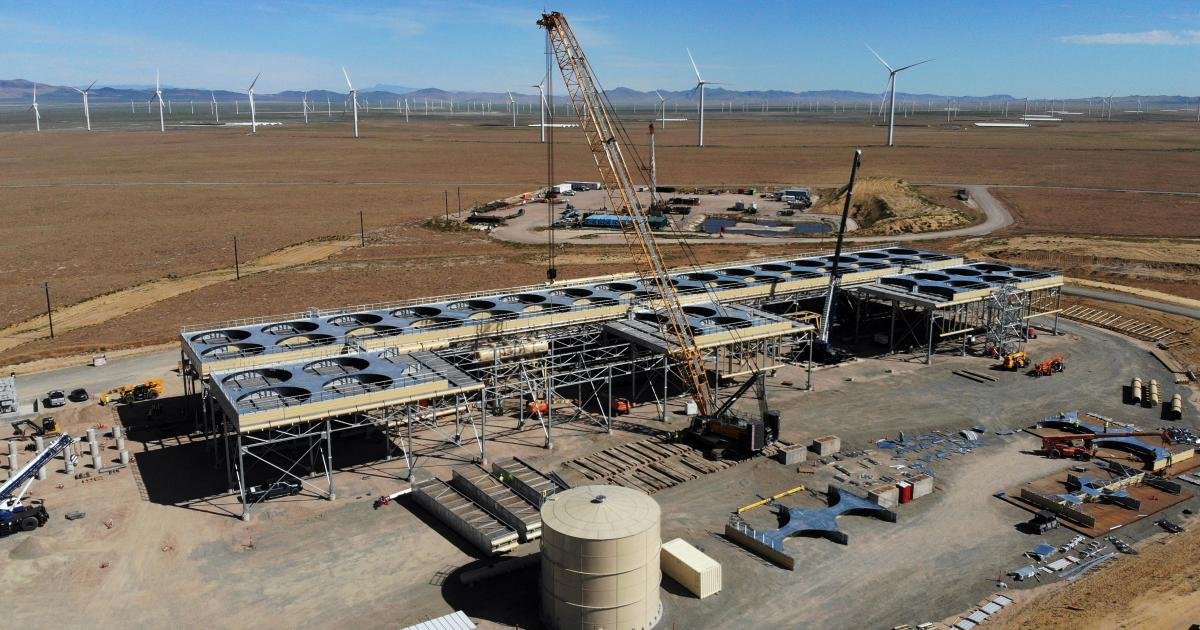
Consider, first, geothermal power, which comes from heat emanating from deep under the earth’s surface. Such a steady power source would make any country’s energy grids—including the United States’—more reliable and resilient against spikes in electricity demand. Recent innovations have made geothermal plants easier than ever to install. Once, geothermal deployment depended on natural geological formations at shallow depths, which limited most viable sites to areas near the Ring of Fire, the 25,000-mile string of volcanoes surrounding the Pacific Ocean. But over the past decade, new innovations have made it possible to reach the requisite heat or create geothermal reservoirs much closer to the surface, making geothermal power available across most of the world. Drilling remains expensive, but the costs have been nearly halved since the early 2020s. Within the United States, they have continued to plummet thanks to the Department of Energy’s FORGE project, a field laboratory in Utah for developing, testing, and improving new geothermal technology.
China is well positioned to be the world’s new energy superpower.
The United States is already a world leader in geothermal power, and there is good reason to believe it can further its position in the months and years ahead. Decades of U.S. innovation in the oil and gas sector have generated a base of physical capital, supply chains, and technical capability that readily transfers to geothermal energy production. Oil rigs, wells, and drilling and fracking equipment can all be repurposed for geothermal power generation and offset the overhead costs of drilling. American oil and gas workers, for their part, already have the requisite skills in subsurface drilling and borehole development.
Washington is not quite as dominant when it comes to nuclear power. The United States still leads in the operation of advanced large nuclear reactors, but China is quickly closing the gap. The United States has 94 operational nuclear plants but no new ones under construction. China operates 60 reactors today and has 37 under construction. Russia, too, is expanding its nuclear plants; it has 34 large reactors in operation and five under construction. Beijing and Moscow both view nuclear power as a geostrategic opportunity and subsidize deployment using below-market loans, state credits, and subsidies. In ten years, China has been able to halve the construction costs for traditional nuclear plants.
But the United States is still in a good place, mostly thanks to its investment in small modular reactors. These could change the economics of nuclear deployment. Whereas it can take over a decade and cost more than $10 billion for the United States to construct a traditional reactor, small reactors have standardized designs that are cheaper and quicker to build. They generate up to 350 megawatts of power per unit, about a third of the capacity of a traditional nuclear reactor, but their smaller size and lower upfront costs make them more appealing to customers hesitant to go all-in on nuclear megaprojects. And right now, American companies account for nearly a third of publicly available small modular reactor designs, or more than China and Russia combined. The U.S. venture ecosystem has produced a cohort of well-funded startups dedicated to advanced small modular reactor development, including Kairos Power, TerraPower, and X-energy.
CHAIN REACTION
Washington is well positioned to provide the world with geothermal and nuclear power. But it cannot win the race to lead these technologies on its own. Instead, the future of U.S. energy security requires a coordinated international strategy that supports innovation, streamlines supply chains, and builds demand for geothermal and nuclear power around the planet.
This is no easy task. Nuclear supply chains, for example, are highly vulnerable to chokepoints. Right now, the United States imports 99 percent of its uranium. Only six countries are responsible for enriching the vast majority of the world’s uranium, and nearly half that enrichment takes place in Russia. A small set of firms in China, Japan, and Russia manufacture the parts used to build nuclear reactors.
These technologies also face demand-side troubles. Although small modular reactors are much cheaper than large reactors, manufacturers need to demonstrate to investors that they can drive down costs per unit even more to offset the lower relative power output. Novel geothermal systems face a similar challenge: high upfront drilling costs, uncertainty over whether a drilling project will yield a geothermal reservoir, and deployment timelines ranging from seven to ten years all dissuade private investment.
The world’s electricity needs are expected to increase by three-quarters over the next 25 years
But there are clear ways to address these problems. The United States should secure long-term procurement commitments from allied governments for small modular nuclear reactors; this would support investment in new capacity and curb U.S. reliance on enriched uranium from Russia. These procurement commitments could include a tiered pricing system, with a customer paying higher prices for initial small modular reactors followed by lower prices for the reactors it acquires later. Such tiering would limit risk for customers and provide greater certainty about the scope and value of the small modular market for manufacturers. These efforts could also engage major corporations, such as Amazon, Google, and Meta, which have all begun entering into long-term agreements with small modular manufacturers. The United States and its partners should also jointly invest in protecting their production systems. The Sapporo 5 partnership—in which Canada, France, Japan, the United Kingdom, and the United States have agreed to spend $4 billion on uranium sourcing and enrichment to decrease Russian influence over nuclear fuel supply chains—offers a natural platform to build on.
The United States should also set up a buyers’ consortium among electricity consumers, such as utility companies and tech firms, and countries interested in developing new energy sources. This would signal that there is strong demand for nuclear and geothermal technologies and would, in turn, help geothermal and nuclear operators develop optimal production processes through repeated exports. The result would be lower costs and greater U.S. influence abroad. To make this buyers’ consortium more enticing, the United States could also subsidize the export of new technologies through collaborations with multilateral organizations such as the World Bank, which has committed to advancing both small nuclear reactors and geothermal energy, and through its own Development Finance Corporation.
Washington will also need international cooperation to make sure its nuclear and geothermal energy can reach foreign markets. International geothermal deployment often requires approvals from multiple authorities, including central governments and their environmental and water regulators. The result can be disjointed rules and competing priorities that lead to lengthy and uncertain permitting processes. American nuclear reactor sales, too, must clear host country licensing requirements and U.S. regulations regarding nuclear nonproliferation and technology exports. If the United States does not have a bilateral nuclear agreement already in place with a potential recipient, it needs to negotiate one before it can sell nuclear technology. These agreements, known as 123 agreements, facilitate nuclear collaboration but include strict safeguards and take 400 days on average to negotiate. The precise licensing pathways for small modular reactors are still under development, and regulations remain country specific.
Clean power is what governments and corporations want.
But Washington has institutions that can help streamline this process. The U.S. Nuclear Regulatory Commission and the Department of Energy, for example, should convene with existing, global standard-setting organizations to create a simplified regulatory framework that governments can adopt or reference when engaging with American nuclear exporters. The State Department, in partnership with the Department of Energy, could standardize 123 packages and create export-control exemptions when selling small reactors to important allies. In partnership with the Treasury Department, the State Department could also pursue a mix of bilateral and multilateral agreements designed to help countries more easily buy U.S. geothermal technology. These deals could mirror similar existing agreements for liquefied natural gas exports. Washington might also consider creating an alternative forum to the International Geothermal Commission for Standards, which is chaired by a Chinese oil and gas company, to harmonize international standards in a way friendly to American businesses.
Finally, the United States should partner directly with U.S. multinational technology companies to strengthen its geothermal and nuclear sectors. These firms drive much of the demand for clean energy in the United States, specifically to support their AI operations. As they build more data centers inside and outside U.S. borders, they will increasingly be able to influence energy markets elsewhere. A handful of American tech giants are building billion-dollar data centers globally, and they contributed to more than a fifth of global greenfield investments—investments in a foreign country for a new project—in 2025. The U.S. government must work with these tech companies to support American clean energy and to shape global energy policy in Washington’s favor. A potential model to follow would be the Stargate Project. Announced in 2025, this joint venture among American, Emirati, and Japanese firms plans to invest $500 billion toward AI infrastructure over four years. To do so, Stargate has tasked the U.S. tech firm OpenAI with negotiating agreements for new data centers and energy sources with countries keen to develop their AI capabilities. The first international agreement to come out of Stargate pairs the construction of a large data center campus in Abu Dhabi, powered by local nuclear and solar energy sources, with Emirati investment in new data centers in the United States that will be equally as large and powerful. Future agreements could also bundle in American energy providers.
POWER PLAYERS
The world’s energy system is changing, and the United States must decide if it wishes to lead it. The previous order was built in large part on American oil and gas, which fueled industrial economies. But today, energy markets are more diversified and centered around clean power. China dominates the supply of intermittent power—solar and wind—and batteries and is thus well positioned to be the world’s new energy superpower. But intermittent power has its drawbacks, and the world would be better suited if clean, firm energy were powering the AI boom.
The United States has what it takes to control this sector. Its oil and gas industries have the knowledge and physical capital to lead in next-generation geothermal. It is home to an innovation ecosystem that has produced the world’s most diverse set of small modular nuclear reactors. It has powerful partnerships with allied countries that can coordinate deployment, development finance institutions that can structure deals and supplement private capital investment, and multinational corporations that want more clean, domestic power. The United States, in other words, has the tools it needs for energy dominance. The question is whether it will use them.
Loading…
