

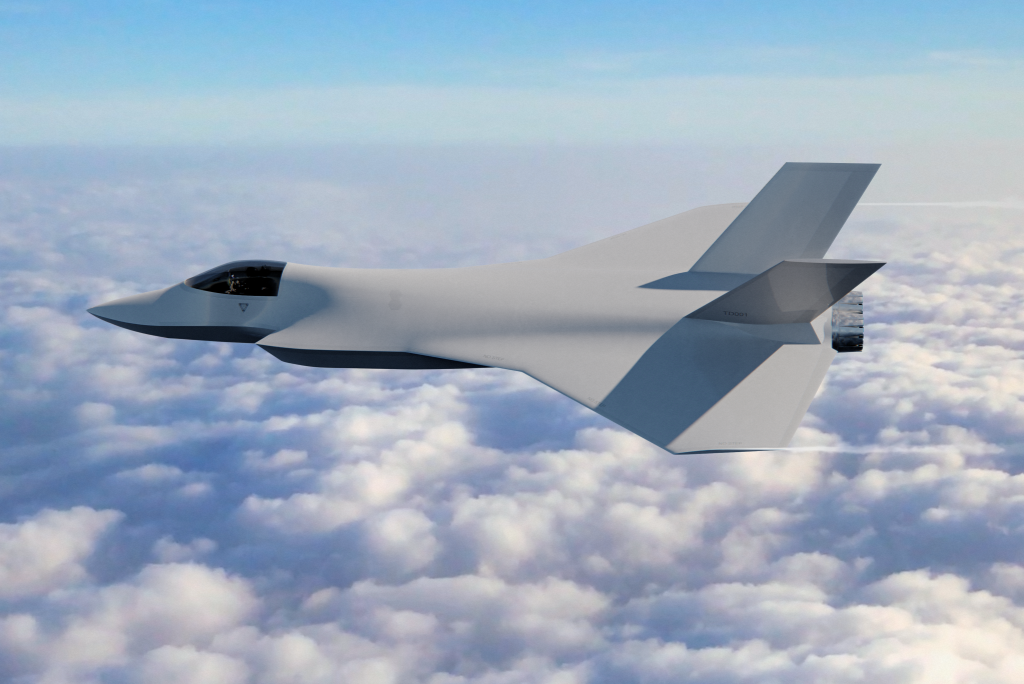
Team Tempest partners today announced significant progress across a series of advanced technology programmes that are helping to mature the critical capabilities required for the UK’s Future Combat Air System (FCAS) and support the nation’s leading role within the Global Combat Air Programme (GCAP).
Team Tempest brings together the UK Ministry of Defence (MOD), BAE Systems, Leonardo, MBDA and Rolls-Royce in a unique partnership, combining government, industry and technological expertise to deliver the next generation of sovereign combat air capability.
Since its launch in 2018, Team Tempest has transformed UK combat air development by accelerating innovation, advancing collaboration and digital engineering approaches, and investing in the advanced skills need to maintain the UK’s strategic advantage in air power.
The partnership also strengthens the UK’s defence industrial base, creating technologies, capabilities and expertise that benefit not only defence and aerospace sectors, but the wider economy as well.
The latest programme milestones demonstrate tangible progress across key technology areas which underpin the UK’s future combat air capability, including:
1. The final assembly of around half of the main aircraft structure for the UK Combat Air Demonstrator – the first crewed combat aircraft in 40 years. Over 11,500 parts have been designed to-date, totally around 90% of the aircraft’s overall weight with many of these being developed through the UK supply chain. Completion of the first robotically assembled component in its Factory of the Future, representing a pioneering industry achievement. The component is scheduled to undergo structural testing later this year alongside one of the wings.
2. A landmark achievement as the Excalibur Flight Test Aircraft, the UK’s state-of-the-art flying laboratory, completes its modifications and next stage of flight trials ready to test cutting-edge integrated sensing and communications systems for the next generation fighter.
3. Delivering critical propulsion milestones, utilising lessons learnt through the Orpheus demonstrator to progress the design of the GCAP engine demonstrator.
Together, these developments will inform the delivery of GCAP, reducing the risk to the programme, while also ensuring the Royal Air Force remains equipped to meet future operational challenges in an increasingly complex and contested environment.
Commenting on the developments, Richard Berthon, Director of Future Combat Air, UK Ministry of Defence said:
“These achievements demonstrate the pace and scale of progress being delivered through the Team Tempest enterprise. From advanced digital manufacturing and flight testing to next-generation propulsion technologies, we are maturing the critical capabilities needed to deliver a world-leading Future Combat Air System for the UK.
The expertise, skills and technologies being developed today are not only reducing risk for GCAP, they are strengthening our sovereign combat air capability and ensuring the UK remains at the forefront of air power innovation for decades to come.”
The work builds on the UK’s sovereign combat air expertise and supports the long-term development of technologies, skills and industrial capabilities that will be critical to delivering GCAP and ensure the UK can maintain Freedom of Action and operational advantage for decades to come.
photo courteys BAE System
