

This is an excerpt from Critical Terrorism Studies: A Dictionary by Lee Jarvis and Alice Martini. Available in all good book stores, and via free download from E-International Relations.
Hamas
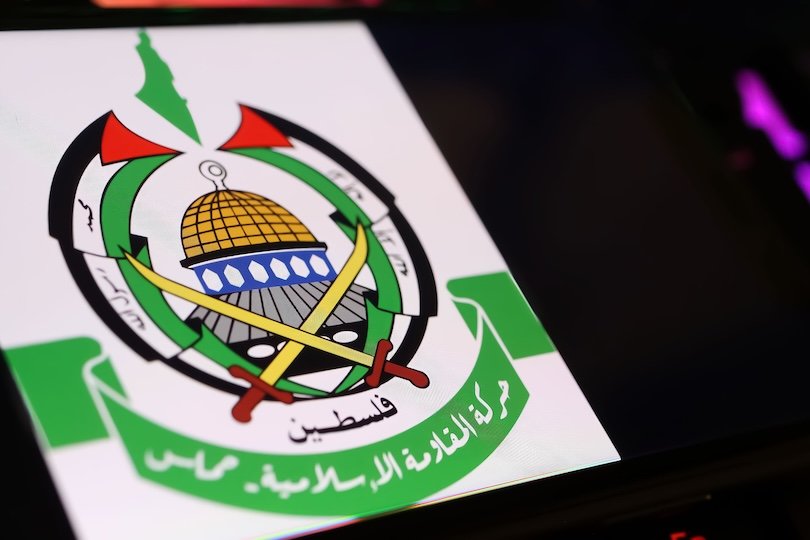
Hamas, an acronym for Harakat al-Muqawamah al-Islamiyya, meaning Islamic Resistance Movement, is a Palestinian Islamist political and militant organisation founded in 1987 during the First Intifada – a Palestinian uprising against Israeli occupation. Hamas combines political, social, and military activities, advocating for Palestinian self-determination and the establishment of a sovereign Palestinian state. The group operates both a political wing which has been responsible for governance in Gaza, and an armed wing, which has conducted various forms of violence and resistance. CTS scholars have argued that Hamas’ humanitarian aid, social welfare, and governance structures complicate reductive portrayals of the group as a purely terrorist entity, raising questions about legitimacy, sovereignty, and state-building in contested territories (Gunning 2023).
Hamas came to power in the Gaza Strip in 2007 following a conflict with the Fatah-led Palestinian Authority, which created a political division between Gaza (controlled by Hamas) and the West Bank (controlled by the Palestinian Authority). This posture changed in 2017 when the two organisations signed a reconciliation agreement. Another important recent date is 7 October 2023, the date of the Hamas-led attack on Israel – one of the deadliest examples of non-state terrorism that led to almost 1200 fatalities. The 7 October attack led to a sustained military offensive by Israel in Gaza and beyond that was responsible for over 50,000 deaths by March 2025 according to a Hamas estimate, as well as the resurgence of conflict between Hamas and Fatah (Gunning 2023).
The US, the EU, Israel, and the UK are amongst the actors that have designated Hamas a terrorist organisation, citing its use of violence against civilians and its armed resistance against Israel. Others, however, including Norway and Brazil, have viewed Hamas as a legitimate resistance movement against occupation, highlighting its social services and political role within Palestinian society. One of the reasons for the difference is whether states distinguish between the political and armed ‘wings’ of Hamas: seeing the entire organisation and its activities as ‘terrorist’, or limiting this label to its violences.
For CTS, Hamas represents a case where the application of the ‘terrorism’ label is contested and reflects local and international power asymmetries. In fact, this case reflects how the label is often applied to non-state actors while ignoring or legitimising state violence, such as the Israeli occupation and settler colonialism of Palestinian territories. In this case, the labelling of Hamas – rather than its actions – as ‘terrorist’ may obscure the historical contexts of colonialism, dispossession, and political struggle that shape Palestinian resistance. This also leads to reflection on how counterterrorism narratives around Hamas are used to justify military interventions, siege policies, and the criminalisation of Palestinian populations.
7 October 2023
7 October 2023 is the date of a major Hamas-led attack on Israel: an act of violence that resulted in over 1100 fatalities, over 700 injuries, and over 250 hostages being taken to Gaza from where the attack had originated. The attack began with the firing of more than 4000 rockets against military and civilian targets. This was accompanied by strikes on the security infrastructure guarding the Gaza border through drones and more conventional means, and followed by an attack involving hundreds of fighters by land, sea, and air. The fighters targeted military bases, kibbutzim, urban targets, and public gatherings including the Nova music festival. The 7 October attack is widely seen to be the deadliest attack on Jewish people since the Holocaust, with victims including nationals from dozens of countries around the world. As with earlier events such as 9/11, the date has been widely used as the name of the attack, with its anniversary continuing to be marked in some countries with expressions of sympathy and grief.
The immediate aftermath of the 7 October attack saw leaders of states around the world condemn the violence and offer their sympathies. The UK Prime Minister, Rishi Sunak (2023), for instance, made the following remarks at a North London synagogue: “The people who support Hamas are fully responsible for this appalling attack. They are not militants. They are not freedom fighters. They are terrorists. And their barbaric acts are acts of evil. There is no other word to describe what we have seen.”
Israel’s response to the attack centred on a sustained and overwhelming military offensive upon Gaza and subsequently in Southern Lebanon and beyond. This response – which generated tens of thousands of deaths (Moench 2024), the destruction of much of Gaza’s infrastructure, the forced resettlement of its population, acute food insecurity and mass starvation (Stamatopoulou-Robbins 2024), and further deaths through lack of access to treatment for chronic disease (Stamatopoulou-Robbins 2024) – saw sympathy for Israel replaced by criticism, outrage and anger within the international community, academia, human rights organisations, and citizens around the world. At the time of writing, three quarters of the world’s states recognised the State of Palestine, with many countries – including France and Australia – moving toward recognition because of Israel’s response to the 7 October attacks.
One of the immediate rhetorical responses to 7 October was the widespread invocation of events such as 9/11 and the 1929 Hebron massacre as metaphors through which to understand the attacks. This is not unusual: historical analogies are common within political discourse, providing valuable cognitive shortcuts for those seeking to interpret and communicate the meaning of complex events. Indeed, 9/11 itself was frequently compared to other traumatic moments in the American historical experience, particularly the surprise 1941 attack on Pearl Harbor that drew the US into the Second World War. We should always be attentive to the rhetorical work done by historical analogies, and recognise that these are chosen rather than inevitable. In this case, the connection with 9/11 contributed to the positioning of the 7 October violence as an unexpected, unprecedented, and unforgivable surprise attack by terrorists that must be met with sustained military force. This understanding received criticism from critical terrorism scholars and other observers because it removes important contextual and other information from events – including Gaza’s political history and the lived experience therein.
Although published critical terrorism scholarship on the 7 October attacks is still emerging, a number of themes are already apparent. One is sustained criticism of Israel’s response to the attacks, which has been interpreted as an extension of the post-9/11 war on terror and evidence of the lack of constraints upon the violences waged by powerful states (Ahmed 2025). A second theme has been to use these events to highlight the historical neglect of Palestine within critical scholarship on terrorism (Aitlhadj et al 2024).
Further reading
Gunning, Jeroen. 2023. Hamas in Politics: Democracy, Religion, Violence. La Vergne: Hurst Publishers.
Schotten, C. Heike. 2024. “Zionism and the War(s) on Terror: Extinction Phobias, Anti-Muslim Racism, and Critical Scholarship”. Critical Studies on Terrorism 17 (4): 996–1018.
Ahmed, Shamila. 2025. “The Middle East: Terrorism, International Law, and the Cosmopolitan Myth”. Critical Studies on Terrorism, February, 1–24.
Aitlhadj, Layla, Alice Finden, Sophie Haspeslagh, Amna Kaleem, Rabea M. Khan, Akram Salhab, C. Heike Schotten, Somdeep Sen, and Lisa Stampnitzky. 2024. “Where Is Palestine in Critical Terrorism Studies? A Roundtable Conversation”. Critical Studies on Terrorism, June, 1–26.
