

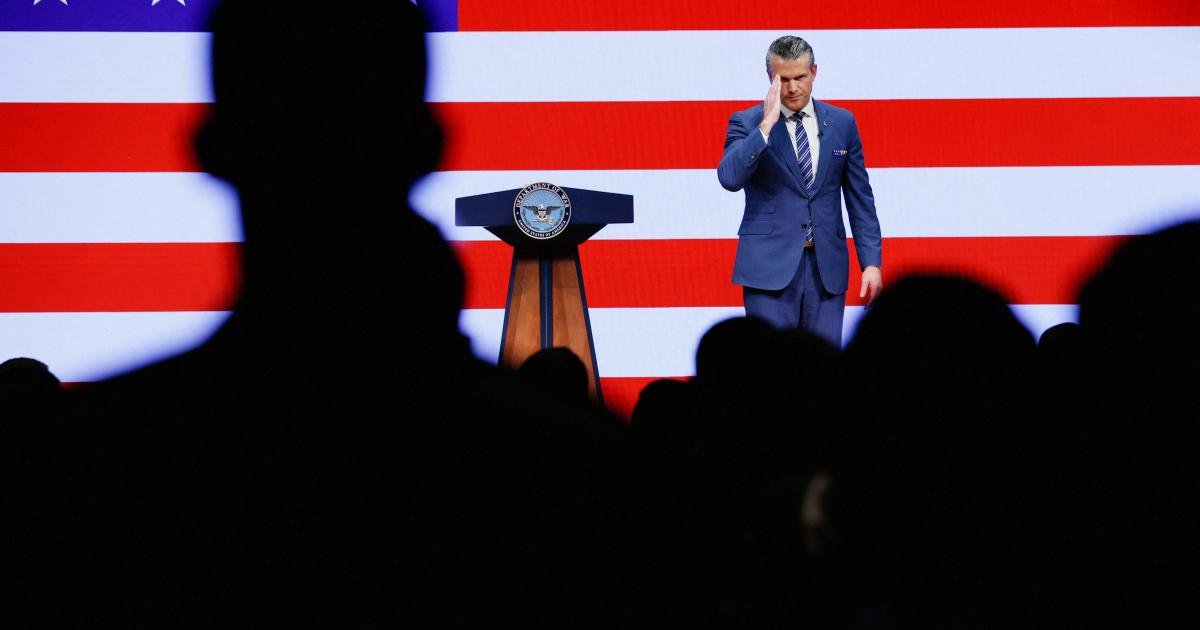
Article I of the Constitution gives Congress sweeping powers to raise, maintain, and equip the armed forces. But the current Congress has done little to use these powers. The intense, frenetic activity of the past two years has undone established norms for military professionalism and may shape civil-military relations for a generation. Yet it has been led almost entirely by the executive branch with little meaningful involvement or pushback from Capitol Hill.
The next Congress will face great pressure to reverse course and in doing so could shore up the historical norms of American civil-military relations. The concern today is not a military that is defying civilians—the traditional bogeyman of American political leaders since the founding of the Republic. Rather, the fear is that the thousands of changes, large and small, that the executive branch has so rapidly imposed on the military may end up undermining the professional ethic on which the U.S. form of civilian control depends.
The incoming Congress can push U.S. civil-military relations in a healthier direction by overseeing the executive branch more actively than its predecessor. It can also help restore trust with both the military and the American public if it focuses on providing greater transparency, takes a more assertive role in conducting defense policy, reinforces the military’s nonpartisan professional ethic, and establishes a new bipartisan commission to reinvigorate the military profession. Congress has the power and authority to improve civil-military relations. The new session, starting in January, is its chance to use them before the damage becomes irreversible.
UNCHECKED AND UNBALANCED
When Pete Hegseth was sworn in as defense secretary, in 2025, he had strong views on the changes he wanted to make, alleging the military had lost its warfighting focus because of misguided priorities and “wokeism.” He has pursued those changes with a zeal not seen since Robert McNamara held the office from 1961 to 1968. Hegseth has reshaped the senior officer ranks: he has fired or removed nearly two dozen senior general and flag officers, and he has gotten rid of more than one-quarter of all four-star generals, the chairman of the Joint Chiefs of Staff, and the chiefs of the U.S. Air Force, Army, and Navy. He has fired, removed, or pulled from promotion lists approximately 80 general and flag officers, a disproportionate number of whom are women or racial minorities. Hegseth has justified those removals in the vaguest of terms, which has convinced most observers that the real reason amounts to little more than because these officers followed the lawful orders of the previous administration. No previous defense secretary has removed such large swaths of the officer corps who honored their oaths to the Constitution and faithfully implemented policies decided by their civilian superiors.
Hegseth has moved quickly, largely ignoring traditional bureaucratic practices, including rigorous staff reviews and close involvement of congressional stakeholders in changing the trajectory of the Pentagon’s policymaking and in conducting military operations. Amid ongoing questions about the legality of the boat strikes the Trump administration ordered against suspected drug traffickers last fall as well as civilian casualties in America’s war with Iran, it is critical to note that Hegseth had already fired the senior, most experienced military legal advisers—sending a warning shot across the bow of younger judge advocates—and begun a significant overhaul of the Judge Advocate General Corps. Ever since the My Lai massacre during the Vietnam War, when U.S. soldiers committed war crimes by killing hundreds of unarmed Vietnamese civilians, the JAG Corps had been empowered to help U.S. personnel abide by the laws of armed conflict. By demoting senior legal advisers and selecting less qualified personnel in those positions, however, the military’s legal voice is more marginalized today than it has been since the Vietnam War. The Trump administration has also centralized decision-making, including by placing routine actions in highly classified channels that minimize opportunities for input and deliberation.
Hegseth has done all of this—and much more—with essentially no pushback from the uniformed military or Pentagon bureaucracy. On the one hand, this shows just how strongly officers accept the principle of civilian control—a posture reinforced precisely because Hegseth has proved willing to punish even unsupported allegations of military insubordination. On the other hand, his actions have had a chilling effect across the force, creating an environment in which the military is reluctant to offer candid advice or uphold its professional standards and values when they are at odds with administration priorities. Indeed, in a highly unusual move, former government officials have publicly called for military leaders to do more to stand up to the Trump administration, even at the cost of undermining civilian control. As we argued in Foreign Affairs in 2024, however, the military cannot save democracy; only Congress and the courts can and should check presidential power.
TAKING BACK CONTROL
Hegseth has enjoyed the unwavering support of President Donald Trump. But the real secret to Hegseth’s success in imposing his agenda on the Pentagon has been the unwillingness of the current Congress to exercise its Article I responsibilities or defend its traditional prerogatives. The incoming Congress can take a different approach by using its power to build trust, transparency, and accountability.
Most pressing, Congress should exercise its ability to appropriately scrutinize defense policymaking, much of which has been shrouded in secrecy under the Trump administration. The current Congress has held very few oversight hearings, and the ones that have taken place have been exchanges of insults rather than of information. When secrecy is genuinely needed, of course, Congress can issue classified briefings and hold closed hearings. But open hearings, when properly conducted, are necessary in cases in which Congress is entitled to answers, for example, about military personnel policy.
In the case of the boat strikes in the Caribbean and the eastern Pacific, Congress needs to know what advice senior military commanders and their JAGs offered, and it must understand how JAG firings affect the process by which commanders discern the lawfulness of military operations. Thus far, the Defense Department has provided only superficial explanations of its actions that basically amount to “we did this because we thought it was necessary.” Such justifications fall far short of what the Constitution envisions as the best way to hold the armed forces accountable: open debate that subjects policies to rigorous scrutiny. Greater transparency would also bolster public confidence in defense policy and remove pressure on the military to have to act as a potential savior of the Constitution.
The next Congress could shore up the historical norms of American civil-military relations.
Congress should also faithfully fulfill its “advice and consent” function established in Article II, which authorizes the Senate to review and confirm presidential nominations and promotions. Hegseth’s unprecedented intervention in the meritocratic promotion process has dramatically altered the military’s upper echelons. Congress has normalized this interference, perhaps unwittingly, by approving Hegseth’s altered promotion lists with voice votes and little inquiry.
The president and the defense secretary must retain the right to remove officers in whom they have lost confidence. But Congress has the right to know why a change was made, and it needs to ensure that promotions and removals follow established law and procedures rather than ideological or partisan considerations. Because Congress created the process for meritocratic promotions, it can push the executive branch to adhere to that process. It should mandate that the defense secretary provide a written explanation, supported by documented evidence of misconduct or derogatory information, for any off-cycle removals of senior officers and restore senior officers’ promotions, which would limit unjustified removals and uphold the merit-based selection process. Improving transparency in personnel policy will have one further salutary effect: it will help retain those qualified military personnel who are wondering whether they should give up on a military career that could be derailed by politicized and capricious promotion decisions.
In addition, Congress has a responsibility to police the well-established principle and practice that the uniformed military must stay away from partisan politics. The military has largely tried to uphold this norm, even as civilian political leaders have sought to draw it into partisan debates. Each time, for instance, Hegseth attacks the Biden administration before military audiences, most of whom served during the Biden era, he unwittingly further degrades the nonpartisan ethic on which service members’ oaths of office—and thus their subordination to his own policies—depend. It sends a message that embracing partisan rhetoric is key to career advancement and signals to the public that the military is not a neutral constituency. Congress can police the executive branch’s politicization of the military through inquiries, hearings, and even measures that prohibit the use of appropriated funds for events that treat military audiences like campaign rallies. Members of Congress can also call out for censure uniformed military personnel who behave in a blatantly partisan fashion regardless of whether they support or oppose the party the member supports.
Most ambitiously, Congress should reclaim its role in making defense policy rather than only providing oversight. Legislative deference to the executive in times of war is not unique to Trump’s second term, but Congress should close loopholes that allow presidents to expand their power unchecked. If Congress wants to provide a legal justification to allow the use of force in Iran or against drug traffickers in the Caribbean or the eastern Pacific Ocean, it should do so. If it believes these actions are unlawful, however, it must use its legislative powers to constrain them. Similarly, Congress should amend the Insurrection Act to clarify and restrict the domestic use of military force. The president must retain the ability to respond to true national emergencies, but Congress should narrow the criteria for deployment of troops on U.S. soil to avoid potential abuse.
TYING A BLUE RIBBON
Even as it becomes more active, Congress must strenuously avoid involving the military in a partisan war. Members of Congress should not press the military to criticize the president or the defense secretary in the made-for-social-media-outrage hearings that have become commonplace in Washington. It is right and proper for Congress to ask members of the military to share their personal and professional opinions on key strategic questions. But too often, politicians try to turn officers into combatants in their partisan battles, hiding behind the armed forces to defend partisan agendas or attacking military leaders who have simply carried out the lawful orders of a president from another party. Above all, Congress should not ask the military to be a check on civilian power. Only other civilians have the authority to do that.
Congress cannot solve longer-term issues through the day-to-day legislative process. But it has other tools to more holistically improve civil-military relations and identify the most essential reforms. The time-honored strategy is to set up a nonpartisan blue-ribbon commission to analyze problems, draw attention to their importance, and recommend solutions. A national commission on the state of the professional military ethic, co-chaired by three respected individuals—one with experience in a Republican administration, one with experience in a Democratic administration, and one retired senior military leader—would have the freedom to investigate how recent developments, including attempts to politicize the military and sustain a high tempo of operations, have affected the force. At a minimum, the commission should explore impacts on recruiting and retention; professional military education, fellowships in civilian institutions, and general and flag officer development; the JAG Corps’ ability to provide commanders with candid, independent legal advice; and the state of the National Guard.
The current Congress has not shown enough interest in exercising its own powers. The next one can make a clean break and rediscover the body’s ability to carry out the functions that are necessary to improve civil-military relations. The new Congress can demonstrate its commitment to fulfilling its responsibilities by providing ordinary legislative oversight in the raising, maintaining, and equipping of the armed forces. And on thorny issues that require a bigger response, Congress can start the reform process by creating a national commission to lay out an agenda for action. Even after two years of enormous strain that has eroded best practices in civil-military relations, the next Congress is well positioned to reverse the slide and shore up Americans’ faith in a nonpartisan, professional military that is essential to democracy.
Loading…
