

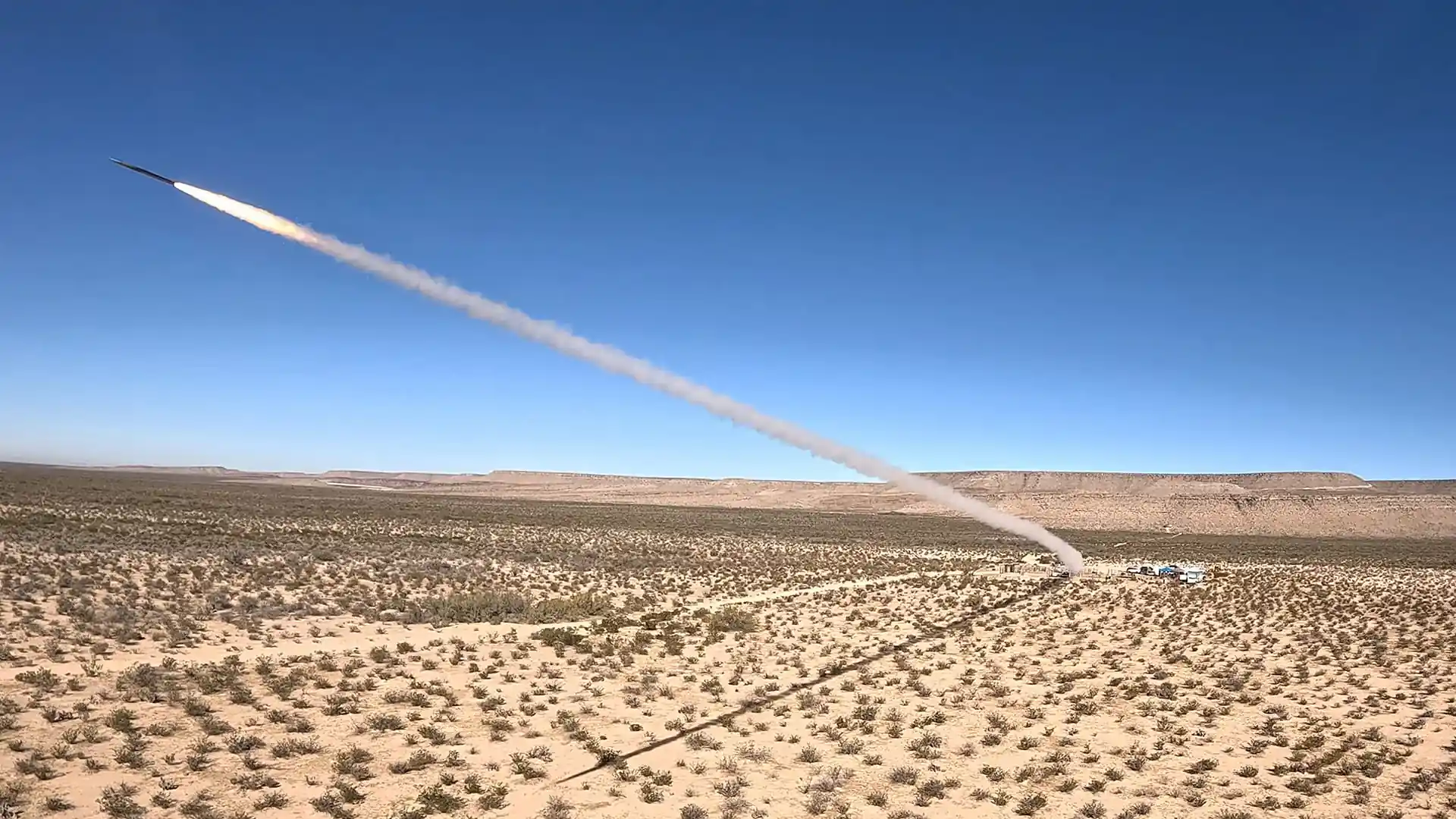
Defense Feeds, Tucson – The U.S. Army NGSRI Missile Achieves Perfect Test Record milestone during the Army’s effort to replace the long-serving FIM-92 Stinger, successfully intercepting every target during its latest series of developmental tests.
The achievement strengthens confidence in the Next Generation Short-Range Interceptor (NGSRI) program as the Army seeks a more capable air defense weapon able to counter modern aircraft, helicopters, cruise missiles and the rapidly expanding threat posed by unmanned aerial systems.
The successful trials come as short-range air defense regains prominence across the world’s militaries. Recent conflicts have demonstrated that low-flying aerial threats can place frontline formations, logistics hubs and critical infrastructure at significant risk, increasing demand for faster and more adaptable interceptors.
NGSRI Missile Moves Closer to Replacing the Stinger
The NGSRI missile is being developed to succeed the FIM-92 Stinger, a shoulder-fired air defense weapon that has served the U.S. military and allied nations for decades. While the Stinger has proven highly effective across multiple conflicts, evolving aerial threats have exposed the need for improved range, seeker performance and engagement flexibility.
According to the latest test results, Raytheon’s interceptor successfully engaged every assigned target during developmental evaluations. Although testing will continue before operational fielding, consistent performance during this phase represents an important indicator of program maturity.
Beyond improved interception capability, the NGSRI is expected to incorporate modern digital electronics, enhanced guidance technologies and increased resistance to electronic countermeasures. These features are intended to improve effectiveness against aircraft employing advanced defensive techniques as well as smaller and less predictable threats such as unmanned aerial systems.
The new interceptor is also expected to integrate with multiple Army air defense platforms, providing commanders with greater flexibility across different operational environments.

Modern Air Defense Requires More Than Legacy MANPADS
The progress of the NGSRI missile reflects broader changes in battlefield air defense. Traditional man-portable air defense systems were originally optimized to engage helicopters and fixed-wing aircraft operating at relatively low altitude. Today’s threat environment is considerably more complex.
Military forces must now prepare to counter a diverse mix of drones, loitering munitions, cruise missiles and low-observable aerial platforms, many of which can approach from multiple directions simultaneously. These threats often operate with smaller radar signatures, slower flight profiles or greater maneuverability than earlier generations of aircraft.
As a result, modern interceptors require more advanced seekers, improved processing power and faster target acquisition to maintain effectiveness under increasingly demanding conditions.
The Army’s investment in the NGSRI also reflects the growing importance of layered air defense. Rather than relying on a single system, military planners increasingly combine long-range interceptors, medium-range systems and highly mobile short-range weapons to create overlapping defensive coverage capable of addressing different categories of aerial threats.
Air Defense Modernization Gains Momentum
The NGSRI missile program forms part of a wider modernization effort aimed at rebuilding U.S. Army air defense capabilities after years of renewed focus on large-scale conventional operations.
Recent combat experience has reinforced the importance of protecting maneuver forces against persistent aerial surveillance and precision-guided attacks. Small drones capable of identifying troop movements or directing long-range fires have become common features of the modern battlefield, increasing the demand for responsive short-range interception systems.
For Raytheon, the successful developmental campaign reinforces its position as a leading supplier of tactical missile systems while supporting one of the Army’s highest-priority modernization initiatives. Continued testing will evaluate reliability, operational integration and production readiness before the interceptor enters broader service.
From a strategic perspective, replacing the Stinger is not simply about introducing a newer missile. It represents an effort to ensure frontline forces remain protected against an increasingly diverse range of airborne threats that continue to evolve in speed, maneuverability and sophistication.
If future evaluations continue to produce similar results, the NGSRI missile is well positioned to become the backbone of the U.S. Army’s next generation of short-range air defense.
By combining improved seeker technology, greater resilience against electronic warfare and the flexibility to engage multiple categories of aerial targets, the system is expected to play a central role in protecting maneuver units throughout future high-intensity operations.
