

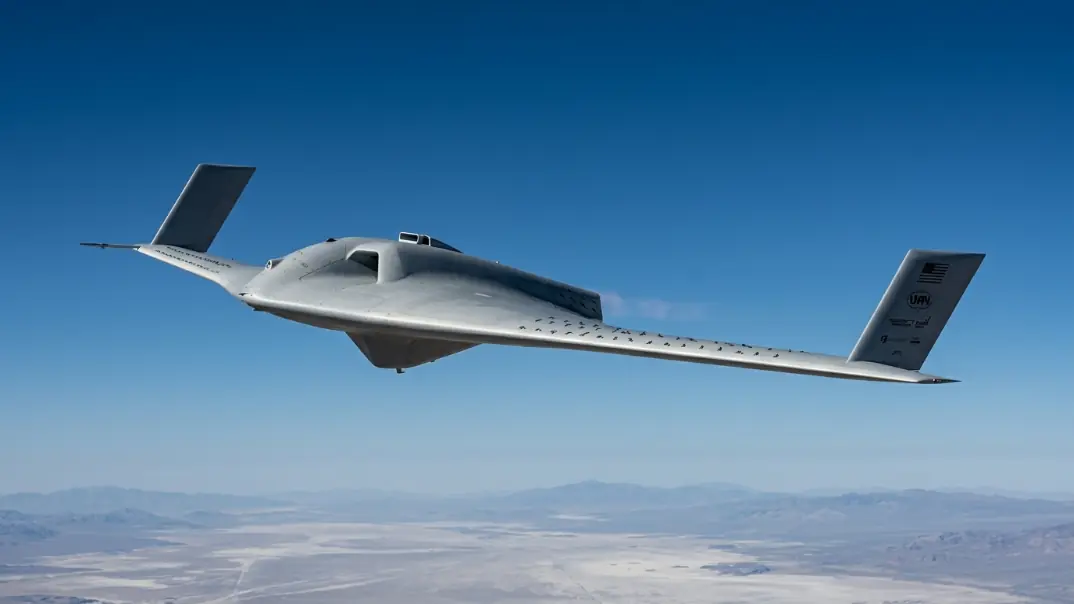
Defense Feeds, Washington — The United States has moved another step forward in advanced unmanned aviation as the US DARPA XRQ-73 hybrid drone advances stealth flight program following its successful first flight test.
Developed under a DARPA initiative, the XRQ-73 represents a new generation of autonomous aircraft focused on stealth, endurance and hybrid propulsion technology. The test highlights growing efforts to reshape future aerial operations through low-observable unmanned systems.
The XRQ-73 is designed as an experimental platform combining stealth features with a hybrid-electric propulsion system. This approach aims to reduce acoustic and thermal signatures while improving operational efficiency. As militaries increasingly prioritize survivability in contested airspace, technologies that lower detectability are becoming more important.
The successful flight demonstrates progress in integrating advanced propulsion and autonomous flight systems into a single platform. While details about the aircraft remain limited, the program reflects broader efforts to develop next-generation unmanned systems capable of operating in highly contested environments. The achievement is likely to attract significant attention within defense and aerospace sectors.
Hybrid Propulsion Supports Stealth and Efficiency
One of the defining features of the XRQ-73 is its hybrid propulsion system. Unlike traditional drones powered entirely by conventional engines, hybrid systems combine multiple energy sources to improve efficiency and reduce signatures. This can enhance endurance while making the aircraft harder to detect.
Lower acoustic output is particularly valuable for stealth operations. Reducing engine noise makes it more difficult for adversaries to identify and track unmanned aircraft. Combined with low-observable shaping, this increases survivability during reconnaissance or strike missions.
Hybrid propulsion may also improve fuel efficiency and operational range. Longer endurance allows drones to remain on station for extended periods without requiring frequent refueling or recovery. This is especially important for intelligence, surveillance and reconnaissance missions.
In addition, the integration of hybrid systems reflects broader aerospace trends toward advanced energy management. Future military aircraft are expected to rely increasingly on efficient and adaptable propulsion technologies. The XRQ-73 appears to align closely with this direction.

DARPA Focuses on Next-Generation Autonomous Systems
DARPA has long played a major role in advancing experimental military technologies, and the XRQ-73 program continues that tradition. The agency frequently develops concepts intended to shape future operational capabilities rather than immediate deployment. Programs like this often influence broader defense innovation efforts.
The XRQ-73 appears to focus on combining autonomy with survivability. Autonomous systems are becoming increasingly important in modern warfare because they reduce risk to personnel while expanding operational flexibility. When paired with stealth features, these systems can operate in areas that may be too dangerous for crewed aircraft.
Advanced autonomy also supports more complex mission profiles. Future drones may need to navigate contested environments, adapt to changing conditions and coordinate with other platforms in real time. Developing these capabilities is becoming a central objective in military aviation research.
The successful first flight suggests that the program is progressing beyond the conceptual phase. Flight testing provides valuable data on aerodynamics, propulsion and control systems. This information will shape future development and potential operational applications.
Stealth Drones Could Shape Future Air Warfare
The emergence of platforms like the XRQ-73 reflects a broader transformation in air combat strategy. Future conflicts are expected to involve heavily defended airspace with advanced radar and missile systems. Surviving in these environments will require aircraft with reduced signatures and greater autonomy.
Stealth drones provide several advantages over traditional platforms. They can conduct reconnaissance, electronic warfare or strike missions while minimizing exposure to enemy defenses. Their unmanned nature also reduces the political and operational risks associated with pilot losses.
The growing emphasis on low-observable unmanned systems is likely to influence military planning worldwide. Countries are increasingly investing in autonomous aircraft capable of operating alongside crewed fighters or independently. This trend is reshaping the future of aerial warfare.
At the same time, developing effective stealth drones presents significant technical challenges. Balancing performance, endurance and low observability requires advanced engineering and extensive testing. Programs like the XRQ-73 are essential for refining these technologies.
The first successful flight of the XRQ-73 marks an important milestone in this evolving field. While much about the platform remains undisclosed, the test demonstrates continued progress in hybrid propulsion and stealth aviation. As autonomous technologies advance, aircraft like the XRQ-73 could become a key part of future military operations.
