

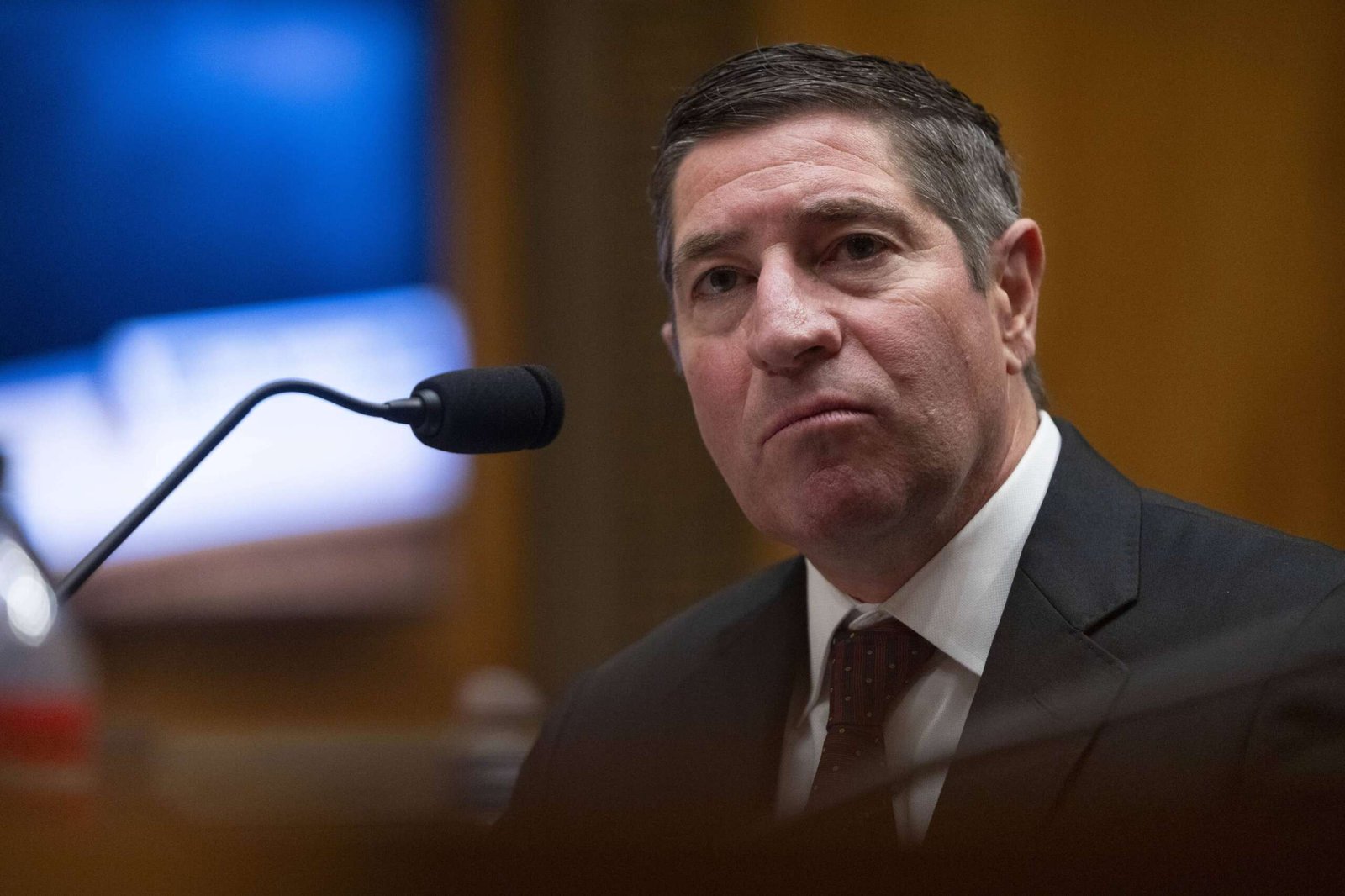
In the coming months, the Office of Personnel Management is expected to release a reworked version of its employee viewpoint survey that’s more focused on granular data and delivering realtime feedback.
OPM Director Scott Kupor said his agency has been refining the survey to focus more on micro-level questions in order to more effectively gauge employee opinion.
“The goal is to get to a decision on what the kind of new survey format looks like so that we have time to do something over the course of this fiscal year for sure,” Kupor told Federal News Network in an interview Wednesday.
OPM cancelled last year’s Federal Employee Viewpoint Survey in August after months of postponements.
Kupor said the previous iteration of the survey may have been good at generating talking points, but it wasn’t effective at spurring behavioral change or measuring things like performance-based culture or merit hiring.
“What you really care about, at least what I care about, is at the individual manager level, do we know that … people understand their objectives? Are they held accountable to those objectives? Do they understand kind of how their objectives tie into the overall objectives of the organization?” he said on The Federal Drive with Terry Gerton. “It’s really at the micro level that we care about these things.”
Kupor also stressed the importance of the concept of employee surveys and being able to understand what’s happening at the “fingertips” of the federal government. He said since FEVS’ cancellation, agencies have been conducting short pulse surveys to identify problems that need to be fixed.
In the absence of FEVS, good government groups tried to take the temperature of the workforce. In a survey of 11,000 federal workers conducted by the Partnership for Public Service in late 2025, overall employee engagement scored 32 out of 100. The partnership says about 60% of the respondents to that questionnaire, which was intended to partly fill the void left by the FEVS cancellation, said they were less engaged than the year prior.
In December 2025, a survey of over 2,000 Foreign Service Office employees found reduced morale among 98% of respondents.
Kupor said FEVS would be returning during a discussion focused on Public Service Recognition Week, in which he acknowledged the return of the Presidential Rank Awards as well as some of the major shifts in the federal workforce and how it’s managed.
“Despite a lot of the changes, and I recognize that there have been a number of changes for people over the course of the year, at the end of the day, we have a really dedicated workforce of people who show up every day and are trying to do their best job on behalf of the American people,” he said
Kupor discussed the changes OPM oversaw in how agencies reward high-achieving workers, explaining that the administration is fostering a “high performance culture.”
“One of the things that we’ve seen for a long period of time is we haven’t done a great job of differentiating people who are truly going above and beyond and doing fantastic work on a regular basis,” Kupor said. “And so, as we think about that, that means making sure that as we think about bonuses and reward systems and recognition, that we disproportionately bring those to the people who truly are going above and beyond in delivering it for the American people.”
He said the administration is trying to eliminate “proxies for performance,” and roll back rules including tenure requirements to further incentivize workers.
“One of the things we’re trying to do is eliminate what are called time-in-grade restrictions, which would make it much easier, that if somebody does a fantastic job, even if they’ve only been doing that job for six months, we shouldn’t have a time-based restriction to our ability to promote and recognize that individual,” Kupor said.
Kupor also defended agencies’ abilities to hold workers accountable in order to accomplish their missions – including by firing or relocating them.
“There’s no question in any organization there are always some individuals who may not be doing the things that we need them to do, and we either have to help them improve that behavior or, in some cases, they may no longer be able to perform those duties accurately,” he said. “We have to have an ability to remove them from the organization and bring somebody in who can do that.”
Kupor acknowledged that many federal agencies have been asked to do more with fewer hands. He said the administration has been particularly focused on eliminating regulations and removing unnecessary tasks and responsibilities from agencies’ “plates” in order to lighten their loads.
“So often, some kind of new requirement comes out, we add that to our work, and quite frankly, the modus operandi has been go back to Congress and ask them for more headcount in order to address that,” he explained. “So thing number one I think in creating efficiency is going through and figuring out, maybe we’re doing 20 things today, and maybe there are two or three that, quite frankly, we’ve been doing for a long time, but the honest answer is they’re not statutorily required, they’re not adding a lot of value. We have to be comfortable with the idea that there are some things that are kind of going to come off our plate.”
Kupor also laid out how some of OPM’s new initiatives and technology tools like artificial intelligence that are already increasing efficiency.
He said his office is particularly focused on hiring people who can help develop and maintain those new technologies, as well as early career workers.
“Much of our federal workforce enters retirement eligibility over the next 5 or 10 or 15 years, we really do need to bring in kind of new people who can hopefully kind of begin to carry out the work on behalf of the American people,” Kupor said. “I think there’s an opportunity for us to do a better job of reinvigorating a public service orientation in our earlier career folks.”
Copyright
© 2026 Federal News Network. All rights reserved. This website is not intended for users located within the European Economic Area.
