

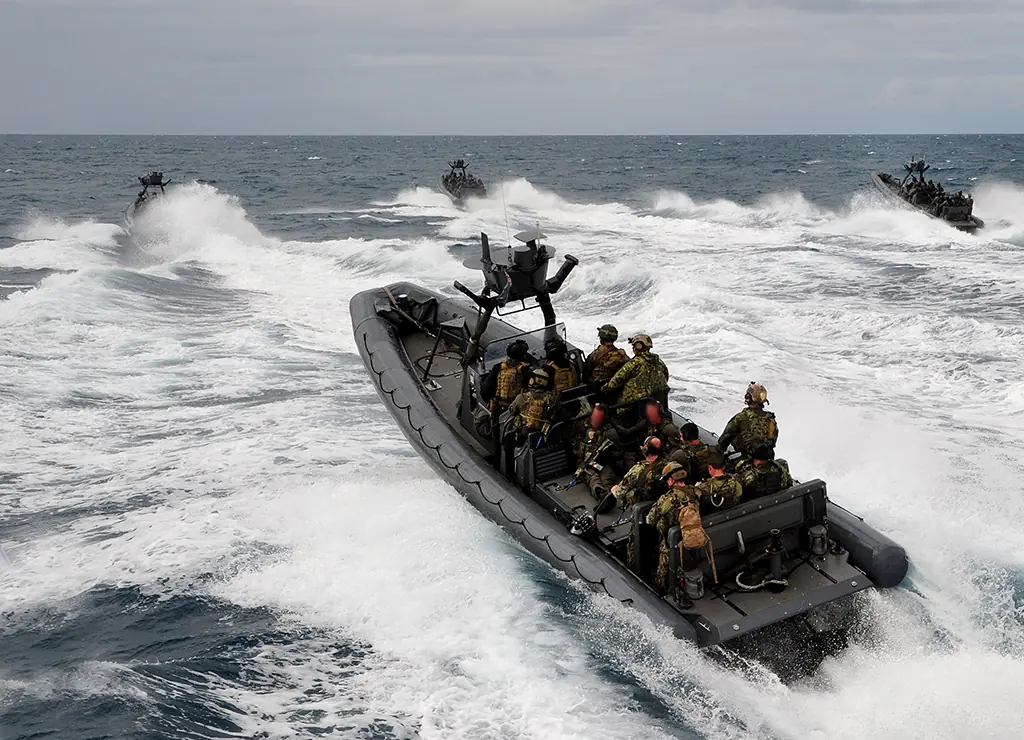
Defense Feeds, Washington — The US Navy is strengthening its small craft fleet as the US Navy RHIB boats order expands maritime operations capability through a new program valued at up to $650 million.
The plan includes the procurement of as many as 474 composite rigid-hull inflatable boats, widely known as RHIBs. These vessels play a critical role in a wide range of naval missions, from security operations to logistics and special operations support.
RHIBs are among the most versatile platforms in naval service. Their speed, maneuverability and durability make them well suited for operations in both open waters and coastal environments. As maritime challenges continue to evolve, the demand for flexible and rapidly deployable assets is increasing.
The latest procurement reflects the Navy’s effort to maintain readiness across all levels of operation. While large warships often receive the most attention, smaller vessels like RHIBs are essential for day-to-day missions. The expansion of this fleet highlights their growing importance.
Versatile Role of RHIB Boats in Naval Operations
Rigid-hull inflatable boats are used across a wide spectrum of naval activities. They are commonly deployed for boarding operations, search and rescue missions and harbor security. Their ability to operate in shallow waters allows them to access areas that larger ships cannot reach.
In addition, RHIBs support special operations forces by providing rapid insertion and extraction capabilities. Their speed and low profile make them suitable for missions requiring discretion and agility. This versatility makes them a valuable asset in both peacetime and conflict scenarios.
The boats are also used for logistics and personnel transport. Moving supplies and crew between ships or from ship to shore is a routine but essential task. RHIBs provide an efficient solution for these operations.
Their design combines a solid hull with inflatable tubes, offering both stability and shock absorption. This allows them to operate effectively in challenging sea conditions. As a result, they remain reliable even in demanding environments.

$650 Million Program Enhances Fleet Readiness
The scale of the $650 million procurement underscores the importance of RHIBs within the Navy’s operational framework. Acquiring up to 474 boats ensures that sufficient numbers are available across different fleets and regions. This supports consistent readiness and rapid response capability.
The use of composite materials in these vessels offers additional benefits. Composite construction reduces weight while maintaining strength and durability. This improves performance and lowers maintenance requirements over time.
The program also reflects a long-term approach to fleet sustainment. By investing in new vessels, the Navy can replace aging boats and standardize equipment across units. This enhances efficiency in training, maintenance and logistics.
In addition, the procurement supports the defense industrial base. Building a large number of vessels requires coordination between manufacturers and suppliers. This contributes to maintaining production capacity and technical expertise.
Strategic Importance of Small Craft in Modern Warfare
While often overshadowed by larger ships, small craft like RHIBs play a crucial role in modern naval strategy. They provide the flexibility needed to respond quickly to emerging situations. In environments where speed and adaptability are critical, these vessels are indispensable.
The increasing focus on littoral and coastal operations further highlights their importance. Many modern conflicts and security challenges occur in these areas, where large ships may have limited access. RHIBs allow the Navy to operate effectively in such environments.
They also support broader concepts such as distributed maritime operations. By enabling smaller, decentralized units to perform a variety of tasks, RHIBs contribute to a more resilient force structure. This approach reduces reliance on a limited number of large platforms.
Looking ahead, the continued investment in RHIBs suggests that their role will remain significant. Advances in materials, propulsion and communication systems may further enhance their capabilities. This ensures that they remain relevant in future operational scenarios.
The US Navy’s decision to expand its RHIB fleet demonstrates a clear understanding of the value of versatile and reliable small craft. In an increasingly complex maritime environment, maintaining capability at every level is essential. These vessels, though smaller in size, are a key part of that overall strategy.
