

On April 25, armed groups launched near-simultaneous attacks against military installations and key strategic sites across Mali. Claimed by Jama’at Nusrat al-Islam wal-Muslimin, a jihadist group, and conducted in coordination with Tuareg separatist forces from the Front de libération de l’Azawad, the attacks targeted multiple nodes across the country’s security architecture simultaneously, from the capital Bamako to Gao, Mopti, and Kidal.
While the attacks themselves were a shock, they should be understood as the logical endpoint of a deteriorating security trajectory that Western governments have watched from an ever-increasing distance. The geographic scope of the attacks, the targeting of senior officials, and the coordination between jihadist and separatist forces reflect a step change in insurgent capability that has been building for years.
Western governments now face a predicament of their own making. As the regional security environment has worsened, their capacity to respond has diminished in direct proportion. The systematic breakdown of military and diplomatic relationships with Sahelian states has left Western actors increasingly unable to see, shape, or contain events in what has become the world’s most lethal theatre of jihadist violence.
That breakdown is the consequence of a counter-terrorism approach that prioritised operations centered on force and violence while failing to address the governance conditions sustaining insurgency. With the prospect of state collapse in Mali, and the emergence of durable insurgent sanctuary, no longer hypothetical, the case for a fundamental recalibration of Western counter-terrorism strategy in the Sahel has now been made clear.
From Intervention to Expulsion
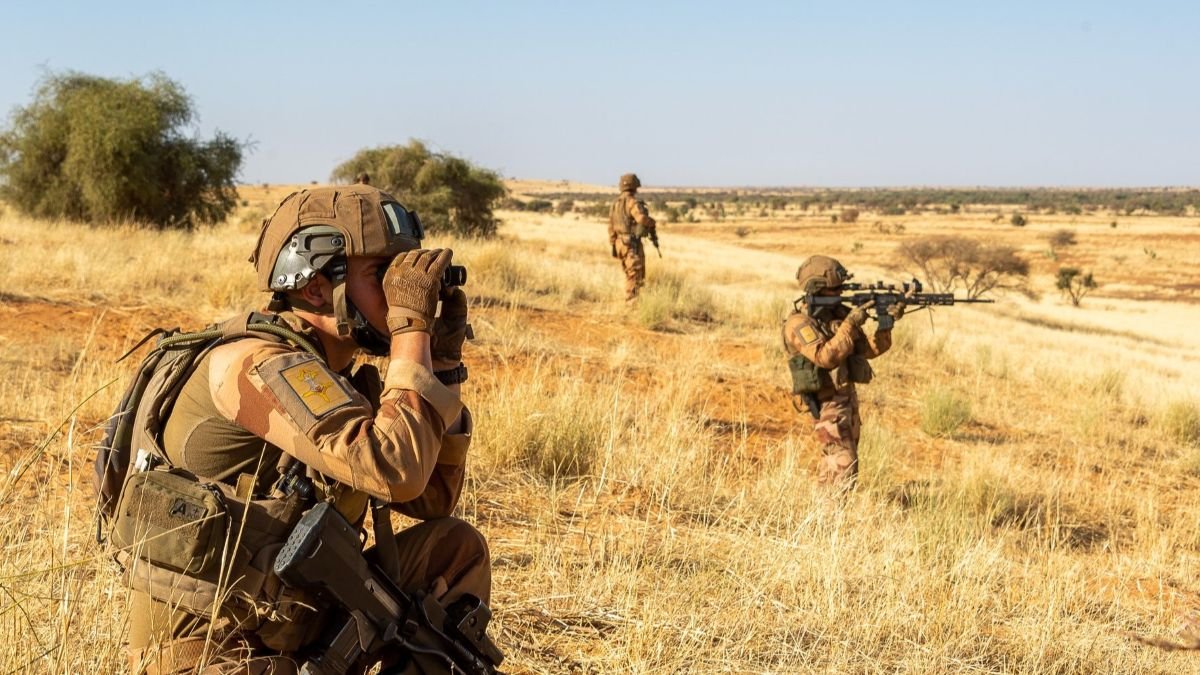
Over the past three years, Western military presence and influence across the central Sahel have collapsed. French forces withdrew from Mali in 2022 after the military junta demanded its exit, ending Operation Barkhane. Burkina Faso followed in 2023, expelling French forces. The United States completed its withdrawal from Niger in September 2024, abandoning key drone and intelligence hubs after its military government terminated their bilateral agreement. In December 2025, Mali and Burkina Faso imposed reciprocal travel bans on U.S. citizens, responding to expanded American restrictions on both countries. Intersecting political, security, and governance failures have driven this Western expulsion from the Sahel.
For one, Western Sahelian counter-terrorism operations fell into the trap that often proves crippling for such missions. Poverty, lack of social services, and corrupt governance are key drivers of terrorism and defining characteristics of much of the Sahelian region. Western counter-terrorism priorities in the Sahel focused on kinetic engagements, while aid and development assistance were second-order priorities. The 2023 classification of the significant staffing gaps in the U.S. Department of State’s African offices as a national security priority captures this imbalance. With scarce employment opportunities and collapsed state services, jihadi groups offering wages and governance attracted participation, or at least tolerance, from populations whose choices were constrained by economic desperation rather than ideological conviction.
Western expulsion also coincided with a wave of military coups that swept the region. New military juntas across the region grew frustrated with Western partners, both for failing to improve security and for attaching political and governance conditions to their support.
The collective withdrawal of Mali, Burkina Faso, and Niger from the Economic Community of West African States and the formation of a trilateral security pact in 2024 spotlights this sentiment. Often seen as a decisive political shift away from Western alignment, the three states criticized the Economic Community of West African States for falling under the “influence of foreign powers.”
As Western forces departed, Russia moved in. The Wagner Group, and now Russia’s Africa Corps, has replaced Western countries as the primary external security partner of Mali, Burkina Faso, and Niger. The attraction was straightforward: Russia offered regime protection without the democracy conditions or governance reform requirements that Western partnerships demanded.
Yet, despite intensive Russian-sponsored disinformation campaigns extolling Russia’s success in combatting militant actors, this substitution has not stabilized the region. Africa Corps has often suffered military setbacks against militants while concurrently engaging in repressive tactics against civilians. In July 2024, for example, a combination of local rebels and jihadist fighters killed as many as 84 Russian mercenaries and nearly 50 Malian soldiers in Tinzawaten, along Mali’s border with Algeria. Violence involving Russian mercenaries in Mali has increased 81 percent, with a 65 percent increase in reported fatalities in recent years. The April 2026 attacks make this ineffectiveness concrete. As militants seized Kidal, Russian paramilitary forces took casualties and withdrew, ceding the town to insurgents.
These events reflect the fact that Russia has not only not improved on the Western counterterrorism record, but has worsened an already catastrophic security environment while providing cover for the junta’s worst instincts.
The Epicenter of Global Terrorism
The consequences of these trend lines are now measurable. The Sahel now accounts for roughly half of all terrorism-related deaths worldwide, a dramatic shift from just over a decade ago, when it represented only a marginal share. Terrorism-related deaths have increased nearly tenfold since 2019, with almost 20,000 fatalities recorded over that period and 3,885 deaths in 2024 alone. The region dominates, and tops, the Global Terrorism Index’s list of countries most impacted by terrorism. Accounting for approximately one-fifth of worldwide terrorism deaths for the second year in a row, Burkina Faso remains the country most affected by terrorism. Niger recorded the largest increase in terrorism fatalities globally in 2024, rising 94 percent to 930 deaths, reversing earlier improvements. Mali ranked fourth worldwide.
These figures do not reflect gradual deterioration. Instead, they mark a categorical transformation in the geographic concentration of global jihadist violence. The Sahel now exceeds Afghanistan, Iraq, and Syria combined in terrorism-related deaths.
Jamaat Nusrat al-Islam wal-Muslimin has emerged as the dominant jihadist actor in the Sahel, outpacing Islamic State in the Greater Sahara, Islamic State West Africa Province, and Boko Haram in both territorial reach and operational sophistication. Formed in 2017 as an al-Qaeda-affiliated coalition, Jamaat Nusrat al-Islam wal-Muslimin has exploited fragile governance, institutional weakness, and political instability to entrench itself across Mali and expand into neighboring states. In recent years, it has been able to conduct coordinated attacks against military, economic, and symbolic targets across Mali. In 2024, the group conducted a successful operation in Mali’s capital, Bamako, targeting a military airport and training center. In 2025, it launched simultaneous assaults on seven locations spanning hundreds of kilometers in western Mali, targeting border towns near Senegal and Mauritania.
The group’s upward trajectory is not defined by lethality alone. The organization has developed de facto governance mechanisms in areas under its influence, levying taxes, regulating commerce, and enforcing social codes. It generates an estimated $18–35 million annually through extortion at transit corridors, artisanal mining taxation, and ransom kidnappings. This hybrid model, an insurgency combined with shadow governance, reflects consolidation rather than episodic violence.
The culmination of this expanding influence is evident in recent events across 2025 and 2026. In late 2025, Jama’at Nusrat al-Islam wal-Muslimin imposed a months-long siege on Bamako. While the group did not seize and hold the capital outright, it demonstrated the ability to disrupt the city through a sustained economic and fuel blockade. The objective here was not conquest, but coercive signalling: to show that the administrative and symbolic core of the Malian state lay within its operational reach.
More recent developments suggest a further escalation. As previously mentioned, in April 2026, attacks targeted military installations and strategic sites across Mali. Explosions and sustained gunfire were reported in Bamako and Kati, including around military bases and the international airport, while additional attacks occurred in Gao, Sévaré, and Mopti—locations that link northern conflict zones with the country’s economic and population centres.
The attacks on Bamako and Kati carry particular significance. As the centres of political authority and military command, these locations represent the core of the junta’s control. Strikes against leadership compounds and other high-value sites highlight the vulnerability of areas that would typically be considered secure. The reported killing of Malian Defence Minister Sadio Camara during the attacks further underscores the extent to which state institutions themselves are vulnerable to penetration and disruption. Even if such breaches are temporary, they can have disproportionate psychological and political effects by eroding confidence in the state’s ability to maintain security.
In the north, the Front de libération de l’Azawad—operating in coordination with JNIM—regained control of Kidal, a longstanding strategic stronghold. That Bamako and Kidal, separated by roughly 1,500 kilometres, were struck in a single coordinated offensive points to something beyond tactical sophistication. It reflects a shared judgment by actors with incompatible long-term objectives that the Malian state is now weak enough to attack from every direction at once.
The situation remains fluid, with the durability of this cooperation and insurgent control of captured territory remaining uncertain. However, the scale of the attacks, the loss of key territory, and the ability to strike high-profile targets reinforce the risk that state authority in Mali is becoming increasingly contested.
While Jamaat Nusrat al-Islam wal-Muslimin is the most successful actor within this ecosystem, it is not alone. In February 2026, Islamic State militants conducted an attack against Niger’s main international airport in Niamey, during which they reportedly “set off explosions and roamed freely among passenger planes.” The broader extremist landscape has led the United Nations to declare Africa as the “global epicentre of terrorism.”
This upward trend in violence is unfolding at a moment when Western countries possess fewer tools to shape outcomes. Intelligence footprints have contracted. Diplomatic relationships have frayed. Advisory roles have diminished. The overlap between withdrawal and escalation is difficult to dismiss as coincidence, with the steepest increases in territorial control and operational sophistication having unfolded during the same period in which Western military presence and intelligence infrastructure receded, replaced by a Russian alternative that has not proven any more successful.
U.S. Africa Command acknowledged such an interconnection and has noted that since the September 2024 withdrawal from Niger, it has lost its ability to monitor terrorist groups closely in the region. American surveillance from Air Base 201 in Agadez provided drone coverage across Mali, Burkina Faso, Niger, and into Nigeria’s terrorist-affected northeast, enabling pattern-of-life analysis, strike targeting, and early warning for cross-border movements. French special operations forces maintained ground intelligence networks that provided human intelligence, tactical assessments, and rapid reaction capabilities, now disrupted by their withdrawal. European partners contributed signals intelligence, tactical fusion centers, and counter-terrorism coordination mechanisms. All these systems depended on physical presence, regular diplomatic contact, military-to-military relationships, and host nation permissions that no longer exist.
The Risk of Jihadist State Control
Should Jamaat Nusrat al-Islam wal-Muslimin’s recent operational success continue, and it is able to supplant Mali’s government, it would be yet another example — alongside Afghanistan with the Taliban and Syria with Hay’at Tahrir al-Sham — of jihadists capturing nation-states. In both cases, Western policymakers were caught off guard and had little ability to shape outcomes. The same conditions are now emerging in Mali, raising the prospect of consequences that extend beyond the region.
Mali’s collapse would not be an isolated event. Burkina Faso and Niger, already governed by juntas facing their own insurgencies, share borders, ideological exposure, and governance deficits with Mali. A jihadist consolidation in one state would reduce the operational constraints on groups already active in the others, extending the sanctuary logic across a contiguous bloc of territory.
State-controlled sanctuary transforms operational capabilities in ways contested territory cannot. Plotting from areas where government forces contest control requires constant movement, dispersed resources, and operational security measures that limit planning sophistication. State sanctuary eliminates these constraints. Terrorist groups can establish permanent training infrastructure for specialized instruction in explosives, tactics, and external operations rather than conducting ad-hoc training in temporary locations. Leadership can coordinate openly without encrypted communications, allowing complex, multi-stage attack planning over extended timelines. Resource concentration and stockpiling become possible without fear of disruption from government raids.
It is these very conditions that have facilitated the deadliest terrorist attacks. Exploiting the stability of Taliban-run Afghanistan, al-Qaeda had years to plan the September 11 attacks, train operatives, and build international networks. Islamic State-controlled territory in Syria and Iraq similarly enabled planning for attacks in Paris and Brussels, resulting in 162 deaths collectively.
Jamaat Nusrat al-Islam wal-Muslimi’s strategic orientation has thus far been locally anchored, focused on displacing state authority and consolidating territorial control. It has not demonstrated the intent or operational architecture required to sustain external attack planning. That said, its al-Qaeda affiliation should not be discounted. Al-Qaeda maintains both the desire and the doctrine for attacks against Western targets, and a subordinate affiliate that achieves state-level sanctuary acquires the operational breathing room, stable logistics, and training infrastructure that transform aspirational ideology into executable planning. Ideology is not static, and an organization that has prioritized local consolidation under conditions of contested control may recalibrate its ambitions once those constraints are removed.
Though Jamaat Nusrat al-Islam wal-Muslimin is the most noticeable regional actor, it is not alone, and the Islamic State’s Sahelian presence exhibits a different threat logic. Since the collapse of its territorial caliphate, the Islamic State has reconstituted itself around the General Directorate of Provinces, an organizational superstructure that enables coordinated activity across regional affiliates simultaneously. External operations capacity within this architecture is a network-level resource, not a capability that any single affiliate must independently develop. An affiliate that achieves durable sanctuary does not need to build its own external operations pipeline from scratch. It provides the network with an additional node that the Islamic State’s central external operations apparatus can task and resource.
Together, this suggests that although the current trajectory in the Sahel should be understood as primarily a regional security and governance crisis, it is not a parochial one. Jihadist violence remains locally focused, and groups are presently oriented toward building territorial control, expanding southward, and displacing state authority within West Africa. However, both al-Qaeda and the Islamic State operate as transnational networks, and sustained sanctuary within the Sahel carries implications that extend beyond the immediate theatre.
Jamaat Nusrat al-Islam wal-Muslimin’s affiliation with al-Qaeda and the Islamic State Sahel’s integration into the General Directorate of Provinces architecture mean that territorial consolidation is not contained at the affiliate level. Sanctuary functions as an organizational asset, stabilizing leadership, enabling sustained training, and reducing the operational constraints that often limit more complex planning. Even where day-to-day violence remains regionally focused, these conditions can generate network-level effects across both organizations.
The Sahel is therefore best understood as a regional fight with transnational consequences. Treating it solely as a localized security problem risks overlooking how durable sanctuary can expand the operational margin of globally networked groups.
Policy Options
The threat assessment above points to a direct conclusion. Western counter-terrorism policy has not been designed to prevent this outcome. It has, in measurable ways, accelerated it. Recalibration is not optional.
Current debates tend to frame the problem as a choice between two approaches: limited re-engagement with junta-led states to preserve intelligence access, or a strategic pivot toward coastal West African partners to contain spillover. Each approach has its own merits and challenges, but neither is sufficient on its own.
The United States, for one, is legally limited by Section 7008 restrictions, which block certain forms of aid to coup regimes. That said, there are ways to circumvent such restraints, and some have called for a more pragmatic approach. The United States could pursue legal, limited, and nonlethal security cooperation, providing critical enablers such as force protection, military medical assistance, logistical support, training on improvised explosive device response, or humanitarian aid.
Early signs of renewed engagement between Sahelian states and the United States have already begun to emerge. Disillusioned with the unkept promises offered by Moscow, certain Sahelian junta regimes have sought limited rapprochement with their former Western partners. A February 2026 visit to Mali by the State Department’s head of its Bureau of African Affairs reflected a “desire to chart a new course in the bilateral relationship and move past policy missteps.” Since this visit, the United States has lifted sanctions on key Malian officials with reported ties to Russian mercenaries, and a renewed deal allowing intelligence cooperation targeting jihadist groups is reportedly nearing completion. These initiatives are underscored by the Trump administration’s 2025 National Security Strategy, which highlights a wariness of “resurgent Islamist terrorist activity in parts of Africa while avoiding any long-term American presence or commitments.”
Others advocate pivoting resources toward coastal states facing spillover threats. Deeper engagement with littoral West African countries such as Benin, Ghana, and Côte d’Ivoire offers Western policymakers the opportunity to maintain a regional presence even as historical partners shift away from the Western camp. This approach accepts loss of influence in coup-affected states while attempting to prevent cascade effects through bolstering neighbors.
Using this logic, Benin faces the most immediate pressure, with Jamaat Nusrat al-Islam wal-Muslimin claiming responsibility for attacks that killed 28 soldiers in January 2025 in its northern border regions. Similarly, Togo has seen increased jihadist activity in recent years, recording ten attacks resulting in 52 deaths in 2024, up from 12 the previous year. Both states share borders with Burkina Faso, where Jamaat Nusrat al-Islam wal-Muslimin operates with relative impunity, making geographic spillover inevitable without proactive governance strengthening in vulnerable border districts.
The Accra Initiative — a regional counter-terrorism cooperation framework including Benin, Burkina Faso, Côte d’Ivoire, Ghana, and Togo — provides an existing institutional architecture that offers Western partners a coordination platform which could “easily” evolve into a more formal exchange center to support strategic planning and synchronize security responses. In particular, for coastal African countries, mobility and ineffective use of existing air capabilities have been highlighted as acute vulnerabilities. Western partners can provide more training and operational know-how designed to increase the effectiveness of existing tools such as drones, light aircraft, and intelligence, surveillance, and reconnaissance platforms. In turn, this will reduce the ability of jihadist actors to move freely across monitored areas and exploit cross-border sanctuaries.
Neither option, however, addresses the fundamental problem that has led to this moment or fully contains its risks. From Washington’s perspective, the drivers of re-engagement in the Sahel appear to be counter-terrorism concerns, and perhaps economic ambitions, specifically a desire to develop the region’s critical minerals. However, this re-engagement does not appear to be underwritten by democratic principles or concerns over Sahelian regimes’ flagrant and systematic human rights violations. Massad Boulos, a senior State Department official, has noted “democracy is always appreciated, but our policy is not to interfere in the internal affairs of other countries. People are free to choose whatever system is appropriate for them.”
To that end, Washington may be taking a page out of the Kremlin’s book, focusing less on engaging around a normative agenda and simply prioritizing a transactional partnership. As perceived moral pressures were a key sticking point in driving the breakdown of Western and Sahelian engagement, this thinking may boost renewed engagement between the United States and the Sahel region. Such an approach, however, would likely not result in long-term security, as it once again serves to simply treat the symptoms of a regional extremism surge rather than its root causes. Instead, a purely transactional approach rewards extractive junta governance while entrenching the corruption and service delivery failures that make insurgent alternatives attractive to marginalized populations.
Additionally, even if engagement shifts away from Sahelian juntas towards littoral West Africa, deploying the same security-first model that delivered two decades of deterioration in the Sahel would simply relocate the failure to coastal states facing identical governance challenges.
Alternatively, policymakers need to invert their African counter-terrorism approach. Western governments should maintain a minimal but persistent intelligence and security presence where access remains possible, including pragmatic engagement with Sahelian regimes, to avoid strategic blindness. But this must be paired with sustained investment in governance capacity, service provision, and economic resilience. This does not imply large-scale state-building, but it does mean recognizing that security operations cannot act as a substitute for governance. Where the state does not provide basic services, justice, and economic opportunity, insurgent groups will continue to fill the gap.
The United Nations has identified several governance investments with unusually strong policy logic for preventing African engagement with insurgent actors. These include strengthening district-level administration and education continuity in vulnerable border regions, and improving judicial capacity so disputes are resolved through courts rather than insurgent mediation. It also includes expanding economic alternatives and reducing security force abuses that function as recruitment accelerators.
The difficulties in implementing such policy options should not be minimized. Costs are substantial, political support for sustained engagement is unclear, success is not guaranteed, and the timeframe must be measured in decades. But the alternative is now visible. On April 25, jihadist and separatist forces struck Mali’s capital, killed its defense minister, and seized a major northern city in a single coordinated offensive. Western governments watched from a distance, with no presence, no leverage, and no meaningful ability to shape what happened next. That is not a strategic constraint to be managed. It is the direct result of two decades of prioritizing kinetic engagement over the governance conditions that determine whether insurgencies grow or contract. Continuing that trajectory will not produce different results. It will produce more of what the world witnessed on April 25 in Mali and eventually beyond it.
James Paterson, Ph.D., is a research associate at the Lowy Institute’s Transnational Challenge program. He holds a Ph.D. from Monash University, and his research focuses on insurgent adaptability and organizational dynamics.
Image: Armée Française via Wikimedia Commons
