

The Trump administration is setting governmentwide limits on how many federal employees can receive top marks for their annual performance evaluations.
But the likelihood of a federal employee receiving a bonus based on their most recent review varies considerably agency-by-agency.
In February, the Office of Personnel Management outlined plans to remove a current ban on a “forced distribution” of federal employee performance evaluations. This plan would limit how many employees can be ranked as high performers in their annual reviews.
Federal employees at several agencies are in the process of receiving financial awards, based on last year’s evaluations, before OPM’s changes went into effect.
A Federal News Network review of policy changes at several agencies shows leadership has considerable discretion in how they choose to recognize top-performing employees.
While some agencies are limiting how many employees receive a bump in their salaries, others are broadening the pool of employees who are eligible to receive a onetime bonus.
HHS caps step-increase awards
The Department of Health and Human Services is limiting the number of top-performing employees who can move up the General Schedule pay scale for achieving top marks on their latest evaluation.
According to internal emails obtained by Federal News Network, only 3% of employees eligible to receive a quality step increase (QSI) will actually get one.
Employees who receive a QSI are given a “within-grade increase,” and move a step up on the General Services pay scale used for most civilian federal employees.
Agencies award fewer QSIs than onetime cash or time-off awards because the employees who receive them are given a bump in salary.
To qualify for a QSI, employees must receive the highest rating of record available.
At the CDC’s National Center for Chronic Disease Prevention and Health Promotion, an office that tracks chronic conditions like cancer and diabetes, 167 employees out of a total workforce of more than 1,000 were eligible. About half of the center’s QSI-eligible employees asked to receive one.
However, the center was limited to awarding QSIs to four employees this year. The center’s leadership relied on a “computer-generated, randomized selection process” to pick the four QSI recipients from those eligible to receive them.
“We recognize that many highly deserving employees elected this award option, and we sincerely wish it were possible to honor every preference,” the center told employees in an email obtained by Federal News Network. “We understand that this outcome may be disappointing, and we want to emphasize that selection is not a reflection of your work or merit. Every employee who elected a QSI has demonstrated performance worthy of recognition.”
All other employees who elected to receive a QSI, but were not selected, will receive their secondary award election. Instead of a QSI, employees can also request a onetime cash payment, a time-off award or a combination of both.
One CDC employee told Federal News Network that the odds of getting a QSI were like “winning the lottery.”
“For me, I think the future as a CDC employee is so uncertain that cash feels like a smarter option,” the CDC employee said. “Previously, it was a no-brainer to take the QSI.”
Seth Kroop, deputy director for management, operations, communications and policy at CDC’s National Center for Emerging and Zoonotic Infectious Diseases (NCEZID), told employees in a recent all-hands meeting that there was a “pretty large difference” between the number of employees eligible to receive a QSI, and the number of employees who received one.
“The bottom line was, there will be far fewer QSI slots than eligible employees across the agency. This was an HHS decision and HHS policy that they shared with us,” Kroop said.
HHS did not immediately respond to a request for comment.
SSA digs deeper into its budget to give more bonuses
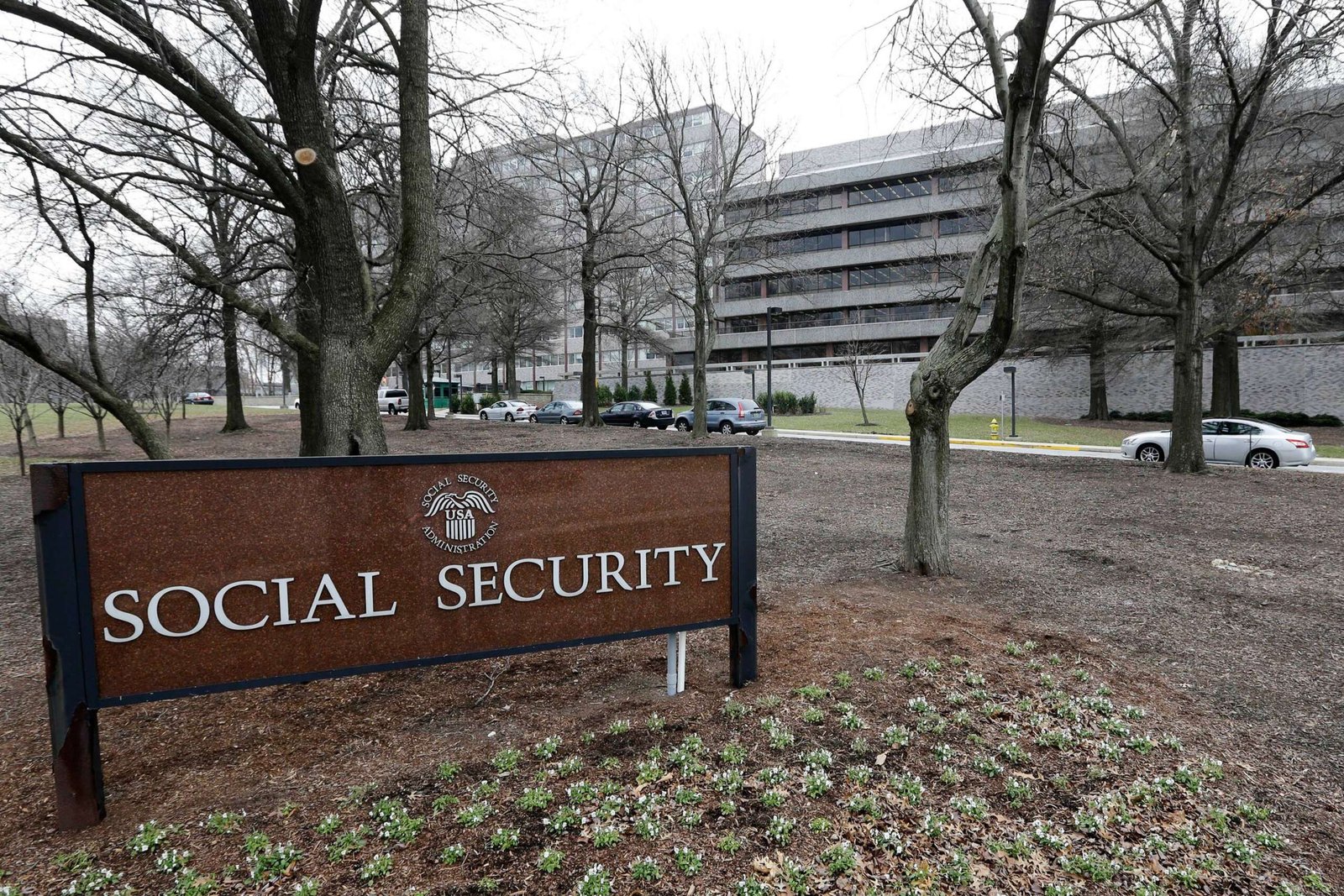
Meanwhile, the Social Security Administration is setting aside additional funds this year to ensure a larger-than-usual pool of employees receives performance awards.
Florence Felix-Lawson, the agency’s chief human capital officer, told employees in an email last month that they would be getting performance awards earlier than usual, at the direction of SSA Commissioner Frank Bisignano.
“His goal was simple: to recognize employees as soon as possible,” Felix-Lawson wrote.
According to the email, SSA expanded eligibility to include employees who received a 3.5 or 3.7 performance evaluation, “reflecting a broader commitment to recognizing strong performance across the agency.”
By making more employees eligible for awards, but with the same amount of funding, SSA officials realized that some employees would be getting lower bonuses than they received in prior years.
“As we reviewed the outcomes, the commissioner emphasized the importance of ensuring that awards remain meaningful — particularly for strong performers across the 4-level,” Felix-Lawson wrote. “At his direction, and in partnership with our budget team, we have secured additional funding to supplement awards for employees rated 4.0 through 4.7.”
Previously, awards at the 4-level began at 0.5% of base salary. With this additional funding, they now range from 1.2% to 1.5%:
- 4.0: 1.2% of base salary
- 4.3: 1.3% of base salary
- 4.5: 1.4% of base salary
- 4.7: 1.5% of base salary
- 5.0: 2.0% of base salary (unchanged)
Felix-Lawson wrote that performance awards are discretionary and “are not guaranteed year to year and are not intended to mirror prior awards.”
“When we are able to provide them, we do so thoughtfully, balancing recognition, performance differentiation, and available resources. We are fortunate to have a commissioner who strongly supports recognizing the contributions of this workforce, and this additional investment reflects that commitment,” she wrote.
VA sets bonus criteria for top-rated executives
The Department of Veterans Affairs is also setting the bonus criteria for its senior leadership.
In a Jan. 29 memo, VA wrote its senior leadership, members of the Senior Executive Service and SES-equivalent employees would be eligible for a 12-20% performance award if they received top marks on their most recent performance evaluation.
A review of internal documents obtained by Federal News Network shows that performance awards for several SES employees went from 10% in prior years to to 20%.
VA Press Secretary Quinn Slaven said in a statement that under President Donald Trump, “VA rates and rewards employees based on how well they serve veterans.”
“The Biden Administration’s VA handed out top-performance ratings and huge bonuses like candy – whether employees deserved them or not. In fact, under Biden, over 98% of senior VA employees received perfect or near-perfect ratings. No serious person would call that a system for developing, incentivizing and rewarding top talent,” Slaven said.
In a town hall meeting in February, VA Secretary Doug Collins told employees that the department under his leadership is making effective use of recruitment and retention incentives.
“We want to keep good people, and we’re going to do that in every possible way,” Collins said.
Copyright
© 2026 Federal News Network. All rights reserved. This website is not intended for users located within the European Economic Area.
