

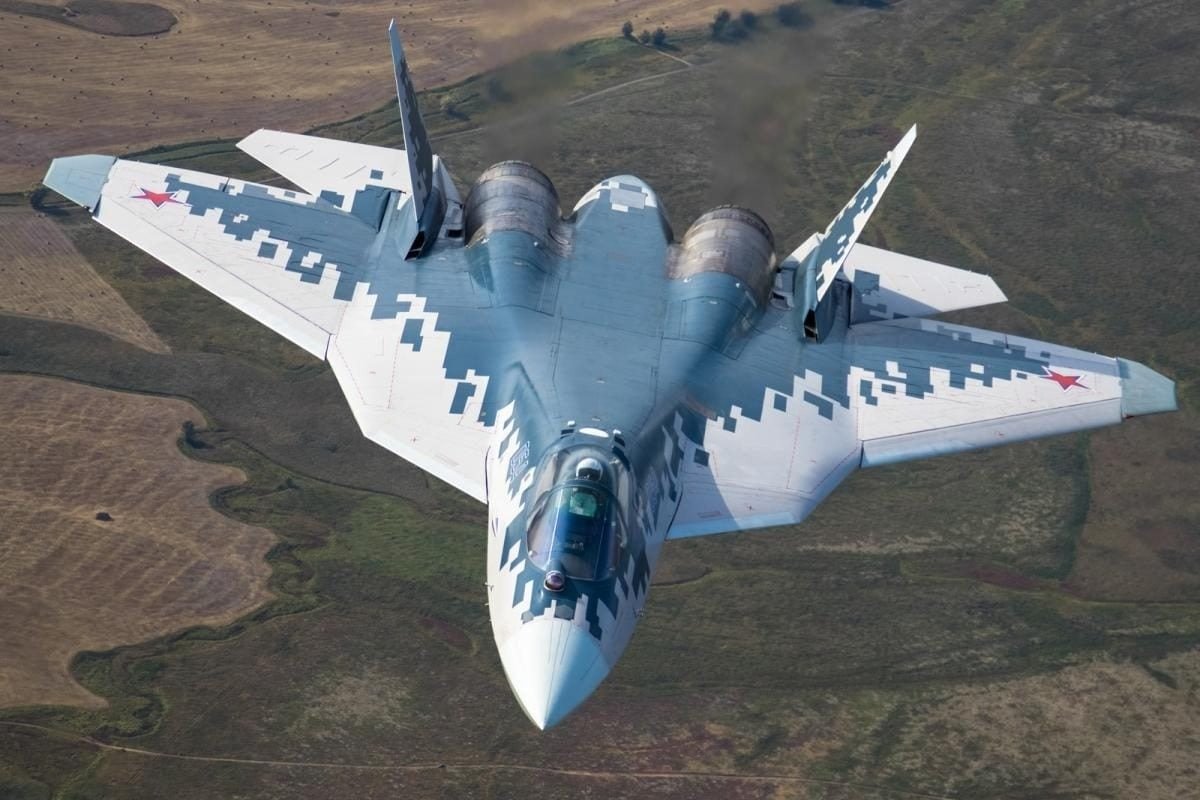

Russia’s United Aircraft Corporation recently stated, “Several countries have already contracted this fighter. The list of customers is steadily expanding,” but to date, only one has been confirmed for the Su-57E.
To date, the only confirmed foreign customer of the Su-57E is Algeria, which reportedly signed a US$2 billion contract for 14 aircraft. However, deliveries have been repeatedly delayed due to technical issues, production problems, and the need to adapt avionics to customer requirements. Five Su-35s have been offered as an alternative.
In Komsomolsk-on-Amur in Siberia, the roof collapsed following a serious fire on 11-12 April in one of the workshops at the Gagarin Aviation Plant (KnAAP), which manufactures the Su-57.
This refers to Plant No. 46, a vital part of the production process for manufacturing composite components for the Su-57. Damage to or destruction of the workshop would directly halt or considerably delay the assembly of Su-57 airframes.

The plant only delivered two Su-57 fighter jets to the Russian Aerospace Forces in 2025, and the total number of Su-57s produced, including prototypes, is estimated at 20-25 aircraft. Two of these were damaged by a Ukrainian drone strike in June 2024, and it is unclear whether they have been repaired.
The Su-57, NATO reporting name Felon, was designed as a stealthy twin-engine multirole fighter and began as the T50, which first flew in January 2010. Although India signed a draft joint development contract in 2008, it lost interest in the Su-57 in 2019 after the protracted development and production.
Two aircraft were deployed to Syria in 2018 for combat evaluation, but the type has seen limited operations over Ukraine.
by David Oliver
