

Over the course of six weeks of war between Iran, Israel, and the United States, Saudi Arabia’s restraint has perplexed some onlookers. After all, the war almost immediately spilled into the Persian Gulf. Iran’s retaliatory attacks on infrastructure in Gulf countries—and then Tehran’s closure and Washington’s subsequent blockade of the Strait of Hormuz—ended a security paradigm that had dominated for decades and facilitated the astonishing rise of the Gulf’s economies. Although Saudi Arabia allowed U.S. forces to use its bases, it refrained from directly responding to Iran’s strikes. It issued terse diplomatic warnings, but unlike the United Arab Emirates, it did not call for the continuation of the war or promise to join the U.S.-Israeli campaign. And unlike Oman and Qatar, it has limited its diplomatic outreach to Iran, instead tacitly supporting Pakistan’s efforts to mediate a de-escalation.
Riyadh’s posture is, to some degree, an extension of a long-standing hedging strategy. Saudi Arabia fears a too-strong Iran; after a 2016 rupture, the two countries did not normalize diplomatic relations until 2023, in an agreement brokered by China. But since then, it has come to fear Israel’s ambitions in the Middle East, as well. It does not want either Iran or Israel to become a regional hegemon. The war has disrupted Riyadh’s entente with Tehran, but neither capital wants to see relations collapse entirely.
Until now, Riyadh has adopted a wait-and-see posture. It is keen to maintain its cease-fire with the Houthis, a product of normalizing its ties with Iran. Saudi Arabia’s outright participation in the war would invite Houthi attacks, which would imperil Saudi oil exports transiting the Red Sea. But it knows it cannot trust the United States to guarantee Middle East security, either. If Iran escalates its attacks, targeting vital Saudi infrastructure, Riyadh may enter the war, deploying its air force and missile capabilities.
No matter how the conflict ends, however, Saudi Arabia knows it must preserve its economy and its strategic independence. It will continue to look to the United States for some support, but it will have to complement that by deepening its regional alliance with Egypt, Pakistan, and Turkey—and pursuing a greater reliance on China. And it will need to seek a new arrangement with Iran to manage the war’s aftermath. If it can do that and rally the support of all the Gulf Cooperation Council (GCC) states behind its position (including the United Arab Emirates and Bahrain, which have pressed for a more aggressive posture toward Tehran), it stands a chance to grow its regional and global clout after the war is over, not see it dwindle.
THROWN OFF BALANCE
Saudi Arabia has always preferred a weak and contained Iran, one that could not threaten Riyadh’s security or economic plans. After the 2003 U.S. invasion of Iraq, Saudi Arabia watched with alarm as Iran’s influence in the Arab world grew. The Islamic Republic’s support of the Houthi rebellion in Yemen was of particular concern to Riyadh, prompting it to intervene militarily there, which exacerbated tensions with Iran. Formal diplomatic relations between the two countries collapsed after a mob attacked the Saudi embassy in Tehran in 2016, and three years later, the rift deepened further after the Houthis—at Iran’s behest—attacked Saudi oil facilities, briefly disrupting half of the country’s oil production.
The direct attack shocked Saudi leaders. But so did the United States’ failure to respond forcefully, shrugging off its commitments to defend its partner and protect global energy security. That experience convinced Riyadh that it could not rely on U.S. security guarantees. It invested in its own missile production, threatened to acquire nuclear weapons, and turned to Beijing to help it normalize ties with Tehran. At the same time, Saudi Arabia sought a formal defense pact with the United States and normalization of relations with Israel.
Hamas’s October 7, 2023, attack on Israel and Israel’s expansive military response presented Saudi Arabia with a new challenge. The United States viewed diplomatic normalization between Israel and Saudi Arabia as a precondition for a defense pact, but Israel’s operations in Gaza made normalization politically impossible, at least in the near term. The Gaza war also turned Israel into a military juggernaut determined to shape the future of the Middle East. Saudi Arabia feared Iran, but it was equally unwilling to be locked into a regional order fully defined by Israel. To expand its options, Saudi Arabia signed a defense pact with Pakistan last year. That pact became the basis for a broader regional coalition, also including Egypt and Turkey, to deter and contain threats to Saudi interests from both Iran and Israel—a coordination that teed up Pakistan’s mediation efforts in the current conflict. Bilateral ties among the four preceded the recent war, but only after the war did they take the shape of a multilateral axis.
Although Riyadh did not want this war, it also came to see little benefit in a tenuous cease-fire that would likely only prompt additional rounds of fighting, extending the threat of protracted conflict indefinitely. The U.S.-Israeli strikes that decapitated Iran’s prewar leaders have elevated more strident and hawkish figures, and given that the Trump administration has not publicized a coherent strategy for managing the war or effectively protected Gulf countries from Iranian retaliation, Riyadh does not trust Washington to restore regional security after the conflict ends. The GCC states have not pursued a joint approach to the war, and Saudi Arabia has positioned itself between Oman and Qatar—which have distanced themselves from the conflict and declared they will work with Iran after it ends—and Bahrain and the UAE, which have encouraged Israel and the United States to decisively weaken or break the Islamic Republic. (The contrast with the UAE is particularly sharp: the UAE attacked two Iranian oil facilities on the day Iran and the United States agreed to a cease-fire.)
FUTURE TENSE
Saudi Arabia’s priority is to avoid becoming entangled in a conflict that puts its vital infrastructure, economy, and future development at risk. If Iran were to attack its infrastructure more widely, however, Riyadh could enter the war; if Bahrain and the UAE were to fully commit to battling Iran, that could also influence its calculus. But joining the war could force Saudi Arabia into normalization with Israel without getting meaningful concessions on the Palestinian issue, which is important to the Saudi people and the broader Arab world that Saudis wish to lead. It believes that Israel sees the war as a way to make the Gulf Arab states dependent on it and lock Iran and Saudi Arabia into a longer conflict, entrenching Israel’s hegemony and reducing the Gulf states to mere oil producers with little strategic relevance.
Even if it remains on the sidelines and the war ends quickly, however, Saudi Arabia could end up with a mess to manage. A wounded but emboldened Iran could continue to threaten its neighbors and maritime security in the Persian Gulf. Tehran, for its part, presumes that its attacks on the Gulf states will not hinder future cooperation. After its 12-day war with Israel, in June 2025, Iran informed the Gulf states that if war broke out again, it would retaliate against countries that host U.S. bases. When war resumed in late February, it did more than that, targeting energy infrastructure and civilian sites in the Gulf and closing the Strait of Hormuz.
Iran reckons that the damage the war did to its relations with its Gulf neighbors is outweighed by the message the escalation sent: that alliances with the United States cannot make the Gulf states secure. It believes that after the war ends, the Gulf states will realize that their economic prosperity requires them to engage with it. And it has realized that asserting control over the Strait of Hormuz could be a powerful strategic tool to deter future aggression. It has become a common refrain in Tehran’s policy circles that had Iran played the Hormuz card sooner, it would never have faced punitive sanctions or war in the first place. Iran has also become aware of the strait’s potential as a source of revenue if it tolls maritime trade as Egypt tolls transit in the Suez Canal.
Before the U.S. blockade began, Iran floated the idea that it could manage the Strait of Hormuz in collaboration with Oman. With such an arrangement, Tehran could constrain the U.S. Navy’s access to the Persian Gulf (and even break a blockade) and negotiate economic and political concessions from countries that depend on trade through the strait. It has also suggested that China could expand on the role it played in brokering normalization between Riyadh and Tehran. But Riyadh is eager to avoid a situation in which the Middle East becomes an arena for U.S. competition with China and Russia.
FRIEND ZONE
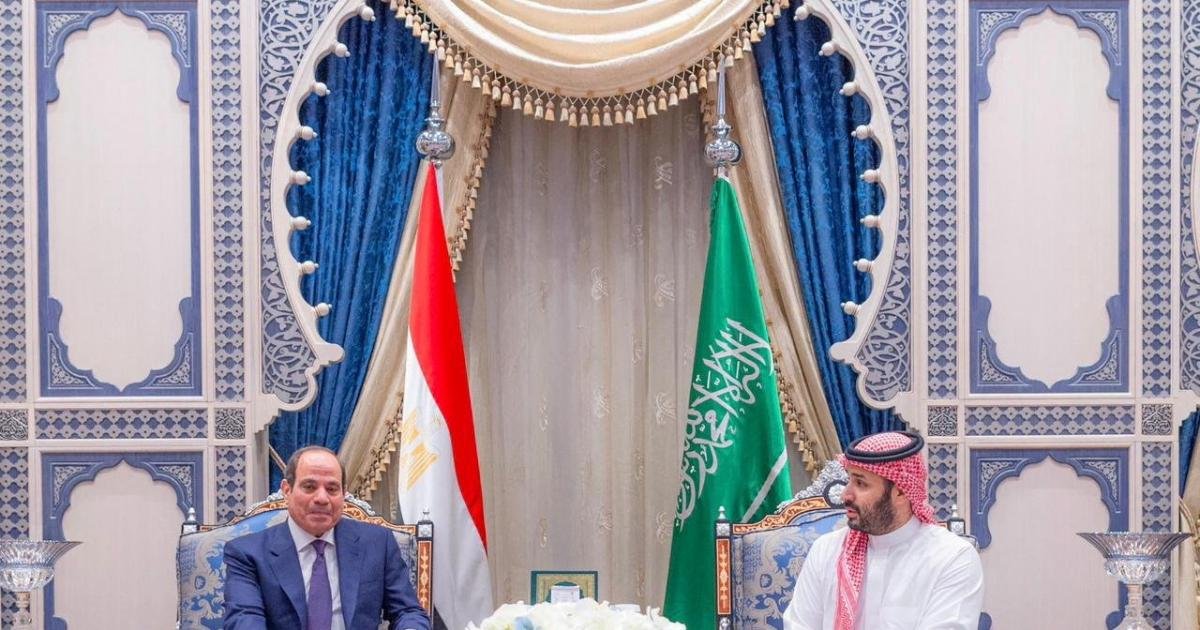
Confronted with two unpalatable choices—accede to Israel’s hegemony over the Middle East or accept an ongoing Iranian threat—Riyadh is looking to strengthen its position by striking new alliances. Soon after the war started, Egypt, Pakistan, Saudi Arabia, and Turkey convened an emergency meeting of foreign ministers of Muslim countries, leading Pakistan to emerge as a mediator. This dynamic not only serves Saudi Arabia in ending the war but also ensures that Riyadh is not excluded from any agreement Tehran and Washington might strike. And if the engagement between this quartet deepens, it could give Saudi Arabia strategic weight beyond the Gulf Cooperation Council and the U.S. security umbrella. Egypt, Pakistan, and Turkey all have sizable militaries that possess technologically advanced weaponry. Pakistan has nuclear weapons, and Turkey is a NATO member.
It is clear that Riyadh is looking for security partners beyond Washington and hopes that four nations can more effectively influence Israel and the United States than Saudi Arabia can on its own. It could seek defensive drone capabilities from other powers disgruntled by Washington’s unpredictability—such as Canada and European countries. It is already beginning to do so: in late March, Ukraine signed a deal with Saudi Arabia to help the kingdom integrate drone technology into air defense systems. And if the quartet strengthens its cooperation on defense deterrence, Saudi Arabia would be better positioned to adapt to prolonged crisis and act as a broker in other theaters such as Lebanon or Gaza.
Saudi Arabia will also need to envision its own framework for Gulf security, rallying other Gulf states and the quartet in support of an agreement with Iran on maritime security in the Gulf. Iran will want Saudi Arabia to ensure that the U.S. bases it houses will not be used for attacks on Iranian territory. Saudi Arabia, for its part, will expect guarantees that its territory will no longer be a target of retaliation from Iran or its proxies. For such a nonaggression deal to work, Saudi Arabia will have to invest in making the GCC a multilateral institution that is truly able to secure economic resilience and defense for all its members—and a deal will need to include security guarantees for other GCC states that adopt the same pact. Oman and Qatar have already pursued such a model of engaging with Iran and did not suffer attacks on their soil during the recent war; other GCC states could see an interest in following suit. Israel, of course, may perceive moves by Saudi Arabia to strengthen its partnerships with Egypt, Pakistan, and Turkey and to engage with a postwar Iran as dangerous. But if the quartet becomes more meaningfully influential and an Iranian-Saudi nonaggression deal can be forged, that could benefit Israel by containing Iran and its proxies and helping clear the way for Israeli-Saudi normalization.
Riyadh views Tehran’s new leadership with deep distrust, considering it to be both more hawkish and more fractured. It is an unlikely partner in forging a viable regional security arrangement. But Iran and Saudi Arabia will always be neighbors; geography limits their choices. The alternative to coexistence is an ongoing cycle of conflict that would doom both Iran and the Gulf Arab states.
Loading…
