

- UK removed its Gulf minehunters with no ready replacement
- Hormuz crisis: UK lacks MCM ships in region and enough escorts to contribute
- Uncrewed ARCIMS is coming, but not deployable/protected yet
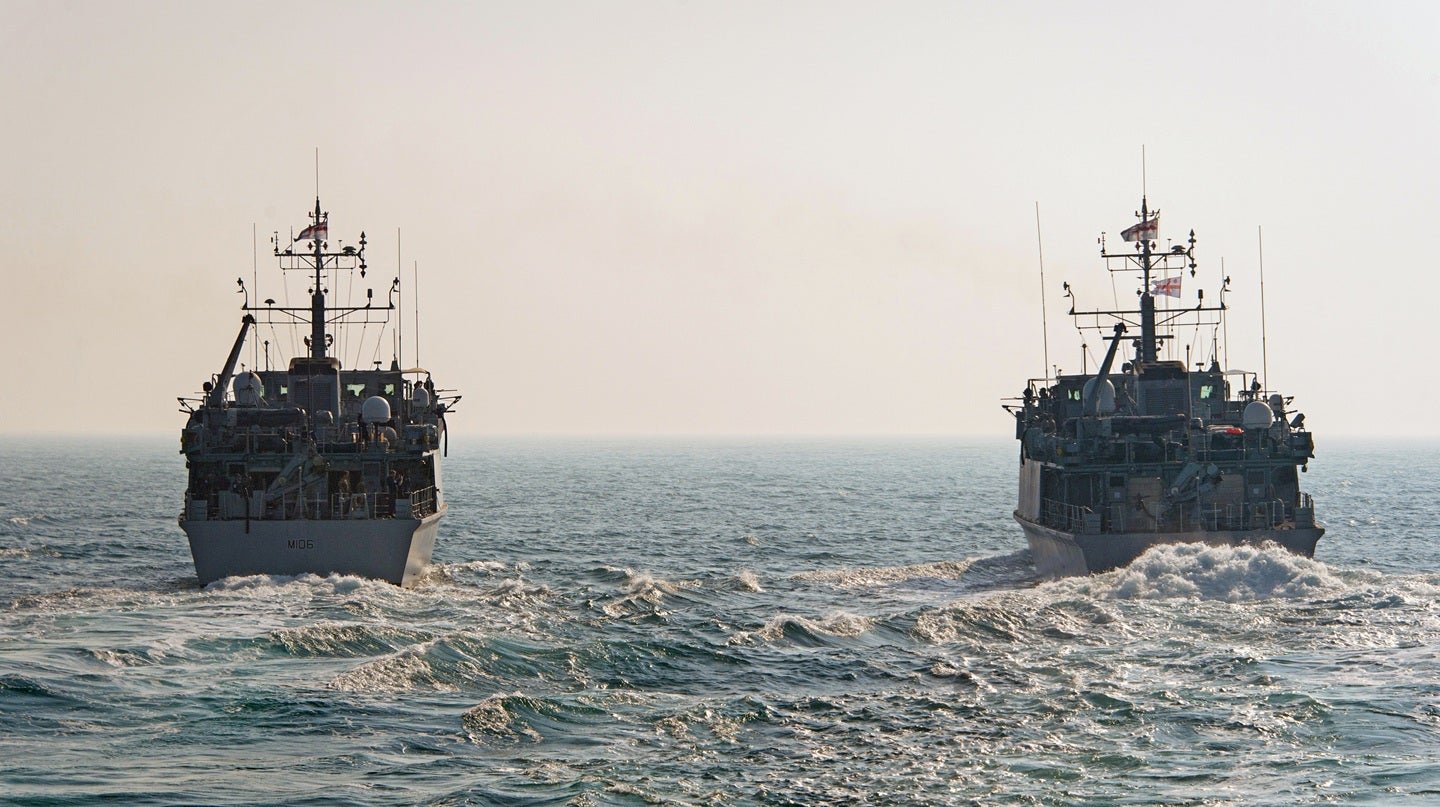
The UK’s decision to decommission its Sandown– and Hunt-class mine countermeasure fleet, a number of which were based in the Middle East, without an immediate replacement is the latest in a series of defence missteps taken by consecutive UK governments.
As recent as January 2026, the UK Royal Navy was able to call upon forward-deployed mine countermeasure vessels (MCMV) in the Gulf, specialised vessels whose role it would be to sweep and clear the Strait of Hormuz in the event of any Iranian effort to lace the strategic waterway with mines.

Discover B2B Marketing That Performs
Combine business intelligence and editorial excellence to reach engaged professionals across 36 leading media platforms.
The Sandown– and Hunt-class MCMVs were ageing, but their capability and the skillsets of their crews were highly valued by the US Navy, which operated similar but less sophisticated MCM capabilities in the Fifth Fleet, which is based out of Mina Salman in Bahrain.
However, the decision was taken by the then Conservative UK Government to begin a phased removal of the crewed MCMVs from Royal Navy service, notably donating vessels to Ukraine as well as selling hulls to Lithuania, to be replaced by an uncrewed capability based around the ARCIMS system.
Notably, Ukraine is unable to sail its former Royal Navy MCMVs to the Black Sea due to the Montreux Convention, and remain in the UK, mostly inactive.
Just four of the Hunt class are still active (HMSs Hurworth, Ledbury, Cattistock, and Brocklesby), are now consigned to home waters and will likely be cut at the forthcoming Defence Investment Plan, along with a range of other Royal Navy platforms, if and when that is published.
The drawdown of UK naval power has continued through the current Labour administration, which is overseeing a reduction of a Royal Navy to its most ineffectual point in modern history. By January 2026, the last of the vessels, HMS Middleton, had left the region, mere weeks before the beginning of the Iran-Middle East crisis.
Analysis of social media accounts of HMS Middleton, like HMS Hurworth, indicate the vessels are not active, and likely moored alongside awaiting decommissioning.
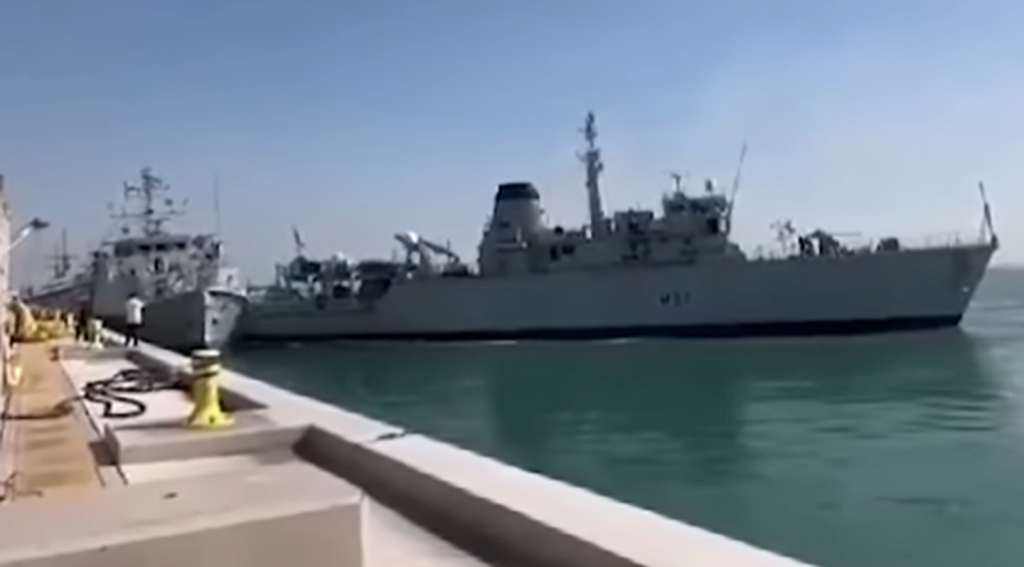
Likewise, the sole remaining Sandown class, HMS Bangor, in the fleet is not operational. The vessel sustained significant damage during a collision in Bahrain in 2024.
This all also comes at a point when MCM capabilities have been thrust to the fore, as the US begins a naval blockade of Iranian ports following the failure of ceasefire negotiations following a month-and-a-half-long war.
As reported by Naval Technology, the US Navy has begun mine sweeping patrols in the Strait of Hormuz in an attempt to clear the waterway of Iranian mines.
Bizarrely, it also transpires that the UK, according to French President Emmanuel Macron, will join France in creating a “peaceful multinational mission” aimed at restoring freedom of navigation in the strait.
Only, the UK no longer has an operational MCM capability in the region, and its scant number of surface combatants currently unavailable to help secure maritime routes in such a contested operational environment.
The loss of a forward-deployed Type 23 frigate to the Gulf, effectively bringing an end to the continuous Operation Kipion deployment, means the UK is reliant on the US Navy to provide security for maritime operations in the region.
Its only available Type 45 air defence destroyer, HMS Dragon, belatedly sent to the eastern Mediterranean in response to Hezbollah missile and drone attacks on Cyprus, has had to undergo an unplanned period of maintenance just days after arriving in theatre.
It is also unclear if the US will accent to any UK requests to help transit MCM capabilities through to the Gulf, with US President Donald Trump ramping up anti-Nato rhetoric in recent days and has previously heavily criticised UK Prime Minister Keir Starmer.
ARCIMS: the eventual replacement
The ARCIMS, part of the Mine Hunting Capability (MHC) programme, comprises uncrewed surface vessels fitted with sensors and uncrewed underwater vehicles (UUV) to sweep and detect subsurface threats.
In March 2026, the Royal Navy took delivery of two USVs and three sets of UUVs, known as SeaCat, following the commencement of training in late-2025. The Royal Navy said the arrival of initial elements of the MHC was the “first practical delivery”, on top of other systems previously handed over.
It is thought that some elements of the MHC have been delivered to Bahrain where the UK previously maintained its Naval Support Facility base next to the US Navy’s Fifth Fleet, although without any vessel host the capability.
Analysis of the UK Maritime Component Command X feed, reveals a number of posts of personnel working with uncrewed systems from the dockside, absent a vessel to test them at sea.
Rumours suggested that the proposed mothership for MCM and subsurface sweep, RFA Stirling Castle, was going to be sent to the Gulf to regenerate a mine hunting capability, but the lack of any Royal Navy assets able to protect such a vulnerable vessel will prevent such aspirations, unless French or other European vessels are able to accommodate.
RFA Lyme Bay was also purportedly being considered to be sent back to the Middle East to act as an MCM mothership, a role that the UK Government allowed to lapse as it continued its overseas drawdown.

