

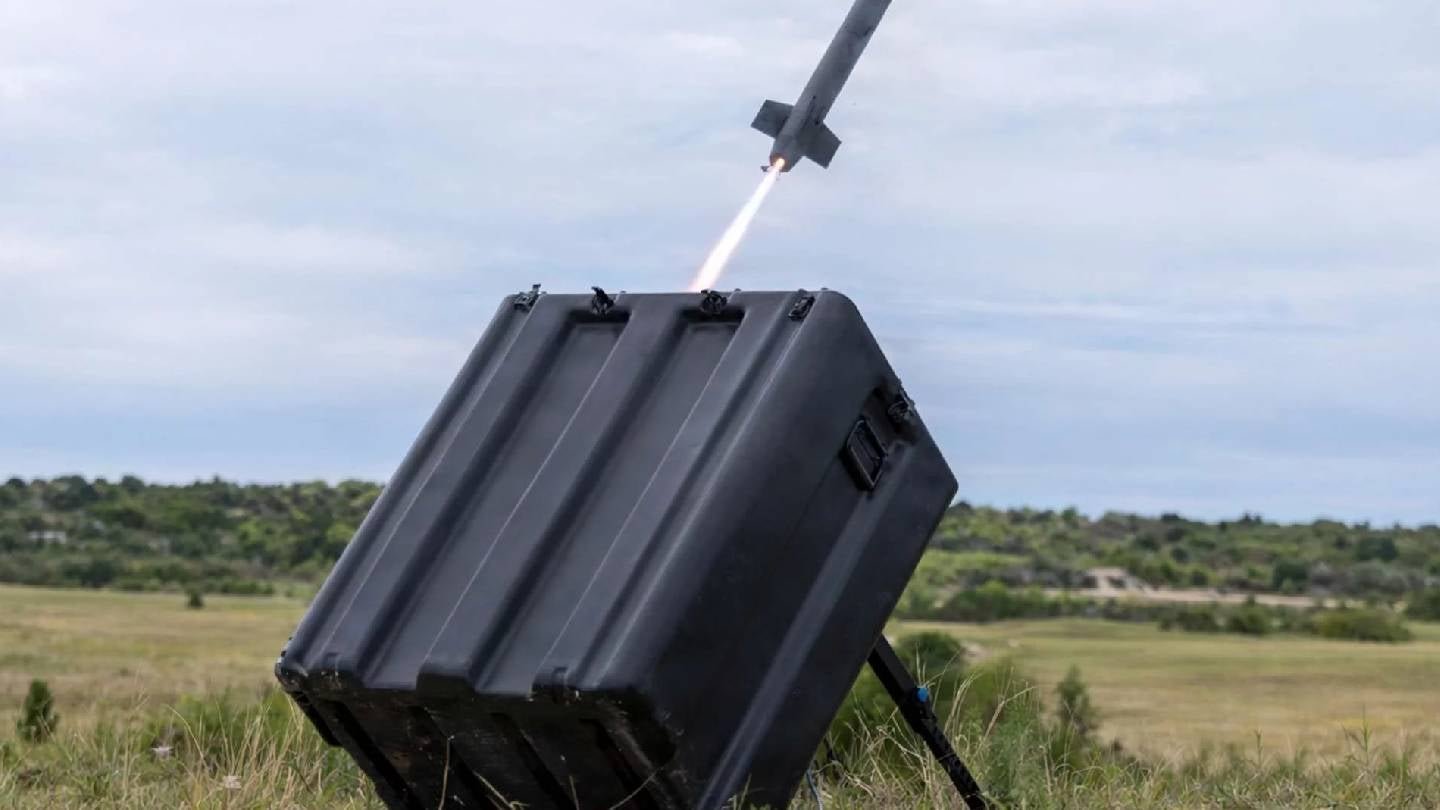
The US Army’s 1st Cavalry Division has recently conducted a live-fire counter-drone exercise at Fort Hood, Texas, as part of efforts to improve defence against small uncrewed aerial systems.
The event, held from 7 to 9 April, marked the latest phase of testing for the division’s Golden Shield counter-uncrewed aircraft systems (c-UAS) concept, which forms part of the wider Pegasus Charge initiative.

Discover B2B Marketing That Performs
Combine business intelligence and editorial excellence to reach engaged professionals across 36 leading media platforms.
Find out more
During the exercise, the division for the first time incorporated autonomous c-UAS battlefield effectors into its operations.
The demonstration saw advanced sensors, both kinetic and non-kinetic effectors, and a command-and-control system working together across various platforms.
These systems formed an autonomous defence network aimed at protecting armoured vehicles and their crews during manoeuvres.
A key moment in the demonstration was a fully autonomous cross-vehicle engagement. A sensor on one platform detected and classified a hostile drone, then sent targeting data and an engagement command to an autonomous weapon system on another platform that neutralized the threat.
This process reportedly shortens the time required to respond to threats and lessens the cognitive demands placed on personnel.
US Army Capabilities Development Command Ground Vehicle Systems Center, research and technology integration executive director Alfred Grein said: “The future is formation-based layered protection, and this is the start of that. Some [of the systems] are more mature than others. But understand that’s part of why we do experiments to determine what we think is ready to hand-off to Soldiers in the field environment.”
The Golden Shield system employs a scalable, open architecture designed to adapt to different mission requirements and incorporate future technologies quickly.
This framework connects sensors and weapons on tactical vehicles, automating the detection, tracking, and engagement of aerial threats.
Findings and data from Exercise Golden Shield will help guide the Army’s integration of these counter-UAS technologies into its manoeuvre formations, supporting ongoing transformation initiatives.
1st Cavalry Division’s air and missile defence chief major Kevin Korrea said: “The intent is to take these systems we tested this week and begin to integrate them within our armoured formations’ training. In that way, we are able to fully exercise not only the systems, but the tanker’s ability to manage these systems while conducting their normal operations.”
The 1st Cavalry Division serve as a combined arms division focused on developing new approaches for armoured divisions in combat.

