

This is part 2 of our 2 part interview with Jacques Payet Sensei. You can read part 1 here.
Josh Gold: In general, would you say Shioda Sensei was calm?
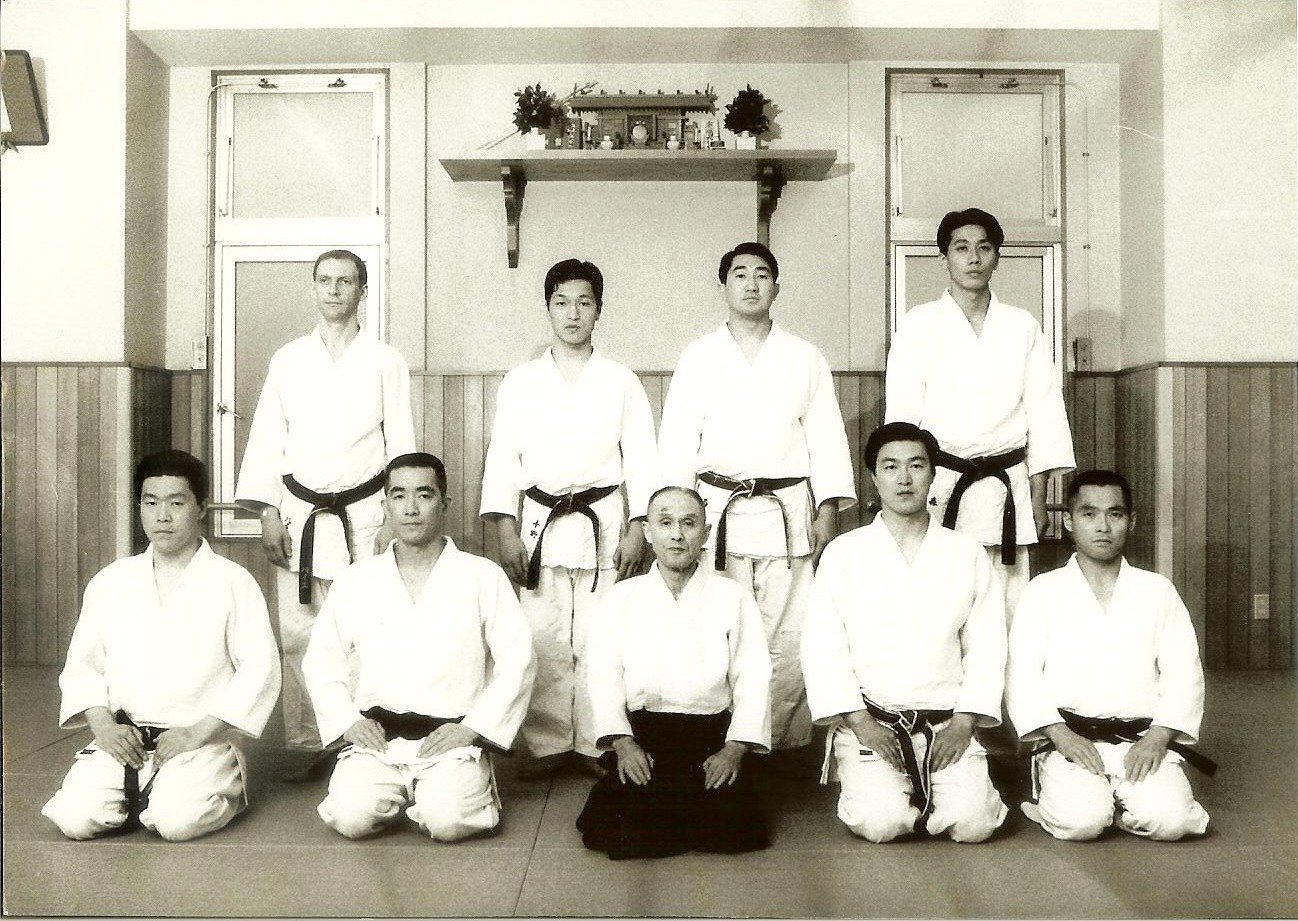
Jacques Payet: Yes, and he was very kind. He was extremely demanding with his uchi-deshi, but very kind to everyone else. But that’s because he was so demanding of himself. He expected the same from everyone around him—except the office staff or people who weren’t truly committed to training.
That was during my first five-year stay in Japan. After that, I went to Europe—to France and England—to teach. But I wasn’t satisfied with what I was doing, so I asked Sensei if I could return. He laughed and said yes.
When I came back, he was much older. Things had changed. In a way, he seemed isolated. People around him would only tell him what they thought he wanted to hear. He didn’t really know what was going on in the dojo. But I wasn’t afraid to tell him the truth. Maybe because I was still like a child to him. We developed more of a personal relationship then. He’d ask me to join him for a drink. He became more relaxed—just a normal person.
Still, he had that Japanese way. He presented a strong public persona—very formal and commanding. But privately, he could be completely different.
So when he was in that more informal mode with you, would he tell jokes? Did he have a sense of humor?
Yes, definitely. I remember once I walked into his office—bowed and said oss, of course—and as I turned around, he threw some crumpled paper at me and laughed. That kind of thing. He had a playful side.
Outside of Aikido, did he have any hobbies or other pursuits?
Not really. Aikido was his life. But he did love animals—especially his dog. He’d get up early every morning, walk and play with the dog. He’d train with it too, dodging and reacting to its movement. He made a kind of game out of it.
Every afternoon, around one o’clock, he’d come to the dojo and stay until around nine at night. That was his daily routine.
Do you remember what kind of dog it was?
I can’t remember exactly. It was a bigger dog. He would train it—make it rush at him, then stop it or move at the last second. He enjoyed that.
Did he like books or movies?
I don’t think so. He was very focused. What he truly loved was people. He always wanted to have people around. After training, there were often parties at the dojo. He loved drinking and talking with everyone.
Sometimes during these parties, he’d suddenly grab someone, throw them across the mat, and start laughing. He’d perform techniques just for fun. After the party, he’d invite a few close people into his small office—and it could get a little intense.
I think he wanted to test if his technique still worked when he was drunk. So he’d call us in and throw us to the floor. It was crazy—but that was just him. He was very intense.
You arrived in Japan in 1980 at age 23. What was that experience like psychologically? What led you to take that step, and how did it feel once you were there?
Before Japan, I practiced karate, jujutsu, and a bit of kung fu. But something was missing. Then I joined the French army for a year, which helped prepare me mentally. It was disciplined, rigid—you had to follow orders. I thought, “If I can handle this, I can handle Japan.”
I didn’t have a great opinion of Aikido at the time. I thought it was too soft. But when I saw Shioda Sensei—so dynamic and powerful—I thought, “That’s what I want.” I didn’t even realize at first that it was Aikido. I thought it was some form of jutsu.
Then I met his son and was introduced formally. I asked to join, and Shioda said yes. From there, it just happened.
I was young. And when you’re training six hours a day, you’re so tired, there’s no time to think. Even though I had some martial arts background, I wasn’t prepared for that intensity. My hands were swollen from too many shomen uchi strikes. Just going up and down the stairs was painful. Every day, I was exhausted.
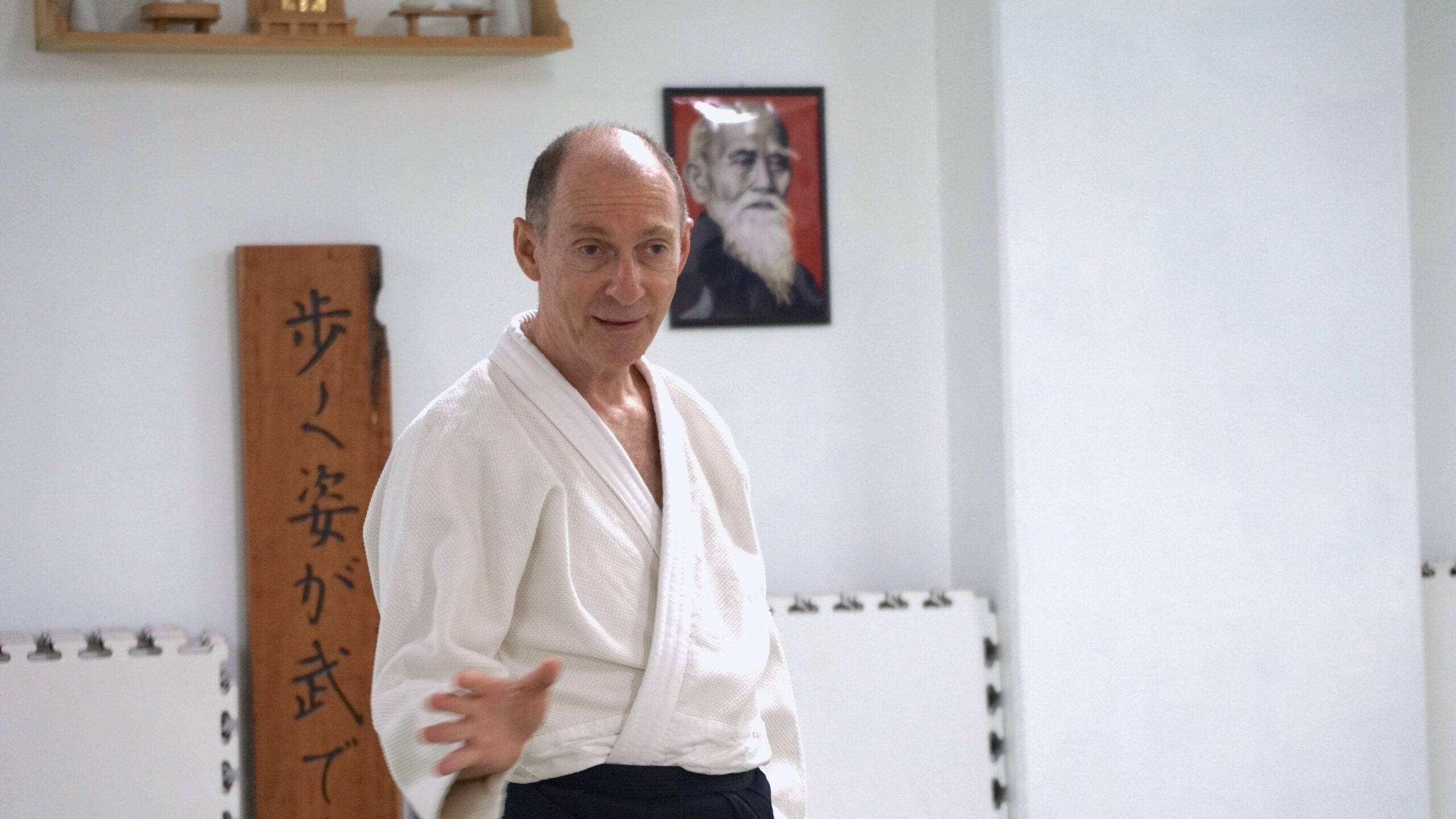
I didn’t speak Japanese. My English was almost nonexistent. And frankly, no one wanted me there. I was a burden—someone who made things more difficult. They tried to discourage me. People were rude. But I didn’t care. I came to study. My mind was set.
I came from a tiny island in the Indian Ocean—Réunion. No one from there had ever gone to Japan for martial arts. It was far. It was expensive. I felt I had no choice but to succeed. I went into survival mode. Every day I finished was a victory. That was my mindset for the first couple of years.
I didn’t have a great opinion of Aikido at the time. I thought it was too soft. But when I saw Shioda Sensei—so dynamic and powerful—I thought, “That’s what I want.”
That’s a very different world from what we see today. In the U.S., we have this concept of “microaggressions,” where people might take offense over something small—even unintentional. People are very sensitive now. But for you, it was very direct. They clearly didn’t want you there.
Yes. They didn’t hide it. They told me with their words and their behavior: “You’re a foreigner. You don’t belong here. You’re a pain.” But I didn’t let it stop me. That was the culture at the time.
But you made it through.
Yes, and I have no regrets. It was a powerful experience for me.
Different times. Different culture.
Yes. And back then, there was no internet. I didn’t know where Shioda Sensei was—maybe Tokyo, maybe somewhere else. I just had a name. It took me almost a month to find him. I didn’t speak the language. Today, you just check online. Back then, you had to really want it.
Did you ever have moments where you wanted to quit?
Many times. But I supported myself by teaching French. I had great students—that helped a lot. They were kind and made things easier. It gave me a break from the pressure and a place to breathe.
I didn’t speak Japanese. My English was almost nonexistent. And frankly, no one wanted me there. I was a burden—someone who made things more difficult. They tried to discourage me. People were rude. But I didn’t care. I came to study. My mind was set.
And over time, did you start to build stronger friendships at the dojo?
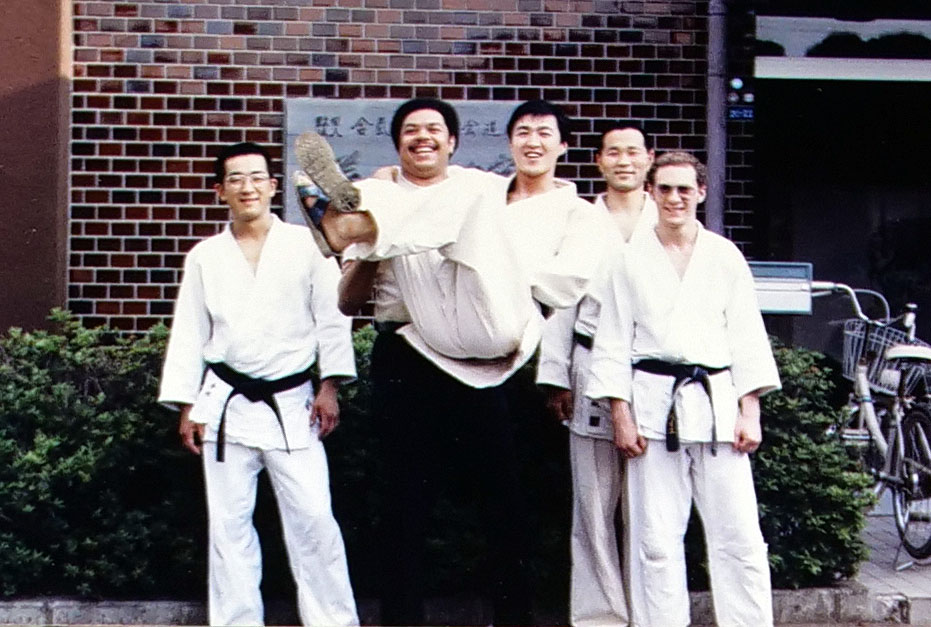
Yes. After about a year, they saw they couldn’t get rid of me. I was doing my best, and they started to accept me. Eventually, it was like being adopted into a family. They’d take me out for drinks or dinner. The community really took care of each other—especially the uchi-deshi, who got small stipends but were looked after by the wider dojo network.
In recent decades, arts like Aikido have seen a decline in popularity, especially among younger people. Meanwhile, combat sports like MMA, Brazilian Jiu-Jitsu, and Muay Thai have exploded in popularity. There’s a whole multi-billion dollar entertainment ecosystem around MMA—tons of media exposure, competitions, fan communities, and a strong appeal to younger generations.
These systems also evolve rapidly—open-source approaches that welcome innovation. You get branches focused on self-defense, others on sport. It seems most new martial artists today are drawn to these types of systems.
Meanwhile, traditional budo like Aikido and Judo are in decline. What do you think about this shift? Is it okay? And if we wanted to increase participation in traditional martial arts like Aikido, what do you think needs to change?
Yes, the world has changed. Forty or fifty years ago, when I came to Japan, there wasn’t much choice. You had karate, judo, and Aikido. And Aikido was big. People like Chiba Sensei or Tamura Sensei—many people came to Japan to train.
Now, people come to Japan for anime or manga. They’re not interested in martial arts. And many think they don’t need to come here to train. They have more choices at home. Honestly, if I were young today, maybe I would have joined MMA or something else. The landscape is different.
But I think people who choose Aikido are looking for something different. Something deeper. The problem is, many Aikido teachers don’t have confidence in Aikido anymore. They feel they have to add something—Brazilian Jiu-Jitsu, boxing, kicking—just to attract people.
Maybe that works. I don’t know. But for me, the essence of Aikido is enough. It’s like basic research. Build a strong foundation first. Then you can experiment. But many people want to skip the foundation and just add techniques from everywhere. That weakens the art.
If we’re confident in Aikido’s value, and if we’re clear in how we present it, people will respect it more. And I think the future lies with young people. What you’re doing with Budo Accelerator is wonderful. I’m trying to do something similar—developing contracts with private schools. I teach in elementary schools, high schools, and universities.
We run three-month programs. And when it’s done well, the kids love it. They gain confidence, learn values they don’t get elsewhere. That’s where I see the future of Aikido.
I think people who choose Aikido are looking for something different. Something deeper. The problem is, many Aikido teachers don’t have confidence in Aikido anymore.
I think a lot of the decline in Aikido’s popularity—and the damage to its reputation—is self-inflicted. Many instructors misrepresent what Aikido is. They try to compete or compare it directly with other systems. But like you said, if we just let it stand on its own—present it clearly, with a strong foundation—it speaks for itself.
For example, at our dojo, because of the Budo Accelerator program, 50 to 60% of our students are between the ages of 15 and 24.
We explain to them that Aikido isn’t optimized for fighting in a ring. It’s a martial art, yes, but also a personal development system. It’s about growth, relationships, and community.
We integrate modern leadership development models. We help students see how the lessons on the mat apply off the mat. For example, the way you relate to your senpai or sensei on the mat is similar to how you build professional mentorships in real life.
We also connect students through an online platform—so they can find mentors across the country, people with martial arts backgrounds in all kinds of professions: doctors, carpenters, police officers. It gives them a practical way to take what they’ve learned in the dojo and apply it in their personal and professional lives.
And we measure impact. Students enter the program, and we track things like critical thinking, public speaking, and mental health. All of these improve. When you explain it that way, students get it. They’re excited. They don’t care if the techniques work in an MMA cage. That’s not the point.
By the way, were you around when Mike Tyson visited Shioda Sensei’s dojo?
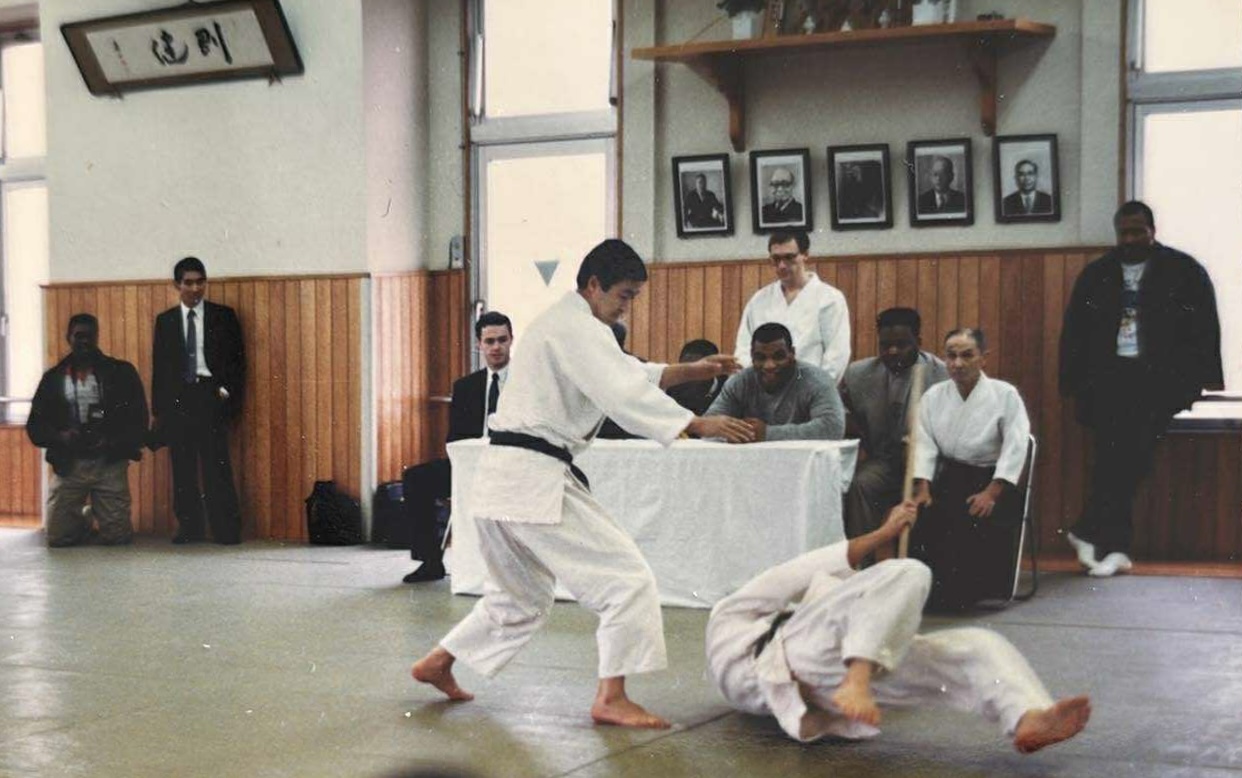
Yes, I was there. It was crazy. Total chaos. Someone from the dojo happened to be at the same training facility as Tyson, where he was doing light workouts. The rest of the day, Tyson was just in his hotel room, bored, watching TV.
Someone suggested he check out traditional Japanese martial arts. He said yes. So they asked him where he wanted to go. He saw a video of Shioda Sensei and said, “I want to see that little guy!”
Suddenly, he was at our dojo. The dojo was on the third floor, and suddenly we had a hundred journalists crowding the stairs—cameras flashing. Nobody spoke English, so they pulled me in to translate.
You were the translator?
Yes. It was wild. Don King was there—crazy hair, lots of noise. Tyson had his entourage—10 huge guys, acting like bodyguards. They tried to enter the mat with shoes on. But Tyson stopped them. He said, “No. Take your shoes off. You’re in Japan.”
He was actually very polite and respectful. He watched a demonstration, asked intelligent questions. At one point, he said, “This guy’s not using any strength. He’s using his body so well.”
Then Shioda Sensei did some nikyo on him. Tyson was impressed. Afterward, his entourage wanted to test things—they started kicking and punching. It got a little chaotic again. But Tyson stayed calm and respectful throughout.
And what did Shioda Sensei think of the visit?
He was laughing and very happy. He loved it. He enjoyed meeting Tyson.
How long have you lived in Kyoto now?
I left California in 2005, so almost 20 years. It’s wonderful. I live simply. My life is Aikido. Sometimes I do other martial arts for fun, but my main focus is Aikido. I ride my bicycle to the dojo. I go through quiet paths by the river, surrounded by nature.
I’m fortunate to live from what I love. I train a lot. I think it’s important to keep challenging yourself. If you stop, you’re already dead in some way. I travel to share what I’ve learned, and I continue to grow through that process.
Do you have any final thoughts or messages you’d like to share with Aikido Journal readers?
Whatever your style, train hard. Try to find the answers inside yourself. Today, there’s so much information—YouTube, online seminars—but the real learning comes from deep practice.
Search inside. Discover what Aikido means for you. And most importantly, share. Don’t just take—give something back.
