

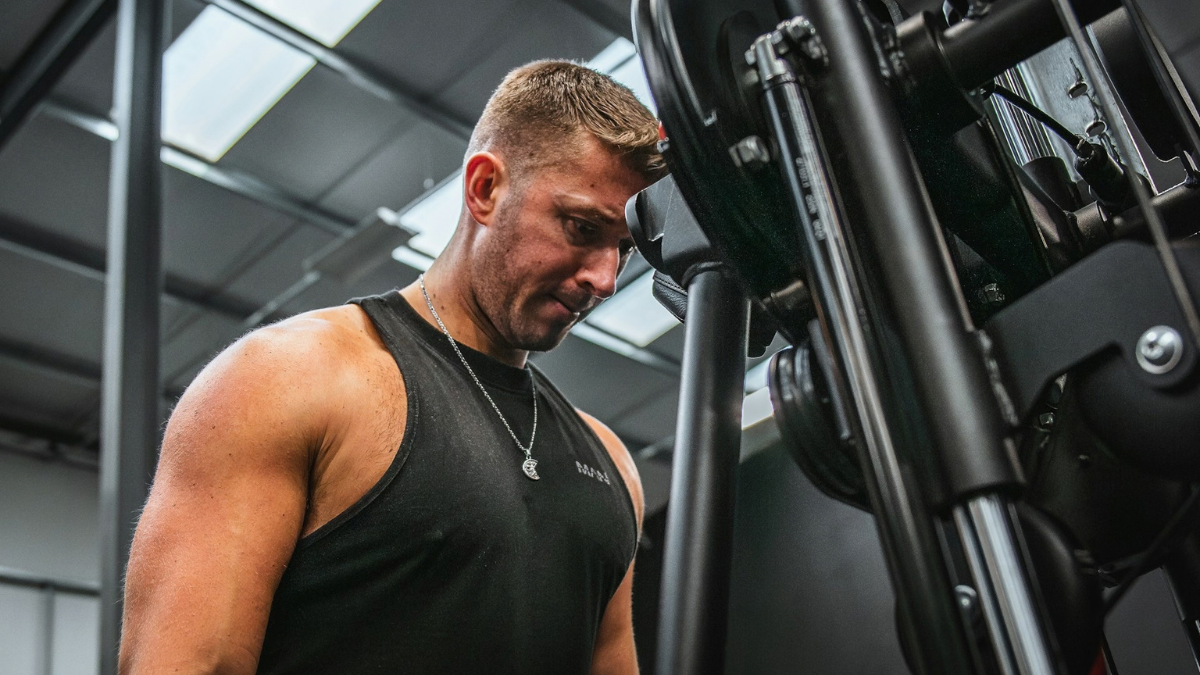
Starting a strength training routine can feel like a lot to learn at once. Gym machines make the first steps more manageable because they guide the movement and let you focus on adjusting the seat, choosing a suitable weight, and moving with control.
Machines are not a shortcut to muscle growth, and you do not have to use them to build muscle. Research comparing machine and free weight training has found similar muscle growth when training programs are matched. Machines are simply one practical way to train, especially if you are new to the gym or prefer a more supported exercise.
For muscle gain, consistency matters more than finding a perfect machine. Choose a weight that lets you complete each repetition with steady form, and gradually increase the challenge as you get stronger. The five machines below cover the major muscle groups and make a useful starting point for a beginner’s routine.
Why Beginners Can Benefit From Gym Machines
A machine can make an exercise easier to set up and repeat from one workout to the next. The guided path can also help you concentrate on the working muscles without having to balance a barbell or dumbbells at the same time. That can make training feel less intimidating while you learn how to control resistance.
Machines do not automatically prevent injuries, and they do not guarantee perfect technique. You still need to adjust the equipment to fit your body, use a manageable load, and stop if a movement causes pain. If you are unsure how a machine works, ask a gym staff member to show you how to set it up.
Muscle growth comes from challenging training performed regularly over time. You can use different rep ranges, but beginners often find it practical to start with sets of about 8 to 12 repetitions. Finish each set feeling that you could do a few more repetitions with good form. As the weight begins to feel easier, add a small amount of resistance or do an extra repetition.
1. Leg Press
The leg press trains the quadriceps, glutes, and other muscles that help extend the hips and knees. It is a useful way to train the lower body while sitting with your back supported, which many beginners find more approachable than starting with a barbell squat.
How to use the leg press
Sit with your back and hips against the pad. Place your feet about shoulder width apart on the platform, then release the safety handles according to the machine’s instructions. Lower the platform until your knees bend comfortably, then press through your feet to return to the starting position. Keep your knees tracking in the same direction as your toes, and avoid locking your knees forcefully at the top.
The correct depth depends on your mobility and the machine’s design. Lower the weight only as far as you can while keeping your hips and lower back in contact with the seat. If your lower back curls away from the pad, reduce the range of motion.
Start with a light load while you learn the movement. The leg press lets you add resistance gradually, but using more weight than you can control can make it harder to keep a comfortable, repeatable range of motion.
2. Chest Press
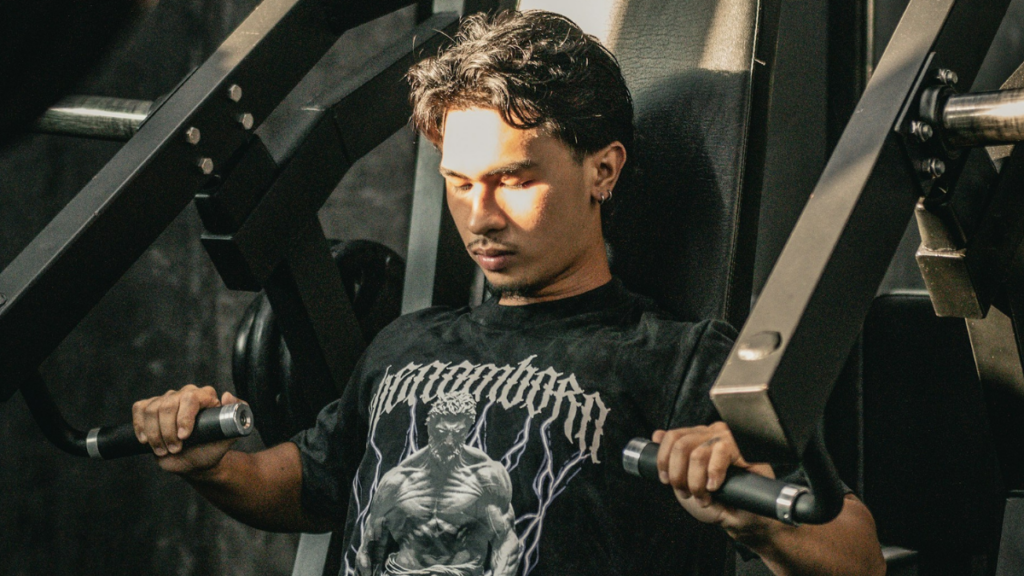
The chest press works the pectoral muscles, with help from the front of the shoulders and triceps. It provides a simple way to practice a pushing movement without balancing dumbbells or a barbell.
How to use the chest press
Adjust the seat so the handles line up around the middle of your chest. Sit with your back against the pad and your feet on the floor. Grip the handles and press them away from you under control, then return them until you feel a comfortable stretch across your chest. Keep your shoulders relaxed against the pad rather than shrugging toward your ears.
A common setup mistake is placing the seat too low or too high. If the handles begin far above or below your chest, adjust the seat before adding weight. Use a comfortable range of motion and keep your wrists straight as you press.
The chest press is a good beginner option because the machine provides stability while you learn how to push evenly with both arms. If one side moves faster than the other, lower the weight and focus on smooth, controlled repetitions.
3. Lat Pulldown
The lat pulldown trains the latissimus dorsi muscles across the sides of your back, along with the biceps and other muscles involved in pulling. It is a practical way to learn an upper body pulling pattern before attempting more demanding bodyweight exercises.
How to use the lat pulldown
Set the thigh pad so it holds your legs comfortably in place. Take a grip slightly wider than shoulder width, sit tall, and pull the bar toward the upper chest. Let your elbows move down toward your sides. Return the bar overhead slowly until your arms are extended without letting the weight stack crash.
Avoid pulling the bar behind your neck. Pulling it to the front gives you a clear target and is generally easier to control. You do not need to lean far backward or swing your torso to move the weight. If you have to rock back to complete repetitions, reduce the load.
Think about driving your elbows down rather than pulling only with your hands. This cue can help you feel the back muscles working while keeping the movement controlled.
4. Seated Cable Row
The seated row trains the muscles of the upper and middle back, including the trapezius and rhomboids, as well as the lats and arms. It complements the lat pulldown by training a horizontal pulling motion.
How to use the seated row
Sit with your feet on the supports and your knees slightly bent. Hold the handle with your arms extended and your torso upright. Pull the handle toward your lower ribs, moving your elbows back without lifting your shoulders. Return to the starting position slowly while keeping your torso steady.
Try not to round your back to reach farther forward or lean back to move a heavier load. A small, comfortable movement of the shoulder blades is natural, but the repetition should not turn into a rocking motion. Choose a weight that allows you to pause briefly near your body and control the return.
For beginners, the seated row is a useful way to build familiarity with pulling and to balance pressing exercises in a workout. Use the machine’s available handle that feels comfortable on your wrists and shoulders.
5. Seated Leg Curl
The seated leg curl trains the hamstrings, the muscles at the back of your thighs that bend the knees. It is a simple complement to the leg press, which emphasizes the muscles used to straighten the knees and hips.
How to use the seated leg curl
Adjust the seat and pads so your knees line up with the machine’s pivot point. Place the lower pad just above your heels, then curl your legs down and back as far as feels comfortable. Pause briefly, then return the weight slowly to the start. Keep your hips and back against the seat throughout the exercise.
If the machine has an adjustable thigh restraint, set it so your legs stay in place without feeling squeezed. Do not bounce the weight or use momentum to finish repetitions. A smooth pace makes it easier to control the movement through the full range you can manage comfortably.
How to Put These Machines Into a Beginner Routine
You do not need a complicated program to begin. You could use these five machines in one full body workout, performing two sets of each exercise for about 8 to 12 controlled repetitions. Rest long enough between sets to feel ready to use good form again. For many beginners, around one to three minutes is a reasonable starting point, with more rest if needed.
Train this routine two or three times per week, leaving a day between sessions when possible. If you are very sore or tired, take additional recovery time. Begin with a weight that feels manageable and focus on learning the equipment. When you can complete the top end of your repetition range with steady form, increase the load by the smallest practical amount and build up again.
You can also begin with fewer machines or sets if a full session feels like too much. A sustainable routine is more useful than an ambitious plan you cannot maintain. Keep a simple record of the machine, weight, and repetitions so you can see when to progress.
How Many Chin-Ups Should You Be Able to Do Based on Your Age?
Muscle gain also depends on your overall training and recovery. Give the routine time, eat enough to support your goals, and get adequate sleep. If you have a health condition, a previous injury, or pain during exercise, consult a qualified health professional for guidance on appropriate training.
Key Takeaways
| Machine | Main muscles worked | Beginner focus |
|---|---|---|
| Leg press | Quadriceps and glutes | Keep your back and hips against the pad |
| Chest press | Chest, shoulders, and triceps | Set the handles around mid-chest height |
| Lat pulldown | Lats and upper back | Pull the bar to the front with control |
| Seated cable row | Upper and middle back | Keep your torso steady as you pull |
| Seated leg curl | Hamstrings | Align your knees with the machine pivot |
References
- Currier, B.S., D’Souza, A.C., Singh, M.A.F. et al. (2026). American College of Sports Medicine Position Stand. Resistance Training Prescription for Muscle Function, Hypertrophy, and Physical Performance in Healthy Adults: An Overview of Reviews. Medicine & Science in Sports & Exercise, 58(4), pp. 851–872.
- Kraemer, W.J. et al. (2002). American College of Sports Medicine position stand. Progression models in resistance training for healthy adults. Medicine & Science in Sports & Exercise, 34(2), pp. 364–380.
- Lopez, P. et al. (2023). Effect of free-weight vs. machine-based strength training on maximal strength, hypertrophy and jump performance: a systematic review and meta-analysis. Sports Medicine – Open, 9, Article 51.
- Schoenfeld, B.J., Ogborn, D. and Krieger, J.W. (2017). Dose-response relationship between weekly resistance training volume and increases in muscle mass: a systematic review and meta-analysis. Journal of Sports Sciences, 35(11), pp. 1073–1082.
