

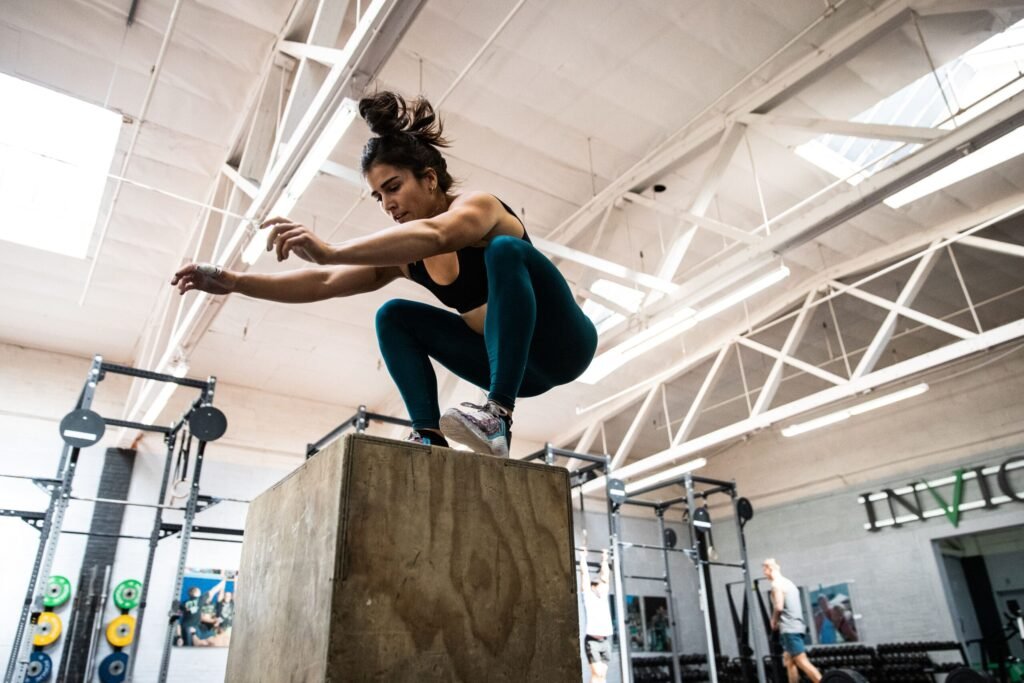
Strong, muscular thighs are about far more than appearance. The muscles of the upper leg are essential for athletic performance, daily movement, joint stability, injury prevention, and long term health. Whether your goal is to sprint faster, jump higher, improve body composition, or simply feel stronger during everyday activities, developing your thighs should be a priority.
The thigh contains some of the largest and most powerful muscles in the human body. These include the quadriceps at the front of the leg, the hamstrings at the back, and the adductor muscles along the inner thigh. Together, these muscle groups generate force during walking, running, climbing stairs, squatting, and countless other movements.

When people talk about achieving more toned thighs, what they are really describing is a combination of increased muscle development and lower body fat levels. Muscle growth creates shape and definition, while reducing excess body fat makes that definition more visible. Resistance training is one of the most effective ways to build the lean muscle mass necessary for this process.
Research consistently shows that compound lower body exercises are among the most effective methods for increasing muscle size, strength, power, and functional performance. While many exercises can target the thighs, a few stand out because of their ability to recruit large amounts of muscle mass while allowing progressive overload over time.
Understanding Thigh Muscles
Before examining the exercises, it is helpful to understand the anatomy involved.
The Quadriceps
The quadriceps consist of four muscles located on the front of the thigh. Their primary function is knee extension, which occurs when you straighten your leg. The quadriceps are heavily involved in squats, lunges, running, jumping, and stair climbing. Studies have shown that greater quadriceps strength is associated with improved athletic performance, better mobility, and reduced injury risk.
The Hamstrings
The hamstrings are located at the back of the thigh and consist of three muscles. They contribute to knee flexion and hip extension. Strong hamstrings help improve sprinting performance, support knee health, and balance the strength of the quadriceps. Insufficient hamstring strength is linked to increased injury risk, especially among athletes involved in running and jumping sports.
The Adductors
The adductors run along the inner thigh and play a key role in stabilizing the pelvis and controlling leg movement. These muscles are heavily recruited during squats, lunges, and many athletic actions involving changes of direction. Recent research has highlighted the importance of adductor strength for both athletic performance and injury prevention.
What Makes an Exercise Effective for Thigh Development?
Not all exercises produce the same results. The most effective thigh exercises typically share several characteristics.
- First, they involve multiple joints and muscle groups simultaneously. These compound movements allow heavier loads and greater overall muscle activation.
- Second, they provide a large range of motion. Muscles generally experience greater growth when trained through substantial ranges of motion.
- Third, they permit progressive overload. Consistently increasing resistance, repetitions, or training volume is one of the most important drivers of muscle growth and strength development.
- Finally, they recruit significant amounts of muscle mass. Exercises that challenge the quadriceps, hamstrings, and adductors together often provide superior overall results.
Based on these principles and the available scientific literature, three exercises consistently emerge as the most effective choices.
Exercise 1: The Back Squat
The back squat is widely regarded as one of the most effective lower body exercises ever developed.
Why the Back Squat Works
The squat requires coordinated action from the quadriceps, hamstrings, glutes, adductors, calves, and core musculature. It allows significant loading and produces high levels of muscle activation across the lower body.

Electromyography studies consistently demonstrate strong quadriceps activation during squatting movements. Research also shows that squat training can significantly increase lower body strength, muscle mass, and athletic performance.
The squat is especially valuable because it closely resembles many real world movement patterns. Standing up from a chair, climbing stairs, lifting objects from the ground, and participating in sports all require mechanics similar to the squat.
How to Perform the Back Squat
- Begin by placing a barbell across the upper back. Position your feet approximately shoulder width apart with your toes slightly turned outward.
- Brace your core and keep your chest lifted. Initiate the movement by pushing your hips backward while bending your knees.
- Lower yourself until your thighs reach at least parallel to the floor or slightly below if mobility allows.
- Drive through your entire foot while extending your hips and knees simultaneously to return to the starting position.
- Maintain a neutral spine throughout the movement and avoid allowing your knees to collapse inward.
Scientific Benefits
Numerous studies have shown that squat training increases quadriceps muscle thickness and overall lower body strength. Research comparing different lower body exercises frequently identifies the squat as one of the most effective movements for stimulating hypertrophy of the quadriceps and gluteal muscles.
Heavy squatting has also been shown to improve vertical jump performance, sprinting ability, and overall athletic capacity.
Common Mistakes
One common error is reducing squat depth excessively. While individual anatomy varies, deeper squats generally recruit more muscle fibers and produce greater hypertrophy adaptations. Another mistake is allowing the heels to lift off the floor. Maintaining full foot contact improves stability and force production.
Poor spinal positioning can also increase injury risk. Keeping the torso braced and neutral throughout the movement is essential.
Exercise 2: The Bulgarian Split Squat
Although traditional lunges are highly effective, the Bulgarian split squat offers unique advantages that make it one of the best thigh building exercises available.
Why the Bulgarian Split Squat Works
This exercise places tremendous stress on the quadriceps while also challenging the glutes, hamstrings, adductors, and stabilizing muscles. Because the movement is performed one leg at a time, it requires greater balance and coordination. Unilateral training can help address strength imbalances between legs while improving stability and movement efficiency.
Research suggests that unilateral exercises produce high levels of muscle activation and can contribute significantly to strength and hypertrophy gains. The elevated rear foot position increases the range of motion and loading potential on the front leg, making the exercise particularly effective for thigh development.
How to Perform the Bulgarian Split Squat
- Stand approximately two feet in front of a bench. Place one foot behind you on the bench.
- Keep your torso upright and your front foot planted firmly on the floor.
- Lower your body by bending the front knee until the front thigh approaches parallel with the ground.
- Drive through the front foot to return to the starting position.
- Complete all repetitions on one leg before switching sides.
- Dumbbells can be held at your sides to increase resistance.
Scientific Benefits
Studies examining unilateral resistance training demonstrate substantial improvements in lower body strength and muscle development.
The Bulgarian split squat generates significant quadriceps activation while reducing spinal loading compared to heavy bilateral squats. This makes it a valuable option for individuals seeking intense thigh stimulation with potentially less compressive stress on the spine. Research also shows that unilateral exercises can improve balance, coordination, and athletic performance.
Exercise 3: The Romanian Deadlift
Strong and toned thighs require balanced development of both the front and back of the leg. The Romanian deadlift is one of the best exercises for targeting the hamstrings while also challenging the glutes and adductors.
Why the Romanian Deadlift Works
The Romanian deadlift emphasizes hip extension rather than knee extension. This movement pattern heavily recruits the hamstrings, particularly during the eccentric phase when the muscles lengthen under load.
Research indicates that eccentric loading plays a significant role in muscle growth and strength development. The Romanian deadlift also improves posterior chain strength, which is critical for athletic performance and injury prevention. Strong hamstrings help stabilize the knee joint and counterbalance the forces generated by the quadriceps.
How to Perform the Romanian Deadlift
- Stand holding a barbell with your feet hip width apart.
- Maintain a slight bend in the knees throughout the exercise.
- Push your hips backward while lowering the bar close to your legs.
- Keep your spine neutral and your shoulders pulled back.
- Lower the bar until you feel a substantial stretch in the hamstrings.
- Drive your hips forward and return to the starting position.
- The movement should originate primarily from the hips rather than the knees.
Scientific Benefits
Research consistently demonstrates high hamstring activation during Romanian deadlifts. Studies comparing posterior chain exercises frequently identify the Romanian deadlift as one of the most effective movements for strengthening the hamstrings and increasing muscle thickness. Strong hamstrings contribute to sprint performance, jumping ability, and lower injury risk. Evidence also suggests that balanced development between quadriceps and hamstrings supports long term knee health.
How Often Should You Train Your Thighs?
Research on resistance training frequency suggests that training muscle groups at least twice per week can produce superior hypertrophy outcomes compared to once weekly training. For most individuals, two to three lower body sessions per week provide an effective balance between stimulus and recovery.

Training volume is also important. Current evidence suggests that approximately 10 to 20 challenging sets per muscle group per week can support significant muscle growth in trained individuals. The optimal amount varies depending on training experience, recovery capacity, nutrition, sleep quality, and overall lifestyle.
Final Thoughts
If your goal is stronger and more toned thighs, you do not need dozens of complicated exercises. The most effective approach is often the simplest.
The back squat remains one of the best overall exercises for developing lower body strength and muscle mass. The Bulgarian split squat provides exceptional unilateral training that challenges the thighs through a large range of motion while improving stability and balance. The Romanian deadlift completes the picture by strengthening the hamstrings and posterior chain, creating balanced development and reducing injury risk.
Together, these three exercises target every major muscle group of the thigh while allowing progressive overload, significant muscle activation, and long term improvements in strength and physique.
Combined with proper nutrition, adequate protein intake, sufficient recovery, and consistent training, they form a highly effective blueprint for building stronger, more powerful, and more defined thighs.
Key Takeaways
| Exercise | Primary Muscles | Main Benefit | Recommended Repetition Range |
|---|---|---|---|
| Back Squat | Quadriceps, glutes, adductors | Maximum overall lower body strength and muscle growth | 6 to 10 |
| Bulgarian Split Squat | Quadriceps, glutes, adductors | Unilateral strength, balance, and thigh hypertrophy | 8 to 12 |
| Romanian Deadlift | Hamstrings, glutes, adductors | Posterior chain development and hamstring strength | 8 to 12 |
References
- Aagaard, P., Simonsen, E.B., Magnusson, S.P., Larsson, B. and Dyhre Poulsen, P. (1998) ‘A new concept for isokinetic hamstring: quadriceps muscle strength ratio’, The American Journal of Sports Medicine, 26(2), pp. 231 to 237.
- Bloomquist, K., Langberg, H., Karlsen, S., Madsgaard, S., Boesen, M. and Raastad, T. (2013) ‘Effect of range of motion in heavy load squatting on muscle and tendon adaptations’, European Journal of Applied Physiology, 113(8), pp. 2133 to 2142.
- Borde, R., Hortobágyi, T. and Granacher, U. (2015) ‘Dose response relationships of resistance training in healthy old adults’, Sports Medicine, 45(12), pp. 1693 to 1720.
- Contreras, B., Vigotsky, A.D., Schoenfeld, B.J., Beardsley, C. and Cronin, J. (2015) ‘A comparison of gluteus maximus, biceps femoris, and vastus lateralis electromyographic activity in the back squat and barbell hip thrust exercises’, Journal of Applied Biomechanics, 31(6), pp. 452 to 458.
- Grgic, J., Schoenfeld, B.J., Davies, T.B., Lazinica, B., Krieger, J.W. and Pedisic, Z. (2018) ‘Effect of resistance training frequency on gains in muscular strength’, Sports Medicine, 48(5), pp. 1207 to 1220.
- Haff, G.G. and Triplett, N.T. (2016) Essentials of Strength Training and Conditioning. 4th edn. Champaign, IL: Human Kinetics.
- Mangine, G.T., Hoffman, J.R., Gonzalez, A.M., Townsend, J.R., Wells, A.J., Jajtner, A.R., Beyer, K.S., Boone, C.H., Miramonti, A.A., Wang, R. and Stout, J.R. (2015) ‘The effect of training volume and intensity on improvements in muscular strength and size in resistance trained men’, Physiology International, 102(3), pp. 276 to 283.
- McCurdy, K., Langford, G., Doscher, M., Wiley, L. and Mallard, K. (2005) ‘The effects of short term unilateral and bilateral lower body resistance training on measures of strength and power’, Journal of Strength and Conditioning Research, 19(1), pp. 9 to 15.
- Schoenfeld, B.J. (2010) ‘The mechanisms of muscle hypertrophy and their application to resistance training’, Journal of Strength and Conditioning Research, 24(10), pp. 2857 to 2872.
