

With war seemingly a constant and on its doorstep, Israel has the awkward distinction of developing, fielding and then marketing its own force-multiplying war fighter products. As some deployments wind-down, others are winding up. It is in this context that ESD speaks with ASIO CEO Mr Tomer Malchi.
ASIO is the independent innovator of a n innovative and proven soldier battle management system. Ideally suited to squad level requirements – and urgency, it allows warfighters to make best use of the OODA Loop (Observe, Orientate, Decide, Act) when deployed in a situation when upper echelon decisions are not available or practical for a mission, task or broader deployment in a denied environment.
Concerning the on-going Hamas War, that culminated in the most brutal attack in Israeli history since the Middle Ages on 7 October 2023, during a joyous Jewish holy day* and rave concert celebrating peace and harmony. Irony bites.
ESD: Why is it that some of the best equipped armies fail (e.g., the U.S. in Vietnam), and why does this persist from one generation to the next?
MALCHI: Military history repeatedly reminds us that technological superiority, on its own, is never decisive. Even the most sophisticated and well-equipped armies can struggle when there is a disconnect between strategic capabilities and the realities soldiers face on the ground. Wars are ultimately determined at the tactical edge – by small units operating in complex, fast-changing environments.
This challenge persists because militaries often prepare for the last war they won. Procurement cycles, doctrine and organizational structures tend to focus on large platforms programs and centralized capabilities. Yet, at the frontline, the conflict is much more asymmetric and scattered, rather than centralized. When technology, doctrine, and decision-making are not aligned with the needs and nature of the frontline, even the most advanced militaries can struggle to translate their advantages into decisive outcomes.
ESD: How did ASIO Technologies manage to increase IDF effectiveness in the field, and how is this measured?
MALCHI: Our focus at ASIO is on strengthening the battalion level, which lies at the heart of the ground warfare. We do this by addressing the operational challenges soldiers face across the entire mission cycle, from planning to mission management and situational awareness to navigation, ISR intelligence collection, and ultimately closing the fire loop. The objective is simple: enable faster operational cycles in ground warfare, with greater coordination in joint operations, transforming the “fog of war” into clarity.
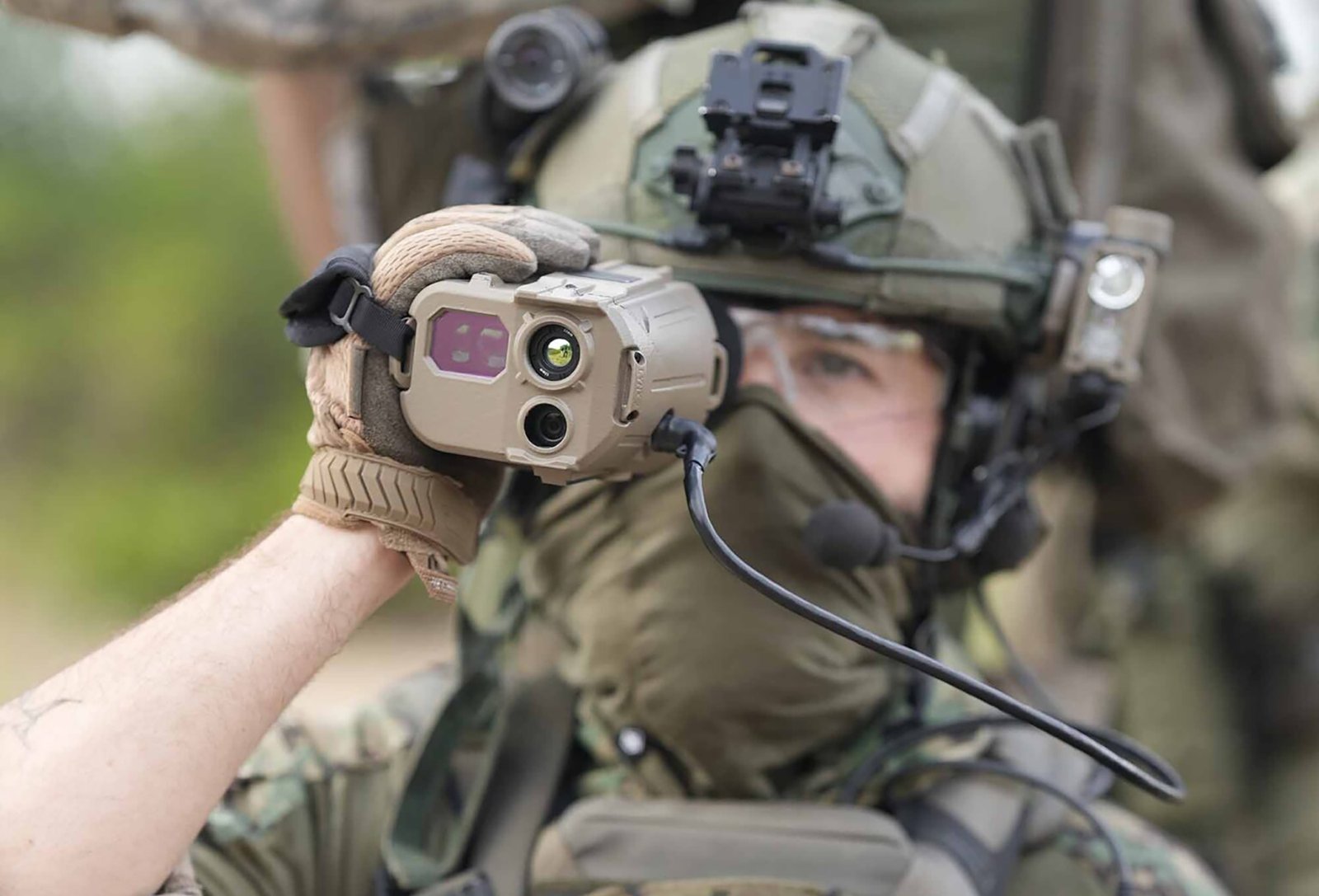
Over the past two years, we have significantly expanded our collaboration with the IDF, delivering thousands of systems. These include ORION soldier systems (OLAR), TAURUS tactical intelligence workstations, LYNX – an advanced situational awareness and tactical augmentation hand-held sensor – and NOCTA drift-free optical navigation modules for UAVs. Together, these systems give maneuvering forces – both regular and reserve units – the tools to operate more independently and efficiently on the ground, while also supporting tactical aerial platforms operating in contested environments.

Effectiveness is measured primarily through operational outcomes. We see it in faster mission planning and execution, improved coordination between units, and stronger situational awareness at the tactical edge. Ultimately, the most meaningful indicator is operational adoption in the field. When soldiers choose to rely on these systems in real operations, and when those systems help them carry out their missions more effectively, that is the clearest measure of impact.
ESD: Where can the largest gaps in an armed force’s capabilities be found? Why is this a recurring issue?
MALCHI: The most significant gaps in military capability are often found between strategic capability and tactical execution. Modern militaries invest heavily in advanced platforms and strategic systems, yet the decisive moments of conflict still occur at the squad, platoon, battalion and brigade levels. This is where soldiers operate in fast-moving, highly complex environments, where decisions must be made quickly, information must be accessible in a clear and intuitive manner, and operational outcomes are ultimately determined.
Moreover, nations budget their defense spending mostly based on deterrence. This strategy works well when you own “big” and “powerful” weapons, systems and platforms. The problem with this strategy is that in most cases the majority of the budget is allocated to those expensive deterring platforms (fighter jets, warships, subs etc.), and doesn’t filter all the way down to the fighting forces, which operate these weapon systems and platforms, therefore a gap is formed.
This gap persists in part because the tactical edge is inherently difficult to standardize and scale. Equipping frontline forces with effective tools across large formations requires solutions that are intuitive, robust, and deployable at scale. Too often, technologies are developed as specialized or niche capabilities rather than as systems designed for widespread operational adoption.
Closing this gap requires more than simply developing better tools for soldiers on the ground. It requires first and foremost a clear decision, that modernization has to start at the bottom, rather than the top. Only then can advanced capabilities translate into real effectiveness where it matters most – at the tactical edge.
ESD: What has ASIO identified as the main operational obstacles facing today’s warfighters, and how should they be addressed?
MALCHI: Modern warfighters operate in highly dynamic, contested environments where decision cycles are short, and uncertainty is constant. Units must maintain situational awareness, coordinate effectively, and continue operating even when communications are disrupted or GPS is degraded, all while managing multiple systems under pressure.
At the same time, combat manpower is shrinking, making soldier lethality and survivability a critical priority. In an era of manpower attrition, technology becomes a critical force multiplier, enabling forces to do more with fewer troops. Importantly, soldier-borne technology can be deployed at a fraction of the cost of major platform investments, making it a highly efficient way to strengthen combat effectiveness.
At ASIO, our focus is on addressing the operational challenges of the maneuvering battalion and making it more effective and lethal. Our approach is to provide capabilities that support the full operational cycle, from mission management and situational awareness to navigation, ISR intelligence collection, and ultimately closing the fire loop. By equipping forces at the tactical edge with integrated, practical tools, we help ensure that technology translates into real operational advantage on the battlefield.
ESD: Is there a point when squad-level dependence on higher-echelon decisions becomes a lethal problem?
MALCHI: Yes, there is. In modern combat environments, excessive dependence on higher headquarters can quickly become a liability. When communications are degraded or the situation on the ground evolves rapidly, waiting for directions from higher echelons can create dangerous delays.
Effective command structures should provide clear intent, coordination and support. But frontline units must also have the situational awareness and tools needed to act independently when necessary. The reality of modern warfare is that the tactical edge moves faster than centralized decision-making can keep pace with. Empowering soldiers to operate with greater autonomy is not simply an advantage; it is often essential for mission success and survivability.

ESD: Why should lower echelons be empowered to make decisions, and why is this easier for some militaries than others?
MALCHI: Frontline units are the first to encounter the real conditions of the battlefield, especially when facing adaptive or evasive enemies who operate quickly and unpredictably. Empowering lower echelons enables decisions to be made faster and closer to the operational reality, which is critical in dynamic environments where delays can mean lost opportunities. In such conditions, the ability to act quickly is not just advantageous; it is often the difference between seizing an opportunity and losing it.
Adapting to this approach is easier for some militaries than others because of cultural and doctrinal differences. Forces that emphasize mission command tend to trust junior leaders and encourage initiative within a clear operational intent. Others rely more heavily on centralized decision-making.
Technology can play an important role in bridging this gap. By providing frontline units with clearer situational awareness and better coordination tools, it allows them to act with greater confidence and independence while remaining connected to the broader operational picture. In this way, technology helps translate strategic intent into effective action at the tactical edge.
ESD: What technical challenges does ASIO help warfighters—or even crime-fighters—overcome?
MALCHI: At ASIO, our goal is to bring operational assurance to the battlefield. This ranges from very intuitive mission planning to situational awareness and reliable ISR capabilities that help forces operate with confidence in complex environments.
Our starting point is always the needs of the warfighter. Many members of our team have served in operational roles, and we develop our technologies based on real field requirements, not just from procurement tenders. That perspective shapes how we design our systems: solutions that are intuitive, practical, and immediately useful in demanding conditions.
One of our greatest sources of pride is the feedback we receive from the field. Hearing directly from operators that the technology made a real difference in their mission is the most meaningful validation of the work we do.

ESD: Looking at ASIO’s platforms for dismounted soldiers, what are their strengths in integrating HUMINT, ELINT, COMINT, ISR, and C2–C5?
MALCHI: The central strength of our platforms lies in their ability to translate information from multiple sources into a clear and actionable operational picture for the soldier on the ground. Rather than adding layers of complexity, our objective is to integrate relevant intelligence and operational data to enable faster decision-making and more effective coordination at the tactical edge.
A core design principle is reducing cognitive load. Systems must be lightweight, intuitive, and seamlessly integrated into the soldier’s loadout, otherwise they will not be used in combat. Rapid deployability is also critical. When dealing with evasive targets with short interception windows, the speed of deployment becomes a real force multiplier.
ESD: In the space of equipping dismounted warfighters, what should the NATO European defense community be discussing more?
MALCHI: One key topic is the importance of the tactical edge. Much of the current discussion still focuses on large platforms and strategic capabilities, yet many operational outcomes are ultimately determined at the squad and battalion levels – by soldiers operating on the ground in complex and rapidly evolving environments.
Speed of deployment is also critical. Modern conflicts are demonstrating the need to shorten the cycle between technological development and operational use. At ASIO, our experience working closely with the IDF has reinforced the importance of technologies that are not only effective but also proven in combat and capable of moving quickly from development to deployment.

More broadly, there should be greater focus on systems that improve situational awareness, ensure resilience in denied environments, and increase the operational independence of frontline units. Equipping soldiers with these capabilities enables them to operate more effectively, lethally and self-sufficiently where it matters most: at the tactical edge.
ESD: Thank you, sir, for your time and unparalleled battlespace and warfighter insights.
*The import of the Jewish holiday Simchat Torah is on a similar level as Eid al-Fatir is for Islam.
By Avi Evgenovitch
Click here to read the latest issue of ESD.
