


You have enough gold for one more upgrade in Crusader Kings III. There’s a promising holding, a useful income boost, and no immediate reason to leave the money sitting around. Before you click, open the succession screen. The person collecting that income after your ruler dies might be your next character’s brother.
That doesn’t automatically make the building a bad investment. It does change what you’re buying.
Succession has a way of turning an ordinary economic decision into a family argument that hasn’t happened yet. You’re deciding where to put money today, but also who gets to use the result tomorrow. A stronger kingdom can leave behind a weaker king. And if you’ve been treating everything inside your borders as one big personal property portfolio, the next funeral can be expensive.
For this example, stick with a landed feudal ruler under partition, without separate elective laws on individual titles. CK3 has enough governments and inheritance exceptions to fill several guides. The narrower question here is whether an upgrade helps the character you expect to play next.
Under ordinary Partition, eligible children share the ruler’s titles, with the primary heir receiving the primary title and realm capital. Other holdings can go elsewhere in the family. The important word is titles. Inheriting a kingdom doesn’t mean personally inheriting every county inside it. Check the actual allocation in your save before treating a particular holding as secure.1
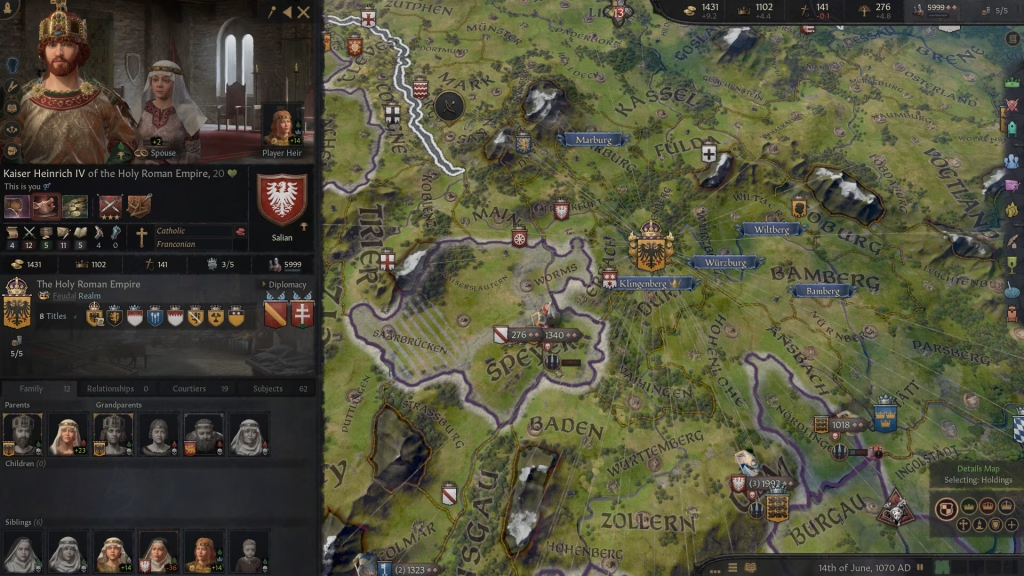
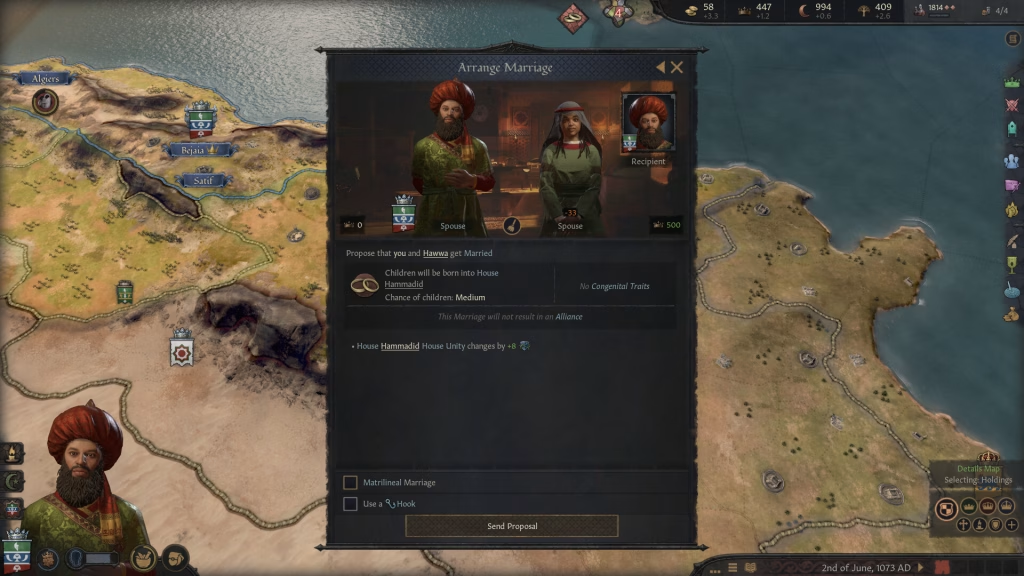
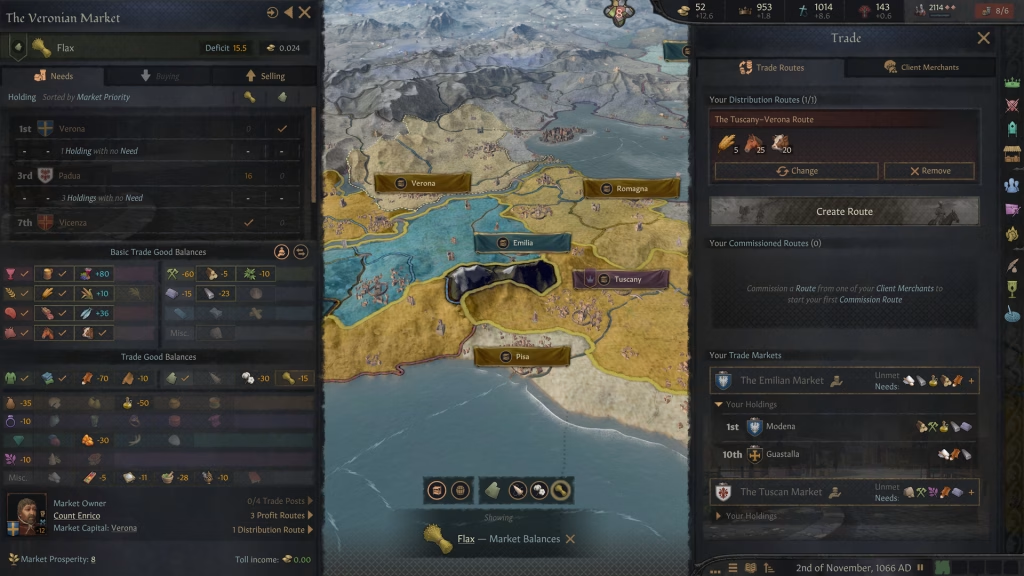
Suppose the succession preview shows your heir keeping the crown and two personally held counties. A younger sibling will receive another county and remain a vassal. The borders may barely change when the old ruler dies. Your personal income base will.
A feudal vassal contributes taxes and levies under their contract. They don’t hand over everything their land produces. The new ruler therefore gets a different benefit from that county than the old ruler received while holding it directly.2 The farms are still there. Someone else gets the first claim on their income (and their own ideas about what to do with it).
This is where the familiar reassurance that “it all stays in the realm” becomes a little too comforting. Yes, a prosperous vassal can be useful. But you still need enough resources under your own control to govern the arrangement.
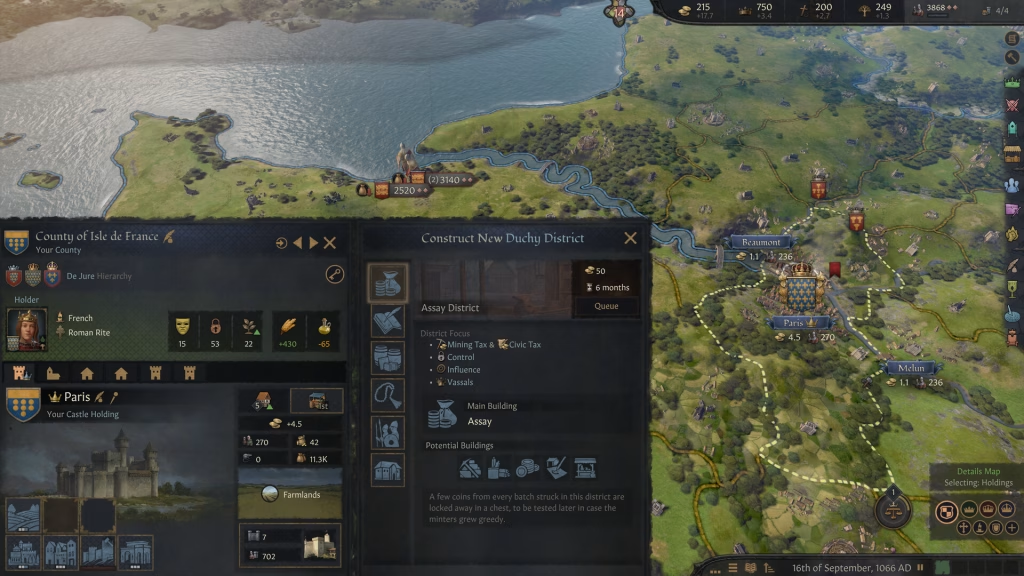
Now return to that building decision. Imagine two eligible upgrades with similar costs. One improves a holding the preview assigns to your player heir. The other improves the county going to the sibling. Assume the second has a better immediate return.
There’s a perfectly sensible argument for taking the better return. Your current ruler may collect it for years. That extra income might help finish a war, fund another building, or keep you out of debt. An investment can earn its place before inheritance ever becomes an issue.
The trouble starts when you count all its future income as though the player heir will keep collecting it directly. You’ve quietly used one owner’s income stream to justify another owner’s purchase. The building tooltip hasn’t lied. You’ve asked it to answer a question it doesn’t cover.
A simple payback estimate helps. Divide the construction cost by the extra income you reasonably expect to receive, using matching units. If a hypothetical upgrade costs 150 gold and adds 0.5 gold a month, that’s 300 months, or 25 years, after completion. Those are illustrative numbers, not a recommendation for a specific CK3 building. They show why the time involved matters.

That calculation leaves out modifiers, interruptions, and any military benefit. It also can’t tell you when your ruler will die. Still, it puts some weight behind “this pays for itself.” Twenty-five years is a substantial part of a reign. If the holding leaves your direct domain much sooner, your heir won’t receive that same payback on the same terms.
Of course, concentrating everything in the expected inheritance has costs too. You might pass over an excellent opportunity for a mediocre one. You might need the benefit now. There’s no reason to turn a useful succession check into a rule that forbids building anywhere else.
The decision should be deliberate: improve the land your heir keeps, accept the current benefit from land they lose, or keep the gold available while the situation is unsettled. Sometimes waiting is entirely reasonable. There’s no prize for emptying the treasury before you’ve worked out what the next ruler needs.
There’s another possibility to check before spending. Will the sibling remain inside the realm at all?
Confederate Partition can create additional titles for younger heirs when the necessary land is held. Ordinary Partition doesn’t create those extra titles. If an independent king’s succession leaves another heir with a separate kingdom, that heir can become an independent ruler. This is why leaving a second kingdom uncreated isn’t a reliable solution under Confederate Partition.3
For the investment decision, that changes the calculation again. An upgraded holding might become part of a neighbouring ruler’s domain. You could have good reasons to want that neighbour prosperous and friendly, especially if you’re pursuing a wider dynastic plan. Just be clear about the intention. Your future character may have no tax relationship with that land at all.
It would be easy to take this too far and treat every sibling as a future enemy. That gets tiresome, and it narrows the game. Providing for another branch of the family can be part of the campaign you want to play. The point is to notice when you’re doing it, rather than discover after succession that your supposed personal investment was a generous family gift.
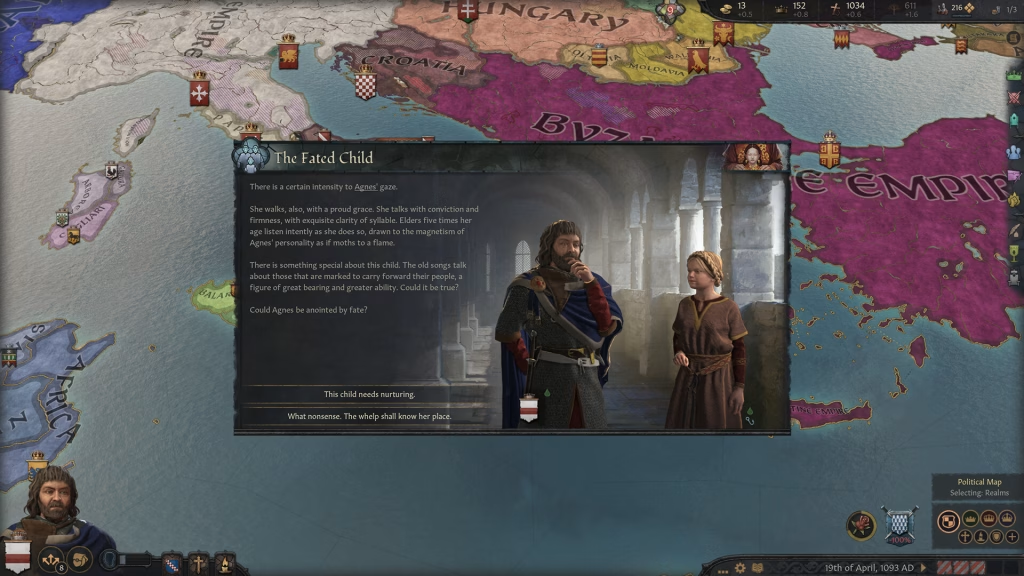
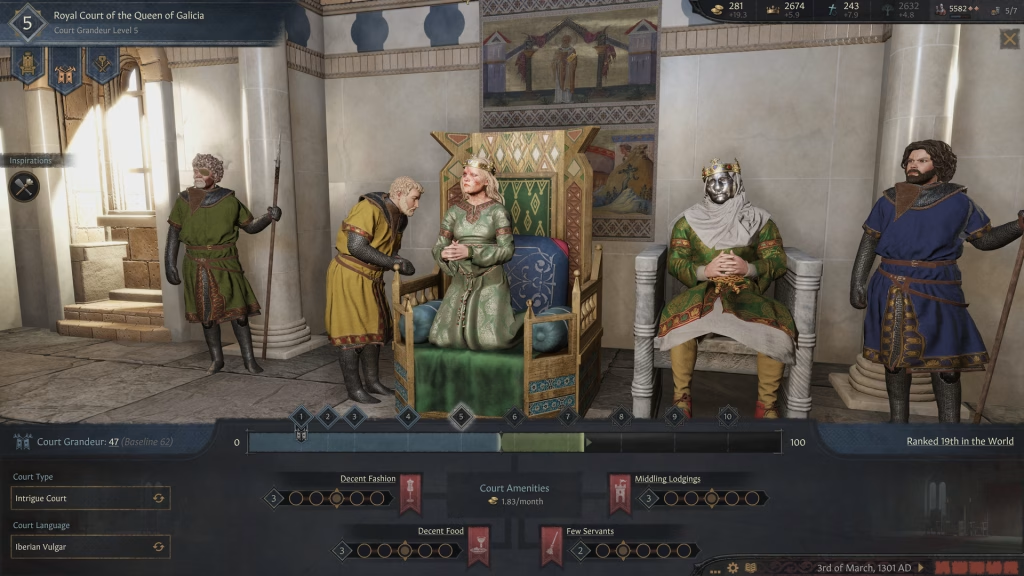
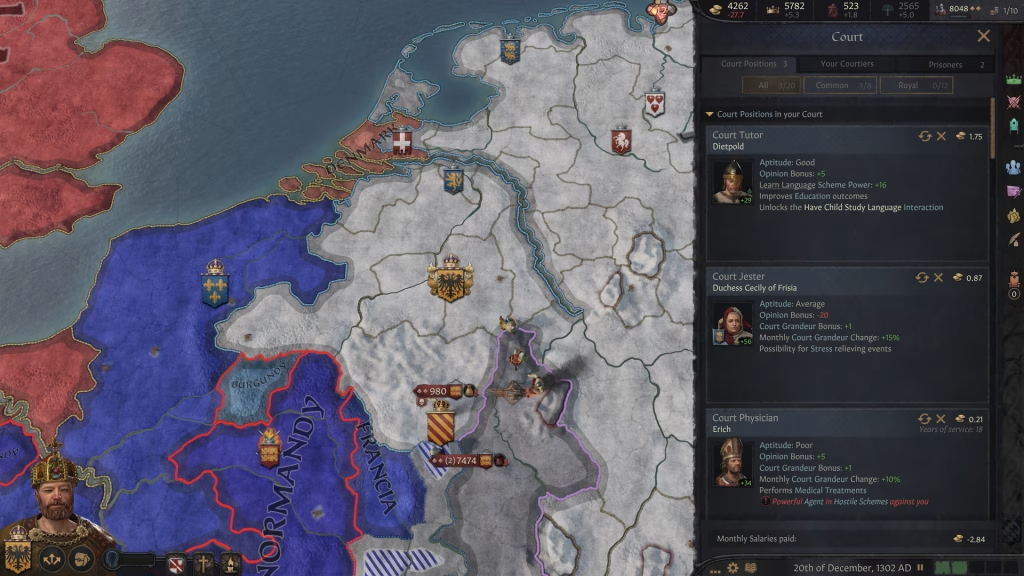
I like what this does to an otherwise straightforward building choice. The holding has a location, a return, and an owner whose identity can change. An apparently efficient purchase can become awkward because of a law somewhere else in the interface. That gives the economy a political consequence without needing a special event to announce it.
There’s a useful lesson here for strategy game design, too. A lasting upgrade becomes more interesting when control over its benefits is uncertain. The player has to think about the institution that carries the investment forward. In CK3, that institution includes a family with several people expecting their share. You can see why they might object to your beautifully efficient plan to leave them nothing.
Before the next substantial building purchase, pause and look at the succession preview. Find the holding you’re improving, check who receives it, then check that person’s expected relationship to your player heir. Revisit the plan when your family or titles change. An earlier preview only described the earlier situation.
Then make the purchase with that information in mind. Build for the current reign if the benefit is worth it. Build for the heir if you want to strengthen their starting position. Help the sibling if that serves your plans for the family.
Just don’t let the kingdom’s name on the map stand in for the answer. Your heir needs to know which bills they can pay after the funeral.
Sources and notes
- CK3 Database: Partition, reproducing the succession law and English localisation from game version 1.20.1.2. The example assumes ordinary feudal partition, with no separate elective title laws. It does not promise that the entire capital duchy stays together.
- CK3 Database: Feudal government, game-file-derived description of contractual taxes and levies. Contribution rates deliberately omitted because the individual contract and modifiers matter.
- CK3 Database: Confederate Partition, plus PCGamesN: Crusader Kings 3 succession laws for the distinction from ordinary Partition. Always check the actual save’s succession preview.
All examples are hypothetical. No personal campaign experience is claimed. The payback calculation is illustrative, not a live building statistic. Sources checked November 14, 2026.

Semi-retired game designer and developer trying to use my experience to enhance the strategy and strategy adjacent gaming sector. Strategy game player for over 35 years. Game development experience in AAA, Indie, and Board.
