

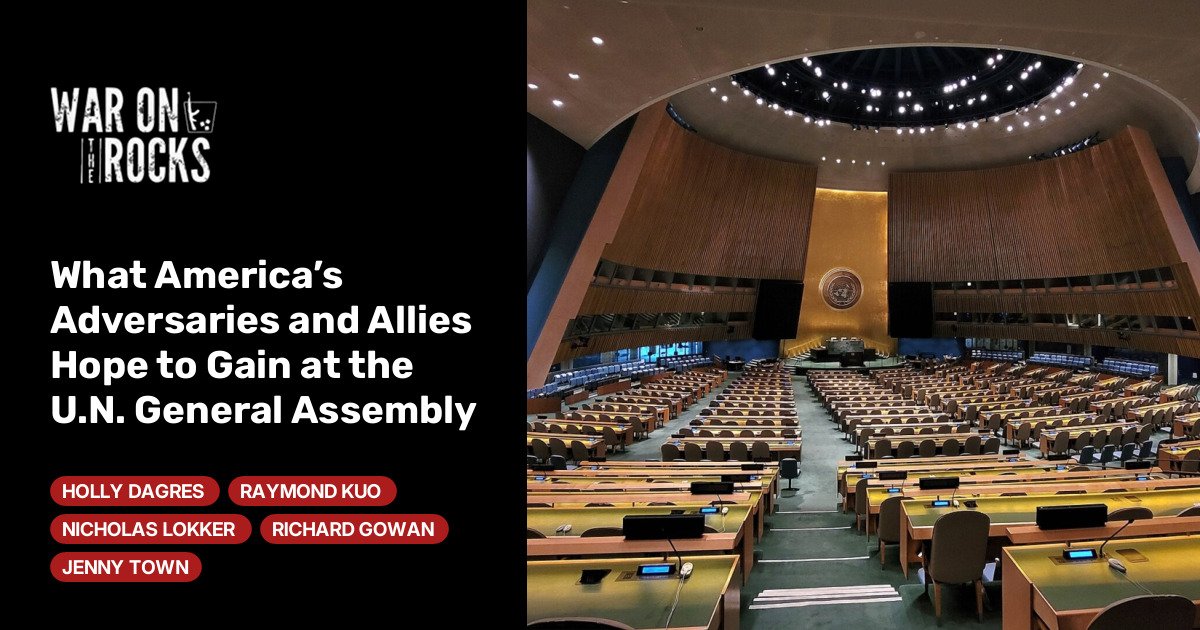
This year’s U.N. General Assembly officially opened on Tuesday, Sept. 8. The annual gathering gives diplomats and leaders a valuable opportunity to press their foreign policy priorities and engage — formally and informally — with both partners and adversaries. Most heads of state will arrive later this month for the General Debate that begins on Sept. 22. The General Assembly will wrap up on Sept. 28.U.S. President Donald Trump and his senior officials have strongly criticized the United Nations, withdrawn from multiple U.N. organizations, and reduced funding. More broadly, the Trump administration’s moves to withdraw some U.S. troops, shift more of the security burden to allies, and impose tariffs on allies and adversaries alike have signaled to the world that the United States no longer intends to play its traditional role in sustaining the United Nations and the international political and economic system it underpins. Against this backdrop of a changing U.S. role, we asked experts to explain how a range of adversaries and allies are approaching this year’s General Assembly — and what each hopes to achieve.Read more below.Holly Dagres Senior Fellow at the Washington Institute and Curator of The Iranist newsletter on SubstackUnlike the Trump administration, Tehran still believes in the utility of multilateral institutions like the United Nations, though it has been unable to use that venue to bring an end to the war. Iranian President Masoud Pezeshkian will make points that resonate with the Global South about a multipolar world and the decline of what it views as American “imperialism,” while also emphasizing what Iran sees as its strength and resilience in the face of attacks from its two biggest foes — the United States and Israel — which launched two wars in the midst of negotiations with Tehran. Expect Pezeshkian to also use the global
Members-Only Content
This article is reserved for War on the Rocks members. Join our community to unlock exclusive insights and analysis.
This year’s U.N. General Assembly officially opened on Tuesday, Sept. 8. The annual gathering gives diplomats and leaders a valuable opportunity to press their foreign policy priorities and engage — formally and informally — with both partners and adversaries. Most heads of state will arrive later this month for the General Debate that begins on Sept. 22. The General Assembly will wrap up on Sept. 28.
U.S. President Donald Trump and his senior officials have strongly criticized the United Nations, withdrawn from multiple U.N. organizations, and reduced funding. More broadly, the Trump administration’s moves to withdraw some U.S. troops, shift…
