

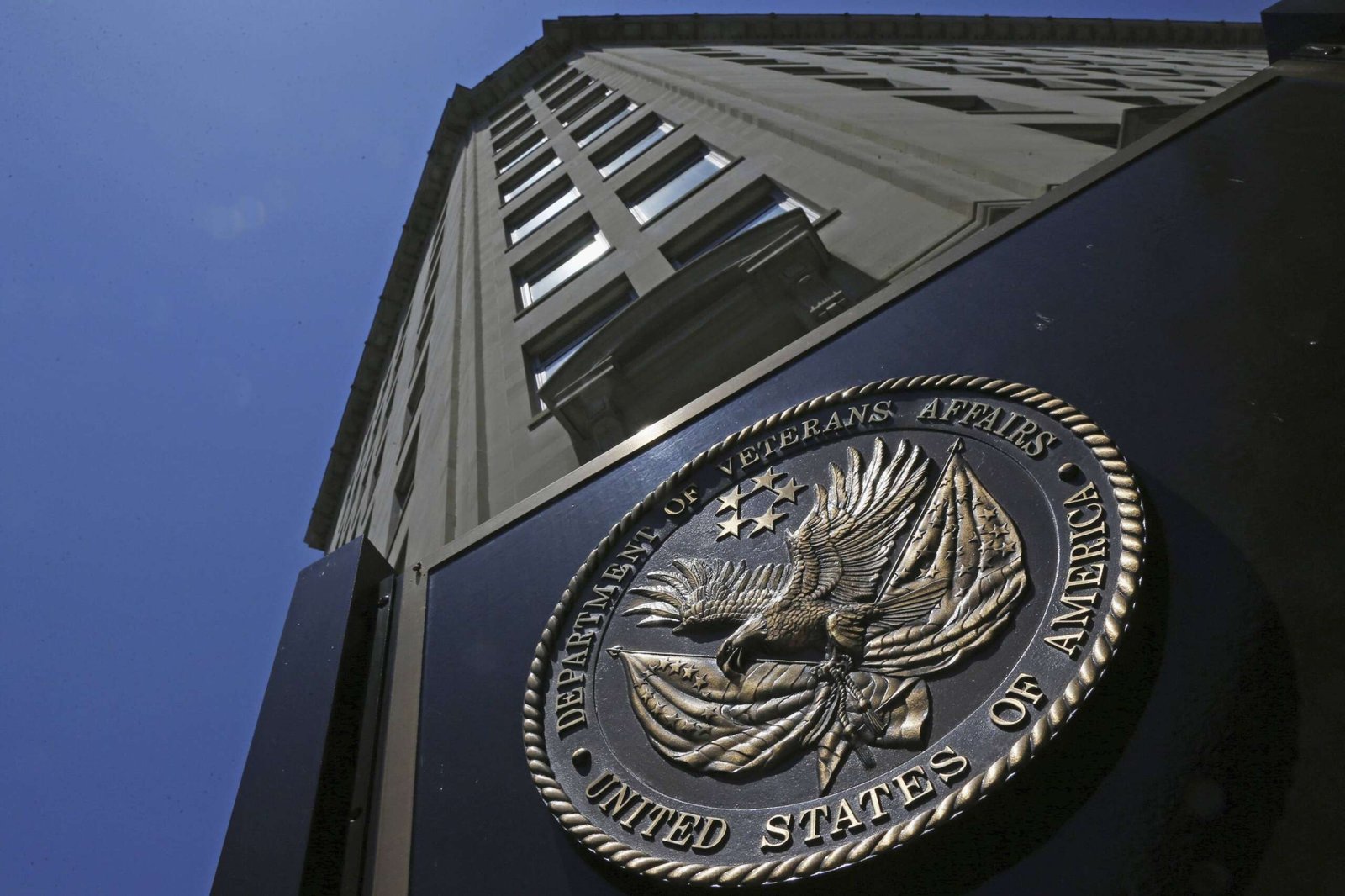
The Department of Veterans Affairs is getting bipartisan praise for its resumed rollout of a new Electronic Health Record — a multibillion-dollar project that has run into myriad problems since it began under the first Trump administration.
VA’s deployment of a new Oracle-Cerner EHR is one of the largest IT contracts in the federal government. The department put the project on hold multiple times to troubleshoot persistent outages and functionality problems.
Last month, the VA resumed EHR deployments after a three-year pause. In April, the VA rolled out the Oracle-Cerner system to four VA health care systems in Michigan ― Ann Arbor, Battle Creek, Detroit and Saginaw.
VA Secretary Doug Collins told the Senate VA Committee on Wednesday, “we’ve just had a phenomenal rollout in Michigan so far.”
“My only problem I have right now in the VA is I have more centers wanting to go ahead and get ahead of the line than anything else, because it’s actually working,” Collins said.
VA’s new EHR is currently running at 10 sites. Full deployment would bring the EHR to 170 sites. The department currently expects to complete the deployment as soon as 2031. The Defense Department completed its transition to the same EHR platform in March 2024.
Collins stressed that completing the EHR modernization project is necessary to get a complete picture of a veteran’s treatment history from both VA and non-VA community care providers.
“They’re working at cyber speed, we’re working at dial-up,” he said. “Until we are able to actually have an EHRM system that is part of the 21st century, we can’t talk to community providers.”
Collis said moving ahead with this project is also necessary to allow VA facilities to seamlessly share records with each other.
“Our facilities can’t talk to each other. Our current record system does not allow us to talk to each other, and we spend $700 million a year just to keep it alive,” he said.
Lawmakers from both parties introduced a slew of bills under the Biden administration to put stricter guardrails on the EHR contract — or pull the plug on the project entirely. But top Democrats on several committees and their Republican colleagues say the EHR project appears to be back on track after years of dysfunction.
Committee Ranking Member Richard Blumenthal (D-Conn.), a critic of many VA management decisions under Collins’ leadership, including an ongoing agency reorganization, said at Wednesday’s hearing that, “I welcome the department’s commitment to advancing the electronic health record modernization.”
Senate Homeland Security and Governmental Affairs Committee Ranking Member Gary Peters (D-Mich.) told Collins in an April 30 appropriations hearing that the VA EHR rollouts in his state have gone well.
“The reports have been very positive from the folks in Michigan, and I appreciate that, but I will say that I’m also cautiously optimistic that future rollouts are going to be just as successful as what we have seen so far,” Peters said. “I’m concerned the accelerated deployment schedule for record modernization may impact that.”
Unlike previous deployments, which occurred one site at a time, the EHR go-lives in Michigan all took place on the same day.
The EHR modernization contract has ballooned well beyond its initial $10 billion estimate. Cost estimates for VA’s EHR modernization range from $16.1 billion to nearly $50 billion.
VA is looking to have the Oracle-Cerner EHR go live at 13 total sites this year and up to 24 sites in 2027.
The Trump administration is looking to give the VA $4.2 billion in discretionary funding for the ongoing EHR rollout in its fiscal 2027 budget request — an increase of about $800 million.
Sen. John Boozman (R-Ark.) asked Collins if the VA’s FY 2027 budget request provides “sufficient funding to further accelerate the program’s rollout without sacrificing quality.”
“I want to help you,” Boozman said.
“We need this fully funded going forward,” Collins replied. “There’s no going back on the ERHM. We’re beyond that point, so it’s got to be done.”
‘The exact same problems’
Groups representing VA employees, however, say the latest facilities to adopt the new EHR are dealing with many of the same problems as before.
Jacob Pannell, a former VA behavioral health provider in the Pacific Northwest, now a business representative for the National Federation of Federal Employees, told Democrats on the Senate VA Committee at a roundtable hearing Tuesday that he saw firsthand the “day one” rollout of the Oracle-Cerner EHR at VA sites in Spokane and Walla Walla, Washington — and that many of the same problems persist.
“We were the first ones to go live, and I will just say this: The reports that are coming in still from the new facilities are the exact same problems that we reported in 2020, 2021 and 2022,” Pannell said. “Every single problem. It still takes twice as long for our providers and nursing staff — even down to our [medical support assistants] and schedulers that are just getting [veterans] in the door — it takes twice as long to go through the system.”
Full health record interoperability between VA and DoD has been the ultimate goal of this project since the VA signed its contract with Cerner in 2018.
“It integrates — I can see some things from DoD, like it was designed to do — but I will tell you this: it’s not worth the risk, it’s not worth the damage that’s been done,” Pannell said.
Under the Biden and first Trump administrations, government watchdogs flagged several problems with the new EHR.
In some cases, the new EHR did not successfully transfer prescription orders to VA’s pharmacy operations as well as flags in veterans’ medical files indicating that they were at an elevated risk of suicide. Pannell told lawmakers that all these things are still “yet to be fully resolved.” As a veteran enrolled in VA care, Pannell said VA medical facilities in Maryland that still use the department’s legacy EHR system don’t have full visibility into his medical records from when he was a patient at facilities in Washington State using the new EHR.
“I can’t even figure out where I need to go to refill my medications, so if I have that problem, somebody who’s pretty good with technology, I know our Vietnam veterans and some of our older veterans, they cannot navigate that system,” he said.
Julie McLendon, legislative committee co-chairwoman of the Nurses Organization of Veterans Affairs, said the VA facilities that have switched over to the Oracle-Cerner EHR are experiencing problems migrating inter-facility consults, referrals and orders. She said that the newest sites deploying the new EHR don’t have the same level of support staff that the VA provided during earlier go-lives.
VA facilities reduce appointment availability and see a temporary drop in productivity as they switch over to the new EHR, but those metrics are expected to return to normal once clinicians become more familiar with the new system.
“We don’t have additional support with additional staff that had been provided during the initial rollout five years ago,” McLendon said. “As we learn it, we don’t have other staff available to see patients, so we are anticipating a chance of extending access and wait times,” McLendon said.
At Wednesday’s hearing, Sen. Patty Murray (D-Wash.) told Collins that the VA, as part of its budget request for next year, continues to improve the new EHR’s functionality at some of the earliest go-live sites.
“We can’t ignore the fact that those original sites are still seeing problems, and you need to be aware of that,” Murray said.
Collins said one of the key issues with previous go-lives was that the VA allowed too much customization in how local facilities implemented the new EHR. The department, he added, has now standardized the EHR deployment process.
“It was bad, and you had six facilities that were allowed to act as if they were independent, not connected, and do whatever they wanted to do, and you had some system software problems. We’ve not had that. We fixed that issue moving forward, and we’re going to go back and fix those as well,” Collins said.
Murray, who serves as the top Democrat on the Senate Appropriations Committee, expressed optimism about the future of the EHR project, even as she pressed the VA to address issues at earlier sites.
“I’m excited that you’re moving out and not hearing complaints. That’s great, but we still have problems at the original sites,” she said.
“That is what drives me every day — to make sure we get it right this time,” Collins replied.
If you would like to contact this reporter about recent changes in the federal government, please email jheckman@federalnewsnetwork.com, or reach out on Signal at jheckman.29
Copyright
© 2026 Federal News Network. All rights reserved. This website is not intended for users located within the European Economic Area.
