

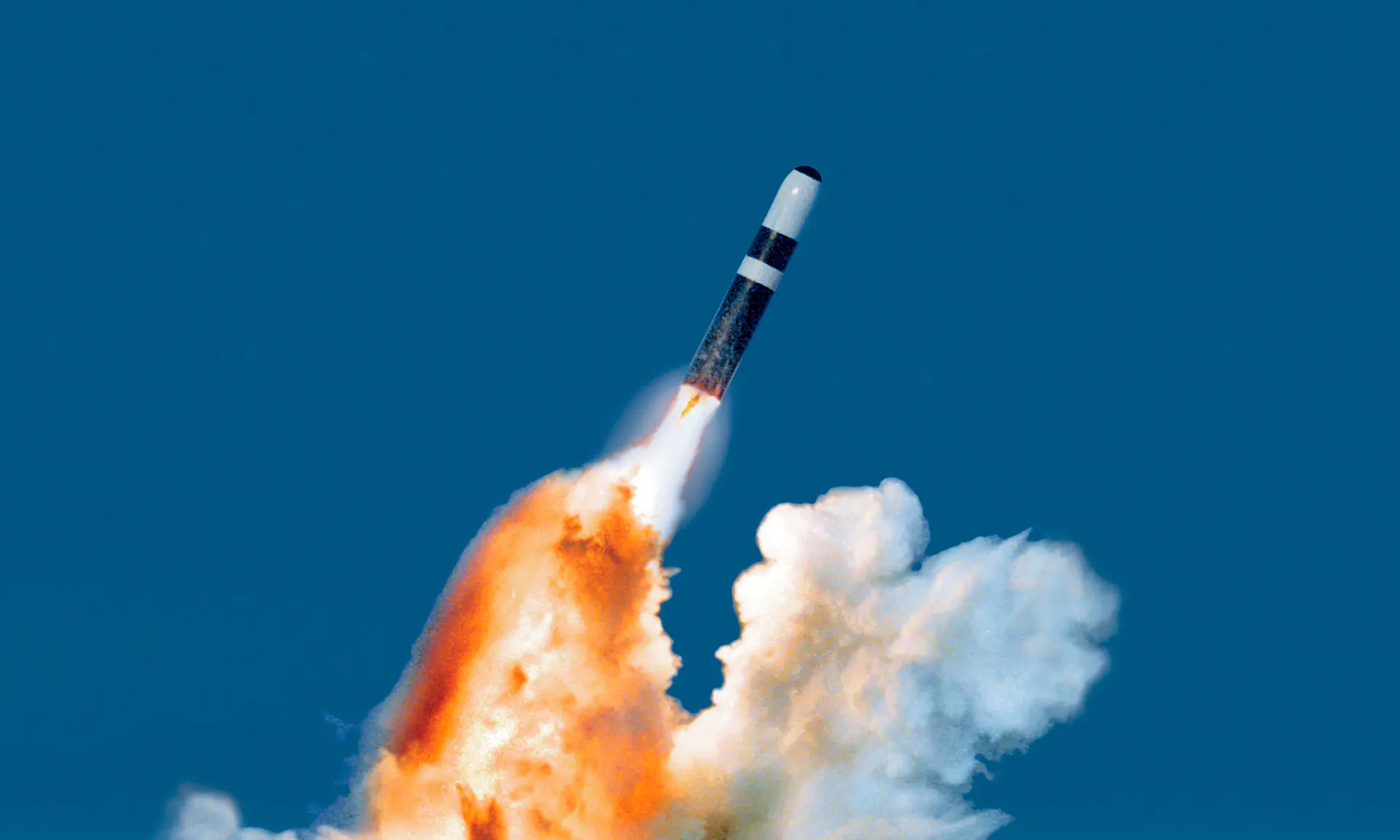
Defense Feeds, Washington — The United States is reinforcing its strategic deterrence capabilities as the US Navy Trident II D5 contract boosts nuclear missile readiness through a $77 million agreement with L3Harris.
The contract focuses on sustaining testing and evaluation systems for the Trident II D5 submarine-launched ballistic missile. As nuclear deterrence remains a cornerstone of national defense, maintaining reliability in these systems is critical.
The Trident II D5 missile is a key component of the US nuclear triad, deployed aboard Ohio-class ballistic missile submarines. It provides a survivable and credible second-strike capability, ensuring deterrence even in the face of advanced threats. Sustaining its testing infrastructure is essential to guarantee long-term effectiveness.
The latest contract highlights the importance of continuous evaluation and modernization. Even established systems require regular testing to ensure performance and reliability under evolving conditions. The focus now is on maintaining confidence in one of the most critical elements of US strategic defense.
Sustaining Reliability of the Trident II D5 System
The primary objective of the L3Harris contract is to support testing systems associated with the Trident II D5 missile. These systems are used to evaluate performance, validate upgrades and ensure operational readiness. Without such testing, maintaining confidence in the missile’s effectiveness would be difficult.
The Trident II D5 has been in service for decades, but it continues to undergo modernization. Life extension programs and upgrades are designed to keep the system relevant in the face of evolving threats. Testing plays a key role in verifying these improvements.
Reliability is especially important for nuclear deterrence. Unlike conventional weapons, these systems are rarely used in combat but must function flawlessly if required. This places a high emphasis on testing, validation and quality assurance.
The contract ensures that the infrastructure supporting these processes remains operational and effective. It also supports ongoing efforts to refine and enhance the system over time.

Role in US Nuclear Deterrence Strategy
The Trident II D5 missile is a central element of the US nuclear deterrent. Deployed on ballistic missile submarines, it provides a secure and survivable capability that is difficult for adversaries to detect or neutralize. This makes it a key component of strategic stability.
Submarine-based deterrence is particularly valuable because of its mobility and stealth. Unlike fixed installations, submarines can operate undetected across vast areas. This ensures that a credible deterrent remains in place at all times.
Maintaining the reliability of these systems is essential for deterrence to be effective. Adversaries must have confidence that the capability exists and can be employed if necessary. Regular testing and evaluation support this objective.
The contract with L3Harris contributes directly to this effort. By sustaining testing systems, it ensures that the Trident II D5 remains a reliable and effective part of the US defense posture.
Long-Term Implications for Strategic Systems
The $77 million investment reflects a broader commitment to maintaining and modernizing strategic systems. As global security dynamics evolve, the importance of credible deterrence remains unchanged. Ensuring that key systems continue to perform as expected is a fundamental requirement.
The contract also highlights the role of industry partners in supporting defense capabilities. Companies like L3Harris provide specialized expertise in testing and evaluation systems. Their involvement is essential for maintaining complex military technologies.
Looking ahead, continued investment in testing infrastructure will be necessary. As upgrades are introduced and new technologies developed, validation processes must keep pace. This ensures that systems remain effective over time.
The focus on sustaining existing capabilities also complements efforts to develop future systems. Balancing modernization with maintenance is a key challenge in defense planning. Both aspects are necessary to ensure long-term readiness.
The US Navy’s decision to fund continued support for Trident II D5 testing underscores the importance of reliability in strategic deterrence. While less visible than new weapon systems, these investments are critical for maintaining confidence in national defense capabilities.
