

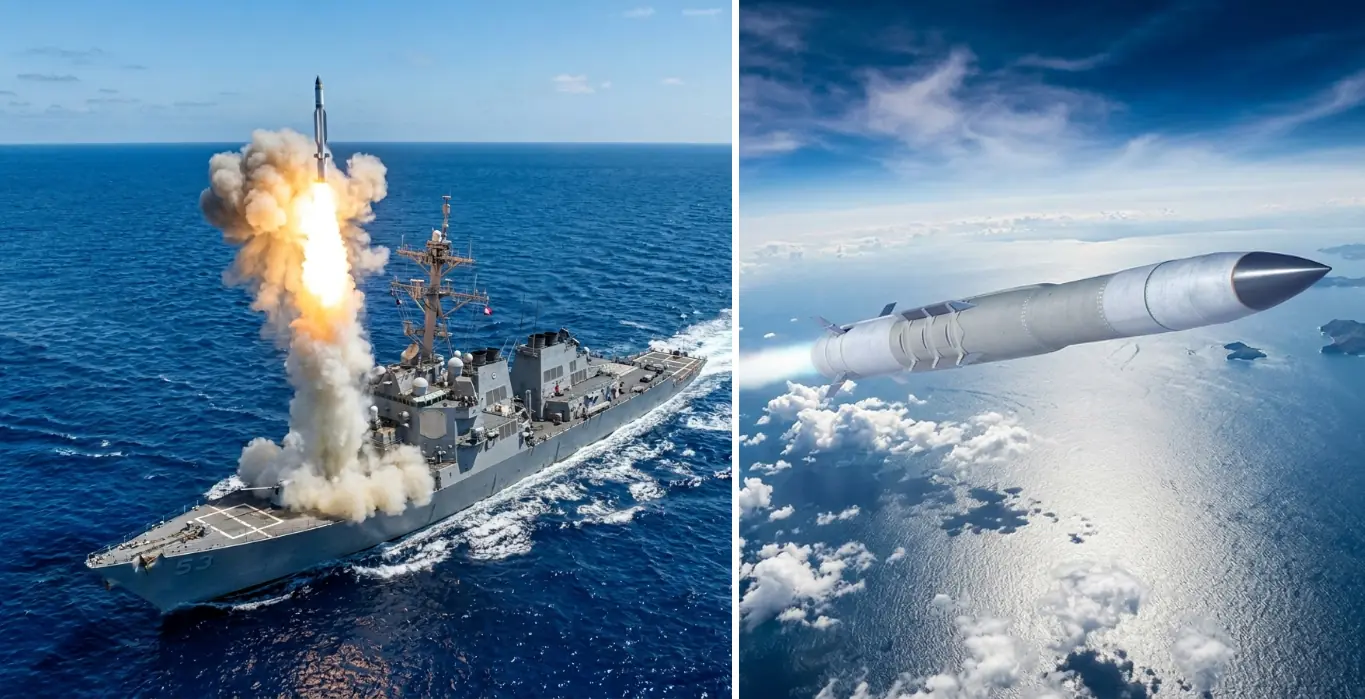
Defense Feeds, Washington — The US Navy is advancing its air and missile defense capabilities as the US Navy PAC-3 MSE upgrade boosts Arleigh Burke defense through planned integration with Aegis-equipped destroyers.
The move reflects a growing need to counter increasingly complex missile and drone threats in modern naval operations. As adversaries expand their use of precision weapons and unmanned systems, naval defenses must evolve to keep pace.
The Patriot Advanced Capability-3 Missile Segment Enhancement, or PAC-3 MSE, has traditionally been associated with land-based air defense. Its potential integration into naval platforms signals a shift toward more flexible and layered defense architectures. By combining proven missile defense technology with the Aegis combat system, the Navy aims to enhance interception capability across multiple threat types.
This development is part of a broader effort to strengthen fleet survivability. Arleigh Burke-class destroyers already serve as a cornerstone of US naval air defense. The addition of PAC-3 MSE could further expand their role in countering emerging threats.
Expanding Aegis Capabilities With PAC-3 MSE
The integration of PAC-3 MSE into Aegis destroyers represents a significant evolution in naval air defense. The missile is designed to intercept incoming threats using hit-to-kill technology, which increases accuracy and effectiveness. This makes it particularly suitable for countering ballistic missiles and advanced aerial threats.
Unlike traditional naval interceptors, the PAC-3 MSE offers enhanced maneuverability and improved range. These characteristics allow it to engage targets that may be difficult to intercept using existing systems. Integrating such capabilities into Aegis platforms strengthens the overall defensive network.
The upgrade also supports a layered defense approach. By combining different types of interceptors, the Navy can address a wider range of threats. This increases the likelihood of successful interception, especially in high-intensity scenarios where multiple threats may be present simultaneously.

Addressing Evolving Missile and Drone Threats
Modern naval warfare is increasingly shaped by the proliferation of advanced missile systems and unmanned platforms. Hypersonic weapons, cruise missiles and drone swarms present new challenges that require adaptive defense solutions. Traditional systems alone may not be sufficient to handle these evolving threats.
The PAC-3 MSE provides an additional layer of protection against such challenges. Its ability to engage fast-moving and maneuvering targets makes it a valuable asset in contested environments. This is particularly important as adversaries continue to develop more sophisticated weapons.
Drone threats also play a growing role in naval operations. Unmanned aerial systems can be used for surveillance, targeting or direct attacks. Enhancing interception capability against these systems is essential for maintaining operational security.
By integrating PAC-3 MSE, the Navy is addressing both missile and drone threats within a unified framework. This ensures that destroyers remain capable of defending against a broad spectrum of challenges.

Strategic Impact on Future Naval Operations
The decision to integrate PAC-3 MSE reflects a broader shift toward more adaptable and resilient naval forces. As threats become more complex, flexibility in defense systems becomes increasingly important. The ability to incorporate different technologies into a single platform enhances operational effectiveness.
For the US Navy, this development reinforces the role of Arleigh Burke-class destroyers as key elements of fleet defense. These ships are already equipped with advanced sensors and weapons systems. The addition of PAC-3 MSE further strengthens their defensive capabilities.
It also highlights the importance of interoperability between land-based and naval systems. Leveraging existing technologies across different domains can accelerate capability development. This approach reduces costs while improving overall performance.
Looking ahead, the integration of PAC-3 MSE could influence future ship designs and defense strategies. As navies around the world adapt to new threats, the demand for versatile and scalable solutions will continue to grow. The US Navy’s move signals a clear commitment to staying ahead in this evolving environment.
