

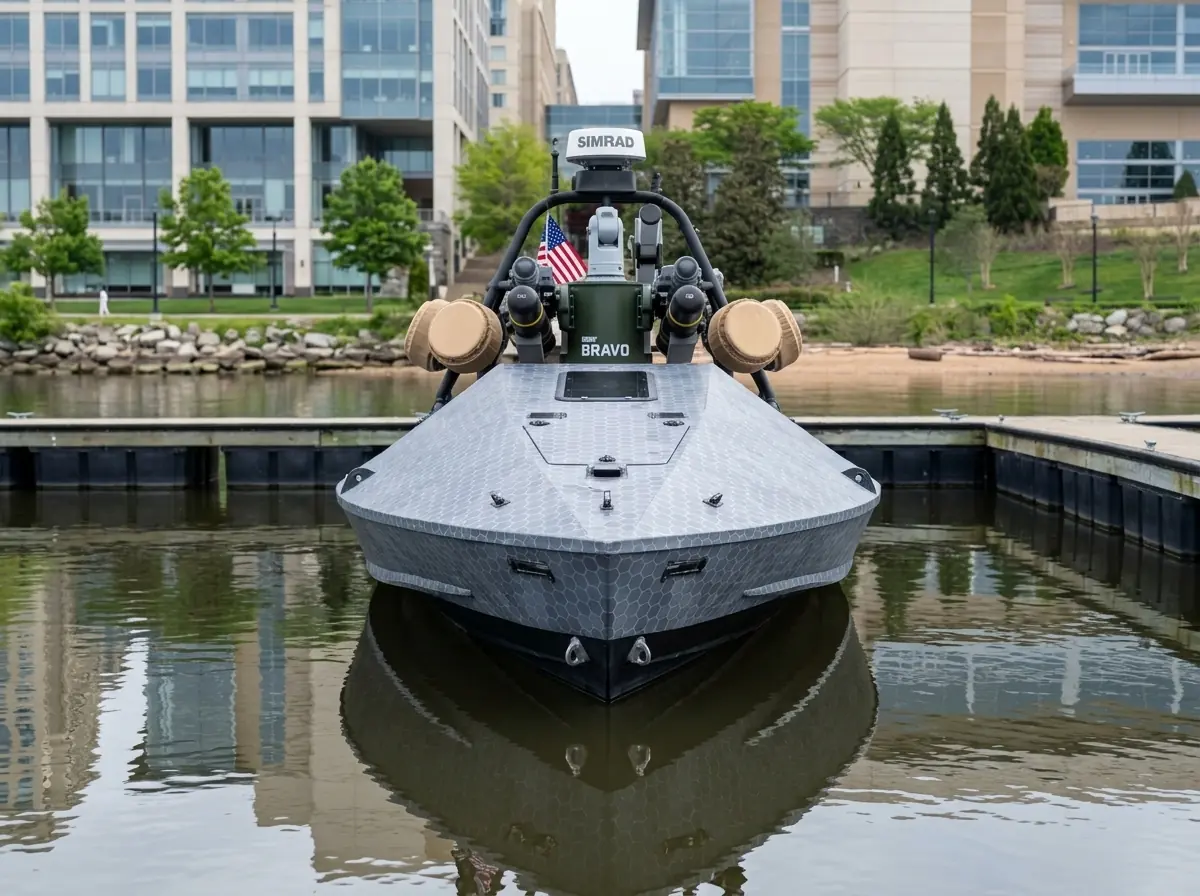
Defense Feeds, Washington — A new phase in unmanned naval warfare is taking shape as the US Navy Comet USV unveils missile-armed drone vessel designed for future operations.
Developed by BlackSea Technologies, the Comet unmanned surface vessel introduces a combination of speed, autonomy and firepower rarely seen in platforms of its size. The system reflects a broader shift toward integrating unmanned systems into frontline naval roles.
The Comet USV is equipped with both Hellfire and Sidewinder missiles, giving it the ability to engage a variety of targets across different domains. This dual capability allows it to address threats ranging from small surface vessels to aerial targets. Such versatility marks a significant departure from earlier unmanned platforms that were primarily limited to surveillance or support missions.
As navies increasingly explore distributed and autonomous warfare concepts, platforms like the Comet are gaining attention. The development raises important questions about how unmanned systems will be used in future conflicts and how they may reshape naval tactics.

Missile Integration Expands USV Combat Role
The defining feature of the Comet USV is its integration of advanced missile systems. By carrying AGM-114 Hellfire missiles, the vessel gains precision strike capability against surface targets. These missiles have been widely used in both land and air platforms, known for their accuracy and reliability.
In addition, the inclusion of AIM-9 Sidewinder missiles introduces an air defense component. This allows the USV to engage aerial threats, including drones and potentially low-flying aircraft. Combining these two systems creates a multi-role platform capable of operating in complex threat environments.
This level of armament significantly expands the role of unmanned surface vessels. Rather than acting solely as reconnaissance assets, they can now contribute directly to combat operations. It also supports the concept of distributed lethality, where smaller platforms collectively increase overall firepower.
Autonomy and Flexibility in Naval Operations
The Comet USV is designed with a strong focus on autonomy and operational flexibility. As an unmanned platform, it can operate without a crew, reducing risk to personnel in high-threat environments. This makes it particularly suitable for missions that would otherwise be considered too dangerous.
Its compact size and mobility allow it to be deployed rapidly across different operational areas. It can be used for patrol, escort or strike missions depending on mission requirements. This adaptability makes it a valuable asset in both peacetime and conflict scenarios.
Autonomous systems like the Comet also support the Navy’s push toward networked operations. By integrating with other platforms, including manned ships and aerial systems, the USV can contribute to a broader operational picture. This enhances situational awareness and coordination across the force.

Implications for Future Naval Warfare
The introduction of missile-armed USVs reflects a broader transformation in naval warfare. As technology advances, unmanned systems are expected to play a larger role in both offensive and defensive operations. Platforms like the Comet demonstrate how these systems can be integrated into existing force structures.
For the US Navy, such developments align with efforts to create more flexible and resilient fleets. Unmanned vessels can operate alongside traditional warships, extending reach and reducing vulnerability. They also provide new options for responding to emerging threats.
At the same time, the deployment of armed unmanned systems raises new strategic considerations. Questions around command, control and rules of engagement will become increasingly important. Ensuring these systems are used effectively and responsibly will be a key challenge moving forward.
As the Comet USV moves from concept to potential deployment, it offers a glimpse into the future of naval operations. Its combination of autonomy, mobility and firepower highlights the evolving nature of maritime warfare. In an environment where speed and adaptability are critical, such platforms are likely to play a central role.
