

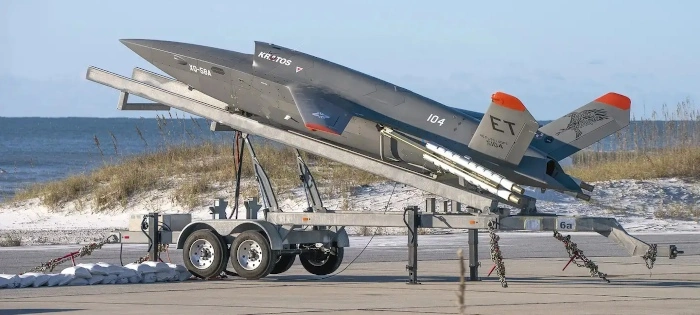
Defense Feeds, Washington — The US Marine Corps is advancing its future air combat strategy as the US Marines MQ-58 Valkyrie plan boosts F-35B combat power with the introduction of collaborative combat aircraft by 2029.
The initiative reflects a growing shift toward integrating unmanned systems with manned platforms to enhance operational effectiveness. As modern warfare becomes more complex, combining human decision-making with autonomous systems is emerging as a key advantage.
The MQ-58 Valkyrie, developed as a low-cost, high-performance unmanned aircraft, is designed to operate alongside advanced fighters such as the F-35B. This concept allows the drone to act as a force multiplier, supporting missions without exposing pilots to additional risk. The Marine Corps’ plan highlights the increasing importance of manned-unmanned teaming in future air operations.
The move also aligns with broader defense strategies focused on distributed and networked warfare. By deploying collaborative aircraft, the Marines aim to improve flexibility, survivability and mission effectiveness. The focus now shifts to how these systems will be integrated into operational units.
Manned-Unmanned Teaming With F-35B
The integration of the MQ-58 Valkyrie with the F-35B represents a significant evolution in air combat operations. Instead of operating independently, unmanned aircraft will work in coordination with piloted fighters. This allows for more complex and adaptive mission planning.
The Valkyrie can perform a range of roles, including reconnaissance, electronic warfare and strike support. By taking on these tasks, it reduces the workload on the F-35B and allows pilots to focus on critical decisions. This enhances overall mission efficiency.
One of the key advantages of this approach is survivability. Unmanned systems can be deployed in high-risk environments where sending manned aircraft would be more dangerous. This provides greater operational flexibility and reduces potential losses.
The concept also supports the use of distributed forces. Multiple unmanned aircraft can operate alongside a single fighter, extending its reach and capability. This creates a more dynamic and resilient force structure.

Enhancing Combat Capability Through Collaboration
The MQ-58 Valkyrie is designed to be a cost-effective platform that can be produced in larger numbers. This allows the Marine Corps to deploy multiple drones without the expense associated with traditional aircraft. The ability to scale up numbers is a key advantage in modern warfare.
These unmanned systems can carry sensors, weapons or electronic warfare equipment depending on mission requirements. This adaptability makes them suitable for a wide range of scenarios. It also allows commanders to tailor their approach based on specific operational needs.
Collaboration between manned and unmanned systems improves situational awareness. Data collected by the Valkyrie can be shared with the F-35B in real time. This enhances decision-making and enables more effective responses to evolving threats.
The integration of such systems also reflects advances in communication and control technologies. Reliable data links and autonomous functions are essential for successful operations. Continued development in these areas will be critical for the program’s success.

Strategic Implications for Future Air Warfare
The introduction of collaborative combat aircraft represents a broader shift in how air forces approach warfare. Traditional models based on individual platforms are giving way to networked systems that operate together. This change is driven by the need for greater flexibility and resilience.
For the US Marine Corps, the MQ-58 Valkyrie program supports long-term modernization goals. It enhances the ability to operate in contested environments where threats are more advanced. This ensures that forces remain effective in a range of scenarios.
The development also has implications for global military competition. As nations invest in similar technologies, the integration of unmanned systems is likely to become a standard feature of modern air forces. This will shape future strategies and capabilities.
Looking ahead, the success of the program will depend on effective integration and operational testing. Training personnel to work with unmanned systems will be an important aspect. Ensuring reliability and performance in real-world conditions will also be critical.
The US Marine Corps’ plan to field the MQ-58 Valkyrie alongside the F-35B highlights a clear commitment to innovation. By embracing new technologies, the Marines are preparing for the challenges of future warfare. The move represents a significant step toward a more advanced and adaptable air combat force.
