

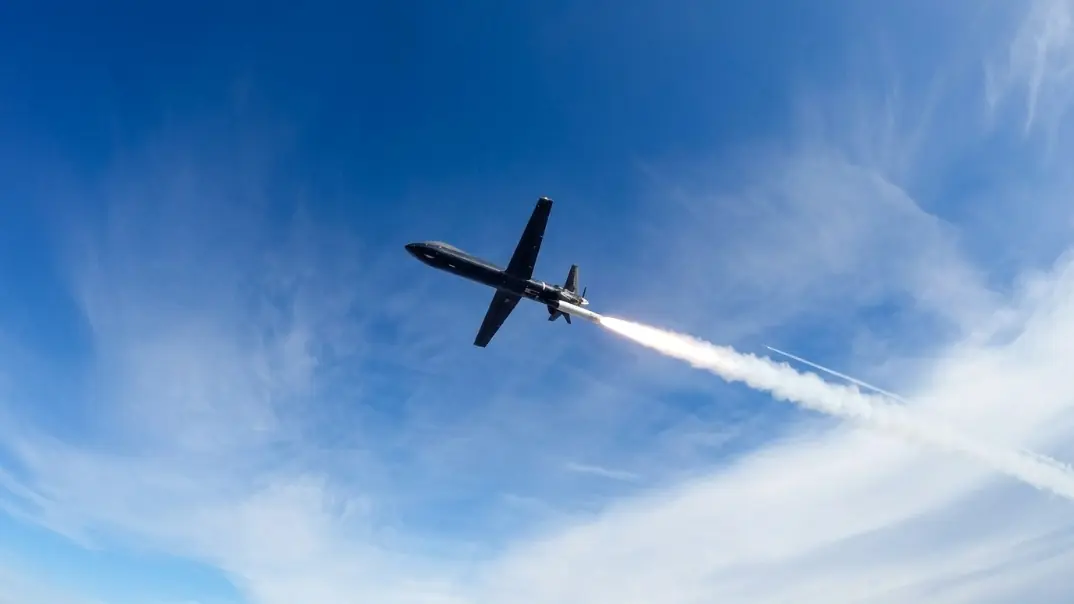
Defense Feeds, London — The United Kingdom is advancing its unmanned combat capabilities as the UK Skylance strike drone expands long-range attack capability following recent flight tests conducted by British defense firm Rotron. The Skylance platform is being developed as a long-range precision strike drone designed to support modern battlefield operations while offering a lower-cost alternative to traditional missile systems.
The testing reflects the growing importance of unmanned strike systems in contemporary warfare. Conflicts in recent years have demonstrated how drones can conduct reconnaissance, precision attacks and loitering missions while reducing risks to personnel. Long-range autonomous platforms are increasingly becoming central to future military planning.
Rotron’s Skylance drone is intended to provide a flexible and rapidly deployable strike capability. Designed for precision engagement missions, the system could potentially support operations against both stationary and mobile targets. The successful tests mark another step in the rapid evolution of unmanned combat technology.

Skylance Drone Designed for Long-Range Precision Strikes
The Skylance drone has been developed with an emphasis on extended operational range and precision attack capability. Unlike smaller tactical drones primarily focused on reconnaissance, long-range strike drones are intended to operate deeper into contested areas while delivering offensive effects.
Precision-guided unmanned systems are becoming increasingly valuable because they allow militaries to engage targets without exposing crewed aircraft or ground forces to direct danger. The ability to launch low-cost autonomous systems over significant distances provides operational flexibility in modern combat environments.
The Skylance platform may also support loitering strike missions. This allows drones to remain airborne while searching for targets before conducting precision engagements when opportunities emerge. Such capabilities have become increasingly important in dynamic battlefield conditions.
Another advantage of systems like Skylance is adaptability. Unmanned strike drones can often be modified for different mission profiles including surveillance, electronic warfare or direct attack. This flexibility increases operational usefulness across multiple scenarios.

UK Defense Industry Expands Autonomous Warfare Development
The testing of the Skylance drone highlights the United Kingdom’s growing focus on autonomous and unmanned military technologies. British defense firms are increasingly investing in systems designed to address future battlefield requirements including long-range precision strike and distributed operations.
The rapid expansion of drone warfare globally has accelerated demand for advanced unmanned systems. Military planners are now placing greater emphasis on affordable and scalable strike platforms capable of operating in contested environments. Drones provide a cost-effective option compared to traditional aircraft or missile systems.
Rotron’s development efforts also reflect broader trends within NATO and allied defense industries. Many countries are seeking domestically developed unmanned capabilities to reduce reliance on foreign suppliers and strengthen technological independence.
In addition, autonomous systems continue to benefit from advancements in navigation, communication and artificial intelligence. Improved autonomy allows drones to operate more effectively with reduced operator workload. These technologies are expected to play a major role in future military operations.
Drone Warfare Continues to Reshape Modern Combat
The successful Skylance tests come at a time when unmanned systems are rapidly reshaping military strategy worldwide. Drones are increasingly used not only for reconnaissance but also for strike operations, battlefield surveillance and electronic warfare. Their influence on modern combat continues to grow.
Long-range strike drones are particularly significant because they offer the ability to project power without relying entirely on crewed aircraft. This changes how militaries approach deterrence, force protection and operational planning. Smaller and more affordable autonomous systems can also be deployed in greater numbers.
The rise of drone warfare has also intensified the focus on counter-drone defenses and electronic warfare systems. As unmanned threats become more common, militaries are investing heavily in technologies capable of detecting and neutralizing autonomous platforms.
At the same time, autonomous strike systems raise important operational and strategic considerations. Reliable communications, target identification and decision-making processes remain critical challenges in unmanned warfare development. Ensuring effective human oversight will continue to be an important aspect of future deployment.
The Skylance program demonstrates how rapidly unmanned combat technologies are evolving across the defense sector. As modern warfare increasingly emphasizes speed, precision and survivability, long-range strike drones are expected to play a larger role in military operations worldwide.
The United Kingdom’s continued investment in autonomous strike capability reflects a broader transition toward technology-driven warfare. Systems like Skylance may eventually become a standard component of future combat operations, supporting both conventional forces and distributed battlefield strategies.
