

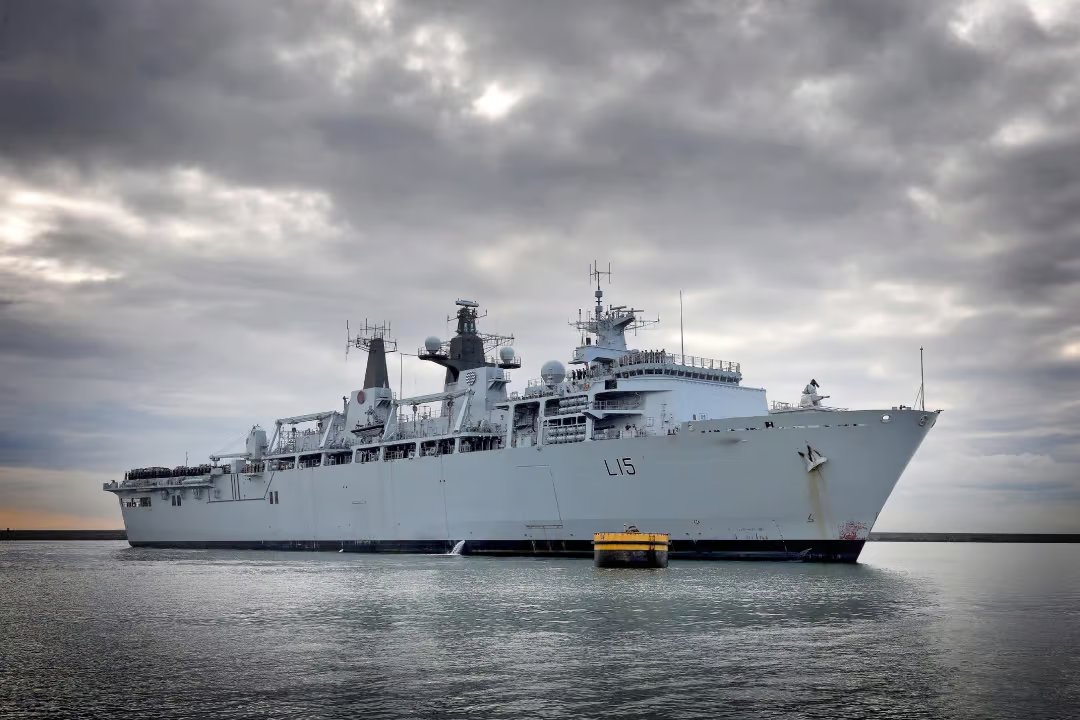

The UK has announced the transfer of the former Royal Navy (RN) amphibious ship HMS Bulwark to the Brazilian Navy.
The landing platform dock (LPD) vessels Bulwark and sister ship HMS Albion were in RN service – providing the amphibious assault capacity for the UK Royal Marines Commandos – until 2024. The 18,000-tonne vessels entered service in 2003 (Albion) and 2005 (Bulwark).
In a press statement on 28 August confirming the transfer, the UK Ministry of Defence (MoD) noted the strong relationship between the UK and Brazil as defence partners. It added that Albion remains at HM Naval Base Devonport, Plymouth, pending disposal plans.
The statement underscored the ships’ flexibility. Alongside amphibious deployments, the platforms conducted maritime security and humanitarian assistance and disaster relief (HADR) missions worldwide.
The final transfer confirmation may have occurred once the UK had committed to replacement platform plans. In July 2026, it announced a GBP2.4 billion agreement to join the Netherlands’ Amphibious Transport Ship (ATS) programme, and to build a new amphibious shipping fleet in partnership with the Netherlands and its navy.
The MoD statement said, “The future ships will be built in UK shipyards, working alongside Dutch industry.”
It added that the 15,000-tonne, 160-m ships will support a range of tasks, including amphibious deployment of personnel, equipment, and vehicles, plus embarking and operating maritime uncrewed systems. Bringing such capability, the statement added, the new ships will be supporting the RN’s transition to a ‘hybrid’, crewed/uncrewed, force structure.
The statement noted too that the future amphibious platforms will form the backbone of the UK-Netherlands amphibious force, with the vessels “delivering a shared and interoperable capability that reinforces NATO’s northern and Atlantic flanks”.
According to Janes, Bulwark’s sale was originally agreed in 2025, with the Brazilian Navy beginning crew training then as well. The ship will be named Oiapoque in Brazilian naval service.
by Dr. Lee Willett
