

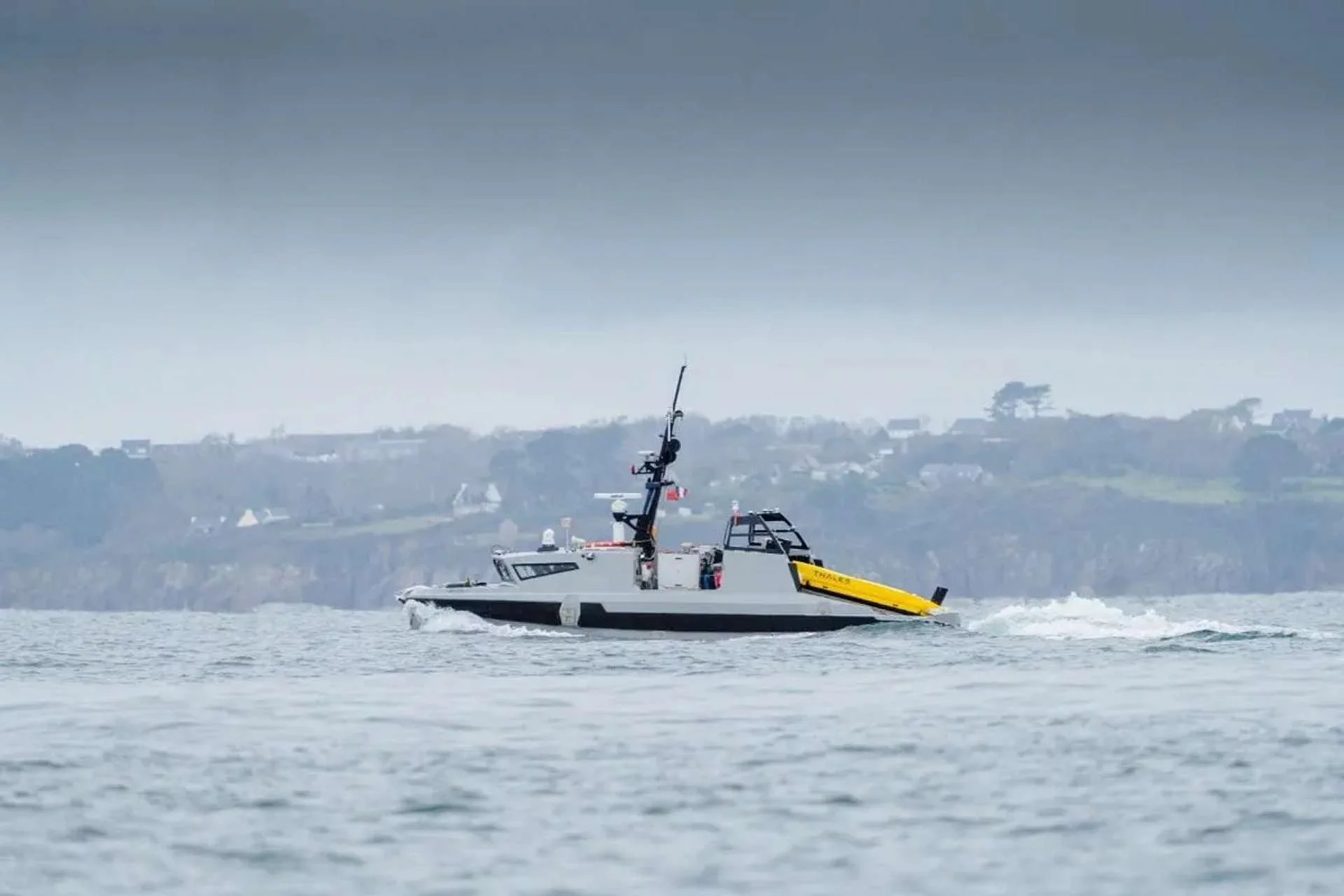
Defense Feeds, Plymouth — UK Adventure autonomous minehunter system entered Royal Navy service on April 3, 2026, marking a major modernization in naval mine countermeasures. Delivered under a €430 million Franco-British program led by Thales, the system shifts mine warfare from crewed ships to remotely operated uncrewed platforms. The UK contributed approximately £184 million to the joint initiative, receiving the first of four planned Adventure units.
Adventure is not a standalone drone but rather a central node in a distributed mine warfare system. The 12-meter uncrewed vessel deploys multiple off-board systems while operators control missions from safe command centers far from hazardous areas. This architecture allows Royal Navy teams to execute complete mine-clearing sequences without exposing personnel to danger.
Advanced Sonar Drives Threat Detection
UK Adventure autonomous minehunter system effectiveness depends heavily on integrated sonar technology. The Thales Towed Synthetic Aperture Multiview sonar provides detailed seabed imaging with multiple perspectives in single sweeps.
The system pairs advanced sonar with AI-based recognition tools that process data rapidly and highlight likely threats, dramatically reducing human analysis time.
The platform deploys additional underwater systems like the SeaCat vehicle for hybrid scanning capability. This approach supports both wide-area searches and close-range inspections when precision is required.
The system operates for extended periods and switches between autonomous and tethered control depending on mission requirements.
UK Adventure autonomous minehunter system neutralization comes from Saab’s Double Eagle remotely operated vehicle, not traditional weapons. Double Eagle carries multiple explosive charges enabling several mine engagements per mission at depths up to 300 meters. Precise charge placement ensures reliable detonation and reduces repeated deployment cycles.
The system emphasizes operational endurance and tempo in moderate sea conditions near ports and shipping lanes. HMS Stirling Castle will support home waters operations while RFA Cardigan Bay provides forward basing in the Gulf region. This deployment flexibility addresses the critical strategic reality that naval mines remain the simplest way to disrupt maritime movement.
Strategic Impact on Maritime Security
Naval mines threaten commercial shipping, naval operations, and critical infrastructure supporting global trade. UK Adventure autonomous minehunter system adoption maintains Royal Navy access to key sea routes while eliminating crew exposure to mine detonation risks. The platform aligns with NATO maritime security requirements and international commitments to keeping vital waterways clear.
Adventure represents a broader naval design shift toward modular, remotely managed capabilities instead of single-purpose ships. This architectural approach allows adaptation across different missions and operational environments. Unmanned minehunting reduces operational costs while enabling sustained mine clearance across extended areas.
The system’s effectiveness in moderate sea conditions makes it practical for real-world deployments protecting critical shipping lanes and naval bases. Multiple Adventure units provide redundancy and increased operational tempo compared to traditional mine countermeasure ships. The remotely operated approach allows 24/7 operations without crew fatigue concerns affecting decision-making during extended missions.

Program Evolution and Future Capability
The Adventure system follows earlier Ariadne units and represents the initial operational capability under the Franco-British program. Additional planned deliveries will expand operational reach across multiple global regions simultaneously. The modular design supports future upgrades in sonar, neutralization systems, and autonomous control capabilities as technology evolves.
Royal Navy planning incorporates Adventure into broader naval transformation embracing unmanned systems across multiple mission areas.
The investment reflects recognition that maritime threats including mine warfare demand modern responses beyond traditional approaches. Forward-deployed units in the Gulf demonstrate commitment to protecting vital strategic chokepoints and commercial shipping routes.
UK Adventure autonomous minehunter system deployment signals confidence in autonomous mine countermeasures as essential naval capability.
The partnership with France extends interoperability benefits across NATO allies facing similar mine threats. Future integration with other autonomous platforms may create comprehensive unmanned force structures for naval mine warfare management.
