

Key Points
- The Air Force posted a notice on August 25 seeking companies able to maintain and update the AC-130J gunship’s targeting software.
- L3Harris ForceX Inc. built the software and remains the only current source for it, with responses to the Air Force due September 9, 2026.
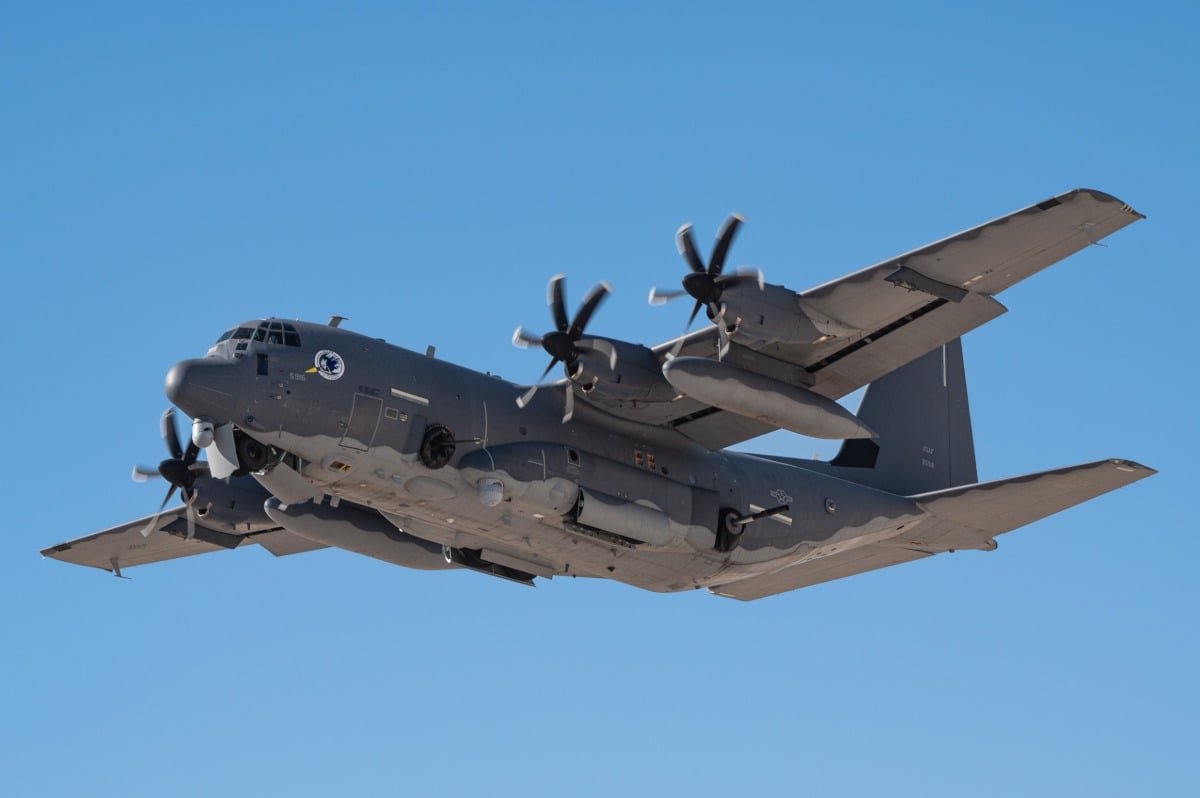
The AC-130J Ghostrider is one of the most heavily armed aircraft in the U.S. military, a modified cargo plane converted into a gunship that circles slowly overhead and rains down precision fire on ground targets. It carries a 30 mm cannon, a 105 mm howitzer, and a mix of guided bombs and missiles, all controlled through sensor and targeting systems that let the crew identify and track threats from high altitude, often at night or in bad weather.
The aircraft is flown almost exclusively by Air Force Special Operations Command and has become one of the primary tools U.S. special operations forces use for close air support during raids and firefights on the ground.
Now the Air Force is looking for a company that can keep the software behind that targeting system running and up to date. A notice posted August 25 on the federal government’s main contracting website, asks companies to describe their ability to sustain and modify a system called the Brimstone Software Suite, along with its core AGAME module.
– ADVERTISEMENT – CONTINUE READING BELOW –
The suite combines real-time surveillance feeds with a range of data products into what the Air Force calls a Surveillance Information System, forming the backbone of the AC-130J’s Precision Strike Package, the combination of sensors and targeting tools the crew relies on to find and engage targets.
L3Harris ForceX Inc., based in Nashville, Tennessee, built the software and is currently the only company the Air Force can turn to for it. The Air Force said in the notice that it does not have access to the software’s underlying code and that trying to reverse-engineer it would not be worth the cost, a common explanation for why the government sometimes has no real alternative to a single supplier on a system this specialized.
The notice lays out specific work the Air Force wants a contractor to be able to handle: contract engineering support to evaluate and correct problems, upgrade interface requirements, fix deficiencies, and manage documentation, configuration, training, testing and fielding of new software. It also calls for what the Air Force terms Post-Deployment Software Support, broken into three areas. Emergency repairs and corrective coding cover immediate fixes needed to keep the system working correctly. Growth and modifications cover adapting the software for new requirements or additional customers outside the normal update cycle. Systems integration and procurement covers folding new hardware and software, developmental or otherwise, into the existing system, along with buying equipment needed for testing and training.
Companies interested in the work also need to show they can handle classified information, produce technical manuals and engineering drawings, and meet standard aerospace quality certifications such as ISO 9001 or AS9100. The Air Force is asking interested firms to detail their past experience on similar contracts, including contract numbers, dollar values and points of contact, and to explain how they would handle parts obsolescence issues on a system this specialized. The notice also asks whether responding companies qualify as small businesses, woman-owned, veteran-owned, service-disabled veteran-owned, or under other federal small-business designations, and whether the company is domestically or foreign owned.
For now, this is only a request for information, not an actual contract opportunity. The Air Force is using it to research which companies could realistically take on the work before deciding whether to open a formal competition. Companies will not be paid for responding, and there is no guarantee a contract will follow.
Companies have until 5 p.m. Eastern on September 9, 2026, to respond, with questions directed to contract specialist Soo Lee and procurement contracting officer Brittney Lightsey at the Air Force Life Cycle Management Center. The Air Force did not say in the notice how many AC-130J aircraft currently rely on the software or when, or whether, a formal contract might eventually be awarded.
