

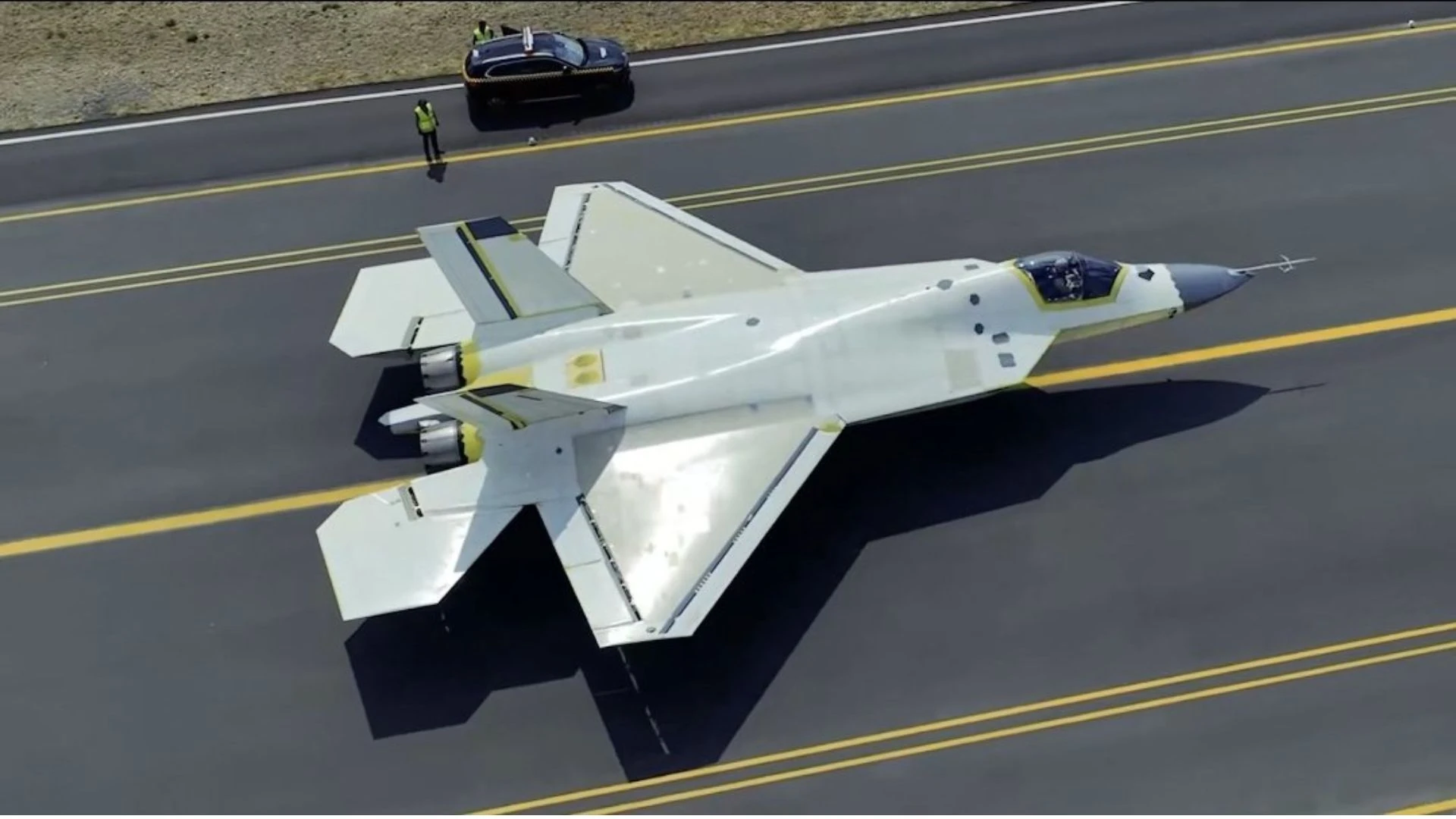
Defense Feeds, Ankara – Türkiye’s KAAN P1 taxi test reveals fifth-generation upgrades, offering a closer look at the latest evolution of the country’s indigenous fighter aircraft program.
The ground test of the KAAN P1 prototype highlighted several visible design refinements and sensor integrations as Turkish Aerospace Industries (TAI) continues advancing the aircraft toward future flight testing and operational development.
The demonstration represents another milestone in Türkiye’s long-term ambition to establish an independent fifth-generation combat aircraft capability while strengthening its domestic aerospace industry.
Türkiye’s KAAN P1 Taxi Test Reveals Fifth-Generation Upgrades
The latest milestone in which Türkiye’s KAAN P1 taxi test reveals fifth-generation upgrades provided observers with evidence of continued progress since the aircraft’s initial public debut.
Although taxi trials primarily validate ground handling, braking systems and aircraft control before more demanding flight activities, they also offer opportunities to evaluate newly integrated hardware and external design refinements.
The KAAN P1 prototype appears to incorporate updated sensor installations and aerodynamic modifications intended to improve mission effectiveness while supporting the aircraft’s low-observable characteristics. These visible refinements suggest that development is continuing through incremental improvements as testing progresses.
For complex fighter aircraft programs, prototype evolution is expected as engineers gather data from successive ground and flight tests, allowing design adjustments before large-scale production begins.

Sensor Integration Is Central to Fifth-Generation Air Combat
Modern fifth-generation fighters are defined not only by low-observable airframes but also by their ability to collect, process and distribute information across the battlespace. Integrated sensors, advanced mission computers and secure data links enable pilots to maintain greater situational awareness while coordinating with other aircraft and command networks.
The KAAN program reflects this broader trend by placing significant emphasis on sensor fusion and digital systems alongside aerodynamic performance. Improvements observed during the P1 taxi test indicate continued efforts to integrate technologies that could enhance target detection, electronic warfare and overall mission effectiveness.
Developing these systems remains one of the most technically demanding aspects of fifth-generation aircraft programs, often requiring years of iterative testing before reaching operational maturity.
Incremental Testing Reduces Development Risk
Taxi trials represent an important stage in the certification process because they allow engineers to validate aircraft systems under controlled conditions before expanding the flight envelope. Testing ground movement, steering response, braking performance and engine operation helps identify issues early, reducing technical risks before more demanding airborne evaluations begin.
Successive prototype improvements are common in advanced combat aircraft development. Rather than introducing every capability simultaneously, manufacturers typically refine structures, avionics and mission systems through multiple test articles as operational data becomes available. This phased approach supports more reliable long-term development while minimizing the likelihood of major redesigns later in the program.
The KAAN P1 prototype appears to follow this established development model as Türkiye advances toward additional flight testing and future production planning.
Building an Indigenous Fighter Ecosystem
Beyond the aircraft itself, the KAAN program represents one of Türkiye’s largest investments in indigenous aerospace technology. Developing a fifth-generation fighter requires expertise across airframe engineering, propulsion integration, avionics, software development, sensor technologies and advanced manufacturing, creating long-term benefits for the broader national defense industry.
As the program matures, lessons learned during prototype development are expected to support future aerospace initiatives while strengthening domestic industrial capabilities. Continued investment in testing and incremental refinement also demonstrates Türkiye’s commitment to reducing reliance on foreign combat aircraft technologies over the long term.
The fact that Türkiye’s KAAN P1 taxi test reveals fifth-generation upgrades illustrates steady progress in one of the world’s most ambitious indigenous fighter development efforts.
While significant testing remains before operational service, the latest prototype refinements highlight an evolutionary approach focused on gradually integrating advanced sensors, improving aircraft performance and moving closer to a fully capable fifth-generation combat platform.
