

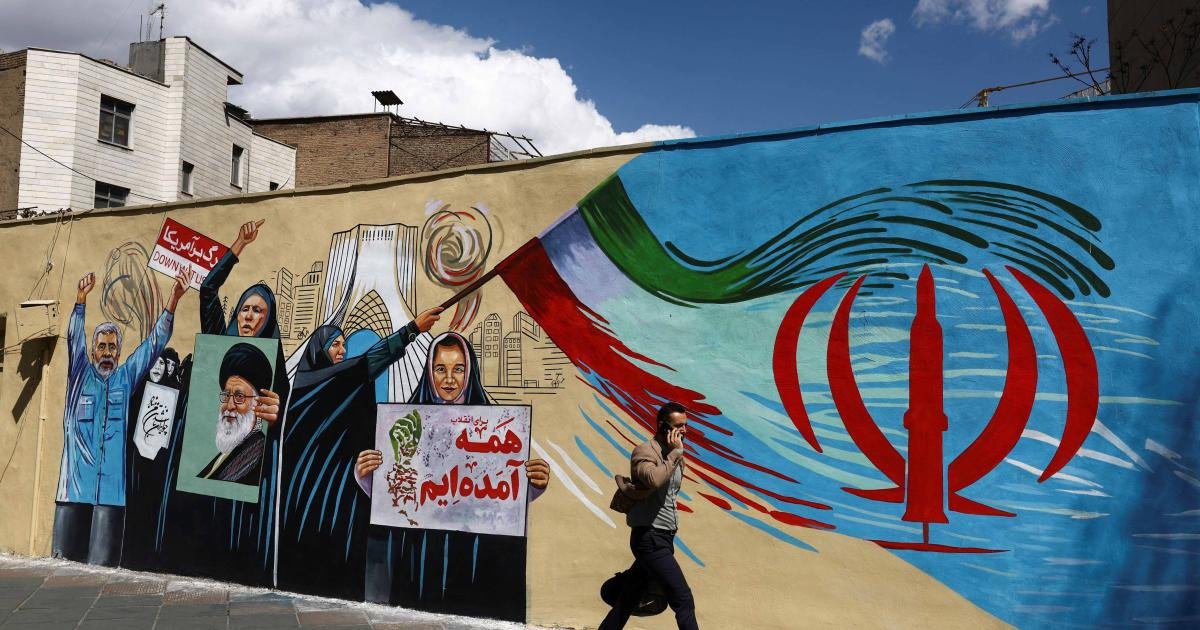
Over the weekend, the United States and Iran failed to come to an agreement in Pakistan to end their war. At first glance, the two sides are miles apart. The United States wants Iran to open the Strait of Hormuz, accept significant restrictions on its nuclear program, limit its missile arsenal, and curtail its support for proxies such as the Lebanese militia Hezbollah. Iran, for its part, wants the ability to monetize its control of the strait, full sanctions relief (including the release of frozen assets), a cease-fire in Lebanon, and, most important, lasting assurances that the United States and Israel will not resume their war against Iran.
The talks took on an extraordinary sense of urgency, in part, because Iran has discovered a new trump card: its ability to effectively close the Strait of Hormuz. In fact, doing so has worked so well in creating leverage that on April 13, Trump began his own blockade, vowing to prevent any ships engaging with Iranian ports from entering or leaving the strait. The success of Trump’s counterblockade will be determined by whether Iran can endure more short-term economic pain than the United States.
As incongruous as the U.S. and Iranian positions appear, it is in the interest of both parties to end the war. The United States has inflicted carnage on the global economy for minimal gain. Meanwhile, Iran’s military and civilian infrastructure have been severely degraded, thousands of Iranians have been killed, and Iran has sacrificed its relationships with Gulf neighbors to survive the U.S.-Israeli onslaught.
As Washington and Tehran enter a new, perilous phase of the conflict, the United States will have to contend with an evolving Iranian regime. As resilient as it has been so far, it faces systemic problems and is in the early stages of a transition. The fate of U.S.-Iranian negotiations, then, will rest on how Trump navigates Iran’s domestic political changes and whether his perception of what is achievable corresponds with Iran’s reality. In the short term, Trump needs to be tactically nimble, ending the war while conceding as little as possible to keep the Strait of Hormuz open. In the long term, however, he needs a coherent strategy—something that he failed to develop before starting the war.
BATTLE OF THE BRIDGE TROLLS
The paradoxical and likely enduring legacy of this war is that Iran was militarily pummeled yet also reestablished deterrence. For the last several decades, Iran’s security architecture largely consisted of three distinct pillars: its missile program, the latent ability to build a nuclear weapon, and support for nonstate and terrorist proxies, such as Hamas and Hezbollah. In the aftermath of Hamas’s October 7, 2023, attack, Israel, with the support of the United States, systematically targeted those pillars. Israel decimated Hamas and Hezbollah and, along with the United States, buried much of Iran’s nuclear infrastructure in June 2025. When Israel and the United States attacked Iran on February 28, 2026, it seemed as if Iran’s missile program was the last available mechanism for deterrence or retaliation.
What this latest round of fighting proved, however, was that Iran had another tool at its disposal: control of the Strait of Hormuz. Iran has shown that it can shut down the narrow passageway with relatively little effort. The strait directly affects global commerce and U.S. interests in ways Iran’s other tools do not.
Iran’s location, coupled with relatively cheap and simple technology, makes closing the strait deadly effective. Right after the war began, Iran attacked at least two ships it claimed were illegally transiting the strait. The ships actually had ties to Iran’s regime but the damage was already done. The attacks spooked maritime insurers into pulling coverage, leaving ships stranded in the Persian Gulf. In the future, Iran only needs to replicate a similar strategy to control the strait and wield considerable power. It does not take much to shut down commercial traffic.
This newfound leverage offers massive advantages to Tehran. Dozens of ships have already paid Iran exorbitant tolls to get through the strait. If Iran keeps this up after the war, it could gain a significant revenue stream at a time when it desperately needs cash. Most important, the strait now represents the security guarantee Iran has been missing since Israel decimated Hezbollah in 2024; for decades, the group’s ability to threaten Israel and others had acted as a deterrent against using force against Iran. Going forward, all American leaders, including Trump, will think twice before undertaking another war with Iran or allowing Israel to launch strikes, knowing that Iran can disrupt the global economy.
Trump is trying to mimic Iran’s success by setting up his own blockade of the strait. Such a move may strengthen Trump’s hand in near-term negotiations because it will deprive Iran of the ability to choose which ships can transit the strait and strangle Iran’s primary source of revenue. But time is on Iran’s side. For the Iranian regime, this war is existential, so it has a greater incentive to endure pain longer. Iran has already withstood nearly five decades of economic coercion. If talks collapse, Iran won’t hesitate to inflict pain on the global economy by further targeting energy infrastructure in Gulf countries. Trump, meanwhile, has to worry about public opinion ahead of the United States’ midterm elections. Iran is counting on Trump blinking first.
ADJUST YOUR EXPECTATIONS
In the long term, U.S.-Iranian negotiations will partially depend on the regime’s future. It is unclear whether the Islamic Republic will emerge from this conflict in the mold of North Korea—undertaking the scorched-earth policies seemingly favored by Supreme Leader Mojtaba Khamenei and Islamic Revolutionary Guard Corps Commander Ahmed Vahidi—or will be controlled by what the Trump administration considers to be pragmatic and opportunistic figures, such as Speaker of the Parliament Mohammad Bagher Ghalibaf. Each IRGC leader left standing has become something of a caricature.
What is clear, however, is that Iran has kept it together better than many people expected. Before February 28, advocates of regime change and American and Israeli war planners generally believed that killing stalwarts such as Supreme Leader Ali Khamenei and his security chief Ali Larijani would lead to the collapse of the regime. Although the deaths of so many leaders may lead to brutal infighting once the war is over, Iranian decision-making so far has proved to be decentralized, nimble, coherent, and decisive. Even the makeup of Iran’s negotiating team reflects such a dynamic: Abbas Araghchi and Ali Bagheri Kani, two political adversaries with diametrically opposed approaches, have set aside their differences to represent Iran on a united front.
The Trump administration has less influence on Iran’s internal politics than it realizes. Trump wagered that he could bomb Iran into submission, but that approach failed. Now, with the start of his naval blockade, he appears to be trying to coerce Iran economically and diplomatically, which will be difficult to do on an accelerated timeline. Trump wants to sniff out a leader he can work with, much as he did in Venezuela. Trump is not the only American leader guilty of meddling in the Islamic Republic’s politics. Presidents Ronald Reagan, Bill Clinton, and Barack Obama all tried to strengthen the moderates inside the system, while George W. Bush and Trump, in his first term, tried to foment regime change. None were successful.
Each IRGC leader left standing has become something of a caricature.
Talks are further complicated by the fact that Iranian leaders often overplay their hand and don’t really understand their American counterparts. As a negotiator over multiple U.S. administrations, I witnessed these dynamics up close, including in 2021 and 2022, as Iran and the Biden administration were in talks to return to the Iran nuclear deal that Trump withdrew from in 2018.
One of the reasons those negotiations failed was that Iran believed that the longer talks dragged on, the more concessions—such as removing additional sanctions—it could squeeze out (as inconsequential as they were). But that stemmed from a fundamental misreading of the United States. President Joe Biden ended the talks, in part, because he saw Iran’s dawdling as undermining the value of the deal. He believed that, as Tehran nickel-and-dimed, it was building up its nuclear capabilities, which was exactly what the United States was trying to constrain.
Iran and the United States are at risk of making a similar mistake today. Both sides probably want an off-ramp, but maximalist demands coupled with a poor understanding of their adversary greatly reduces the chance of success. Trump still seems to believe that additional pressure will change Iran’s strategic calculus, while Iran continues to bank on Trump folding at some point.
DON’T HOLD YOUR BREATH
In retrospect, American analysts, including myself, probably overestimated Iran’s fragility before the war. But there was no denying Iran was—and is—plagued by record levels of inflation and a series of economic and social crises. Iran, for example, has rapidly depleted its groundwater deposits. Last summer, taps ran dry for half a day in Tehran, and state media warned that a portion of the population might need to be relocated. A few months later, Iranian President Masoud Pezeshkian openly admitted that his government was incapable of meeting the needs of its own constituents. Instead of funding social programs, Tehran had spent decades forking out for its nuclear program and proxies, which by June 2025, were virtually worthless.
After regime security forces killed at least 7,000 Iranian protesters in January, the regime appeared brittle. If the United States had done nothing, leaders in Tehran would probably be in a worse position than they are today. The war has unintentionally given the regime a new lease on life, but only temporarily. Even with a new deterrence mechanism and potential influx of cash, the Islamic Republic has not fixed any of the systemic problems that plagued it before the war.
Don’t expect any transformational breakthroughs in the near term. Iran was never going to capitulate because of military pressure and probably won’t succumb to economic coercion, either. If anything, Iran likely believes thatwith the strait closed, time is on its side because it can withstand economic pressure better than the rest of the world can. Iran, after all, has muddled through years of sanctions.
American analysts probably overestimated Iran’s fragility before the war.
Therefore, the Trump administration’s immediate goal should be to address core U.S. interests—ending the war and finding a way for maritime traffic to get through the strait—for as small a price as possible and ideally without allowing an Iranian tollbooth to operate on the waterway. A few weeks ago, the United States could probably have secured goals with the promise that the United States and Israel would stop strikes. That price is likely higher now.
Postwar Iran will probably experience a time of transition and internal power struggles. While this is happening, Iran’s leadership will not be able to make concessions that fundamentally alter the Islamic Republic. More limited deals might be possible. Iran could, for instance, relinquish its stockpile of highly enriched uranium in exchange for sanctions relief. But transformational deals are not going to happen during a leadership transition and on the heels of a war that Iran believes it won.
The good news is that at some point in the future, whoever emerges from Iran’s leadership vacuum will have to choose whether to replicate the failed strategy of the elder Khamenei or to prioritize stability and the well-being of ordinary Iranians. Unfortunately, Trump will not be able to dictate Iran’s timing. His best bet is to exit this war now and prepare a clear, credible, and concise vision of what the United States wants from Iran and what is prepared to offer in return, with the hopes that Iran’s next leader chooses a better path.
Loading…
