

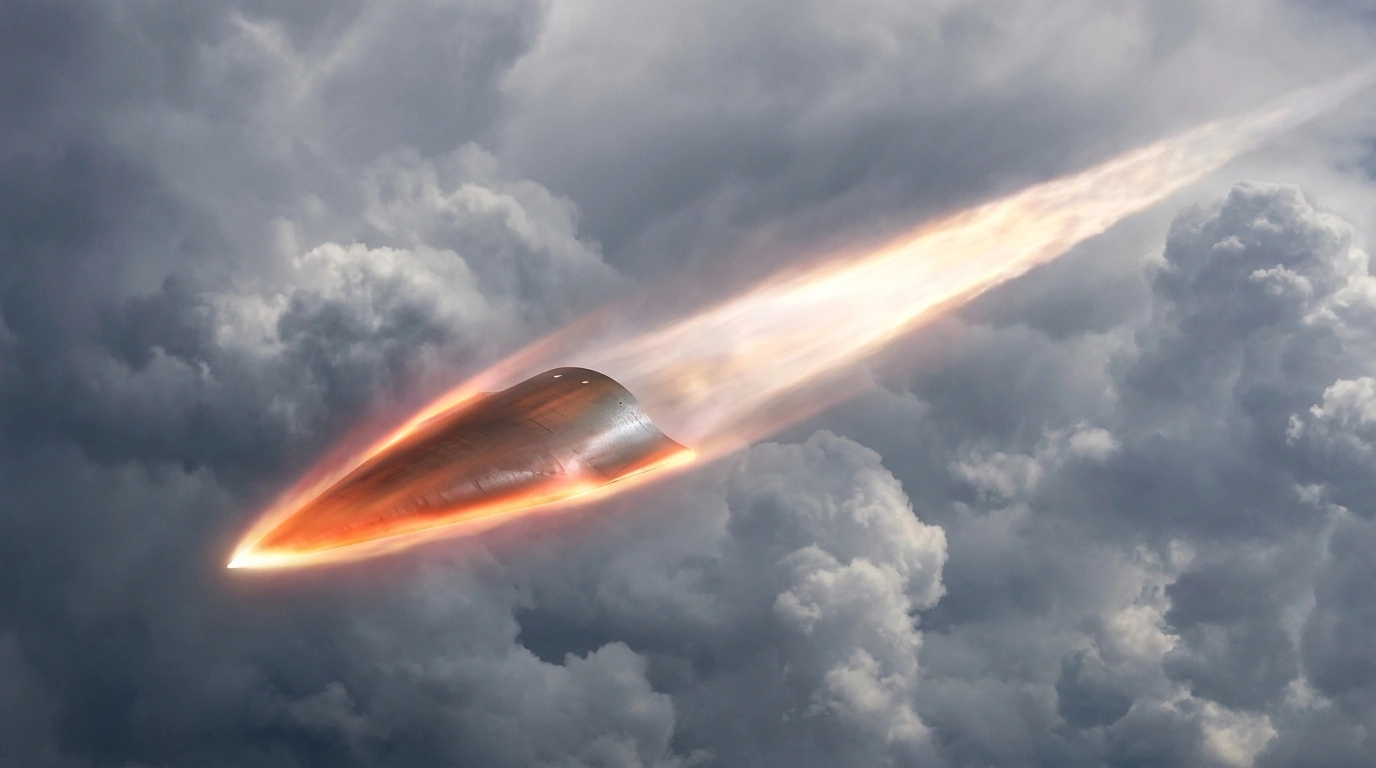
Imagine a weapon traveling so fast that, by the time a radar operator spots it, the countdown to impact has already begun.
At speeds exceeding Mach 20, more than 24,000 km/h (15,000 mph), some of today’s most advanced missiles can cross entire countries in just a few minutes. It’s the kind of speed that doesn’t simply challenge missile defense systems; it reshapes how nations think about security, deterrence, and even diplomacy.
But here’s something that often gets lost in sensational headlines: the fastest missile isn’t always the most advanced, and comparing missile speeds isn’t as straightforward as comparing the top speed of a sports car.
A ballistic missile may briefly reach extraordinary velocities during its descent back through Earth’s atmosphere, while a hypersonic glide vehicle sacrifices a little speed to maneuver unpredictably. Those are two very different engineering achievements.
In this post, we’ll rank the fastest missile systems based on publicly available data from defense agencies, military analysts, and aerospace research.
Along the way, you’ll also discover how missile speed is measured, why Mach numbers can sometimes be misleading, and what separates ballistic, cruise, and hypersonic weapons from one another.
How Missile Speed Is Measured
When people search for the fastest missile, they usually focus on one number: Mach. It sounds simple enough, higher Mach, faster missile. But in reality, that single figure barely scratches the surface.
A missile’s speed changes throughout its journey. During the boost phase, powerful rocket engines accelerate the weapon away from its launcher.
Once the fuel is exhausted, many ballistic missiles enter the midcourse phase, coasting through space at incredible velocities with very little air resistance.
Finally comes the terminal phase, when the warhead or glide vehicle plunges back into Earth’s atmosphere toward its target. For some systems, this is where the highest speeds are recorded.
To put things into perspective, Mach 1 is roughly the speed of sound, about 1,235 km/h (767 mph) at sea level. A missile traveling at Mach 20 is moving at nearly 24,700 km/h, although the exact speed varies with altitude because the speed of sound changes as atmospheric conditions change.
| Mach Number | Approximate Speed (km/h) | Typical Classification |
| Mach 1 | 1,235 | Supersonic threshold |
| Mach 5 | 6,175 | Hypersonic begins |
| Mach 10 | 12,350 | High-speed ballistic flight |
| Mach 20 | 24,700 | Advanced ballistic or hypersonic systems |
| Mach 25 | 30,875 | Peak speed of some ICBMs |
Another detail often overlooked is the difference between peak speed and sustained speed. A ballistic missile might briefly touch Mach 25 while descending through the atmosphere, yet it cannot maintain that velocity for its entire flight.
By contrast, a hypersonic glide vehicle may fly at a slightly lower speed but remain highly maneuverable for much longer, making it far more difficult to track and intercept.
That’s why military analysts rarely judge a missile by speed alone. They also consider how long it can sustain that speed, how it behaves during flight, and whether it can evade modern missile defense systems. In other words, the fastest missile on paper isn’t always the most formidable one in a real-world conflict.
1. Avangard (Russia) — The Fastest Missile in the World
When conversations turn to the fastest missile on Earth, one name almost always rises to the top: Avangard.
Rather than being a traditional missile, Avangard is a hypersonic glide vehicle (HGV) carried into the upper atmosphere by an intercontinental ballistic missile before separating and gliding toward its target at extraordinary speed.

What makes Avangard different isn’t just its headline-grabbing velocity. It’s the combination of speed and agility. While a conventional ballistic missile follows a largely predictable arc, Avangard can alter its course during flight, forcing radar systems and missile defenses to constantly recalculate its trajectory.
Think of it as the difference between trying to catch a fast baseball and trying to catch one that changes direction halfway to the plate.
Avangard at a Glance
| Feature | Details |
| Country | Russia |
| Type | Hypersonic Glide Vehicle (HGV) |
| Claimed Top Speed | Mach 20–27 |
| Estimated Range | Over 6,000 km (depends on launch vehicle) |
| Launch Platform | Intercontinental Ballistic Missile |
| Status | Operational |
Russian officials have stated that Avangard can exceed Mach 20, with some public claims reaching Mach 27 during portions of its flight.
Independent analysts generally agree it is among the fastest operational strategic weapons, although the exact top speed remains impossible to verify because much of its performance data is classified.
Its real advantage, however, is survivability. By flying at hypersonic speeds while maneuvering through the atmosphere, Avangard compresses an opponent’s decision-making time and complicates interception attempts.
Modern missile defense systems are designed around predicting where a target will be. A weapon that can rapidly change course undermines those predictions.
Even so, speed isn’t the whole story. Avangard is a strategic weapon intended for high-value targets rather than routine battlefield use, and its deployment is limited compared with more conventional missile systems.
Still, as of 2026, it remains the benchmark against which every new hypersonic weapon is measured, and the strongest contender for the title of the world’s fastest missile.
2. DF-41 (China) — A Long-Range Missile Built for Speed and Reach
China’s DF-41 isn’t the sort of weapon that makes headlines because of flashy maneuvers or futuristic designs. Instead, its reputation comes from something arguably more important: the ability to travel extreme distances at extraordinary speed while carrying multiple warheads. For military planners, that’s a combination that commands attention.
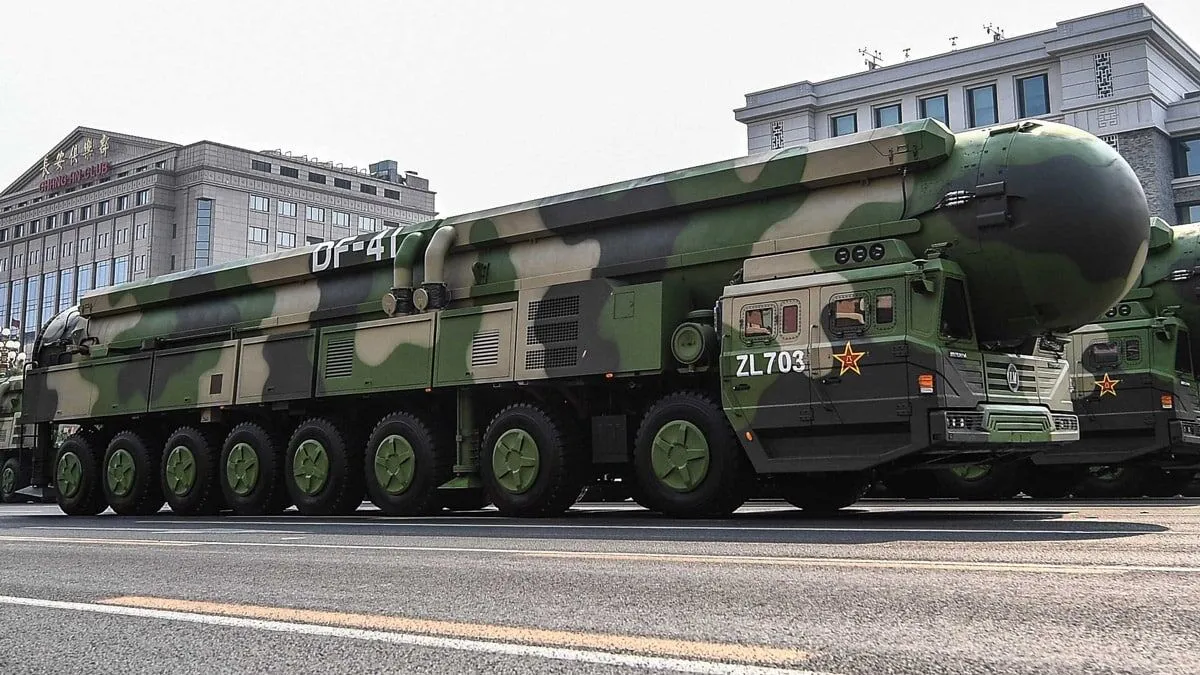
The DF-41 is an intercontinental ballistic missile (ICBM) designed to strike targets thousands of kilometers away. After launch, its multi-stage rocket propels the missile beyond the atmosphere before it follows a ballistic trajectory through space.
During this journey, and especially as its re-entry vehicles descend, it is estimated to reach speeds of around Mach 25, placing it among the fastest missiles publicly known.
DF-41 at a Glance
| Feature | Details |
| Country | China |
| Type | Intercontinental Ballistic Missile (ICBM) |
| Estimated Top Speed | Around Mach 25 |
| Estimated Range | 12,000–15,000 km |
| Launch Platform | Road-mobile transporter-erector-launcher (TEL) |
| Status | Operational |
One of the DF-41’s defining features is its reported ability to carry Multiple Independently Targetable Reentry Vehicles (MIRVs). Instead of delivering a single warhead, the missile can potentially deploy several, each capable of striking a different target.
This capability increases the complexity of missile defense because interceptors may need to engage multiple incoming objects rather than just one.
Another strength is mobility. Unlike silo-based missiles that remain fixed in one location, the DF-41 is transported on large mobile launch vehicles. This makes it more difficult to locate before launch, improving its survivability during a conflict.
Although much of the missile’s technical data remains classified, defense analysts generally agree that the DF-41 represents one of China’s most advanced strategic weapons. Its blend of long range, very high speed, mobility, and potential MIRV capability secures its place near the top of any ranking of the fastest missiles in the world.
3. Trident II D5 (United States) — The Ocean-Based Speed Champion
Unlike many of the missiles on this list, the Trident II D5 begins its journey beneath the ocean’s surface. Hidden aboard nuclear-powered ballistic missile submarines, it is designed to remain out of sight for months at a time. That stealth, paired with remarkable speed, has made it one of the cornerstones of the United States’ strategic nuclear deterrent for decades.

Once launched, the Trident II D5 bursts through the water before its multi-stage rocket ignites, accelerating the missile into space. During its flight, it is estimated to reach speeds of Mach 24 to Mach 25, placing it among the fastest missiles ever deployed.
More importantly, it can travel roughly 12,000 kilometers, allowing it to reach distant targets without the launching submarine ever approaching hostile coastlines.
Trident II D5 at a Glance
| Feature | Details |
| Country | United States |
| Type | Submarine-Launched Ballistic Missile (SLBM) |
| Estimated Top Speed | Around Mach 24–25 |
| Estimated Range | About 12,000 km |
| Launch Platform | Ballistic missile submarines (SSBNs) |
| Status | Operational |
What truly sets the Trident II D5 apart isn’t raw velocity, several missiles on this list are similarly fast. It’s the balance of speed, precision, and survivability.
The missile has earned a reputation for exceptional accuracy, allowing it to strike designated targets with a high degree of confidence. Combined with the secrecy of submarine operations, this makes it a key element of the United States’ second-strike capability.
The Trident II D5 can also carry multiple independently targetable reentry vehicles (MIRVs), enabling a single missile to engage several targets. That capability increases its strategic value without requiring additional launches.
Even after decades in service, the Trident II D5 continues to receive upgrades that extend its operational life. Its proven reliability, impressive range, and blistering speed ensure it remains one of the most capable, and fastest, ballistic missile systems in the world.
4. Minuteman III (United States) — A Proven ICBM That Still Packs Incredible Speed
Some military technologies fade into history after a decade or two. The LGM-30G Minuteman III has done the opposite. Despite entering service in the early 1970s, it remains one of the most important components of the United States’ land-based nuclear deterrent.
That longevity isn’t an accident, it reflects decades of modernization, testing, and engineering updates that have kept the missile relevant in an era of rapidly evolving threats.
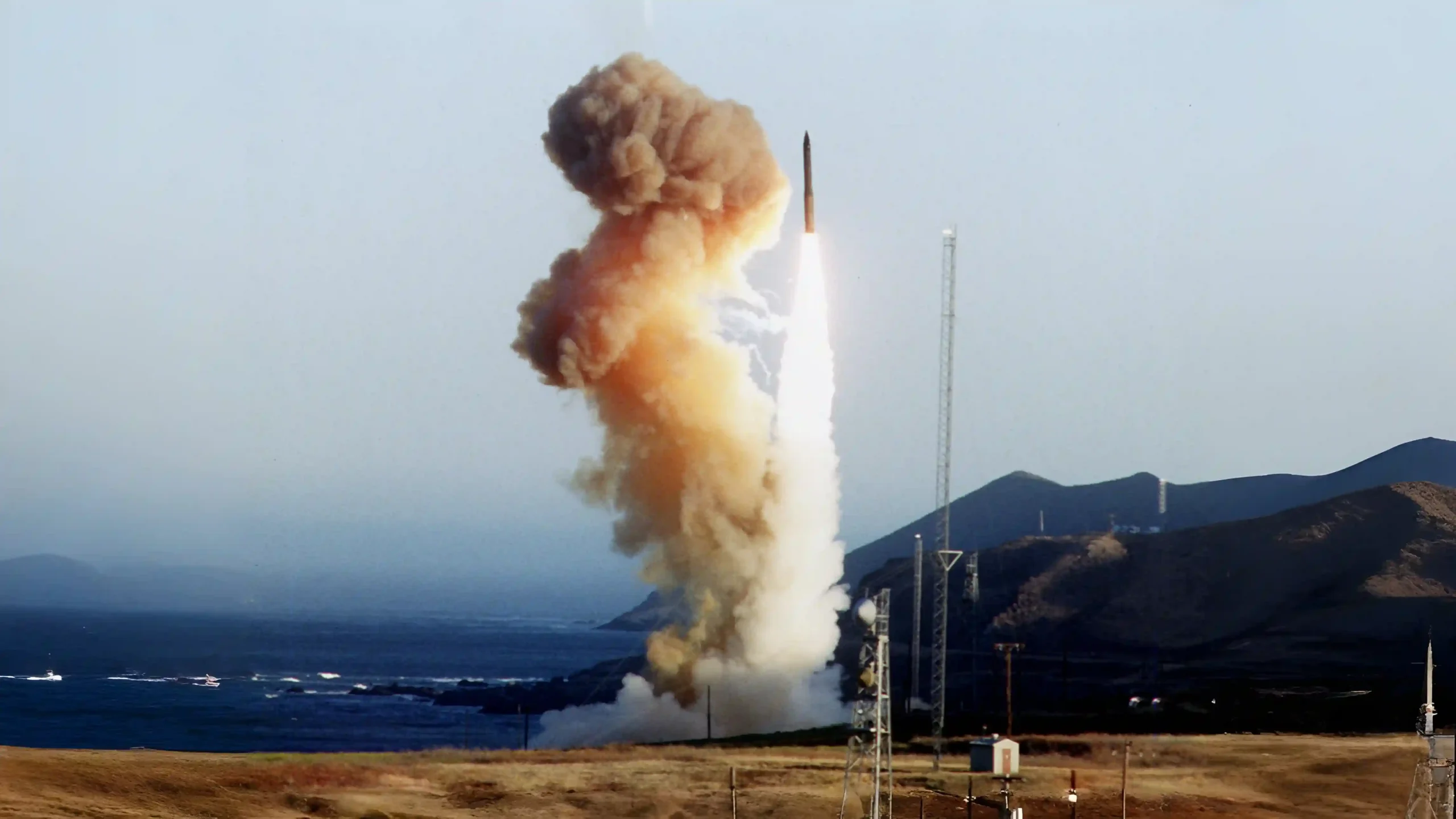
The Minuteman III is a three-stage intercontinental ballistic missile (ICBM) housed in hardened underground silos across the United States. Once launched, its solid-fuel rocket motors propel it into space at astonishing speed. Public estimates place its peak velocity at around Mach 23, allowing it to cover intercontinental distances in roughly 30 minutes.
Minuteman III at a Glance
| Feature | Details |
| Country | United States |
| Type | Intercontinental Ballistic Missile (ICBM) |
| Estimated Top Speed | Around Mach 23 |
| Estimated Range | About 13,000 km |
| Launch Platform | Underground missile silos |
| Status | Operational (being gradually replaced by Sentinel) |
One reason the Minuteman III continues to rank among the fastest missiles in the world is its dependable solid-fuel propulsion.
Unlike older liquid-fuel systems that require lengthy preparation before launch, a solid-fuel ICBM can be fired within minutes after receiving authorization. In strategic terms, those saved minutes can make a significant difference.
Although newer hypersonic weapons attract more attention today, the Minuteman III remains an essential part of the United States’ nuclear triad.
Over the years, upgrades to its guidance, propulsion, and command systems have extended its service life far beyond what its original designers envisioned.
Its speed may not be the highest on this list, but the combination of proven reliability, rapid launch readiness, and global reach explains why the Minuteman III is still regarded as one of the world’s premier strategic missile systems.
Even after more than five decades, it continues to demonstrate that dependable performance can be just as valuable as cutting-edge innovation.
5. Agni-V (India) — A Rising Force in Long-Range Missile Technology
The Agni-V represents more than just another entry in the ranking of the fastest missiles. It symbolizes India’s steady progress in developing indigenous strategic technology.
Designed and built largely within the country, the missile reflects years of research aimed at extending range, improving accuracy, and strengthening national deterrence.
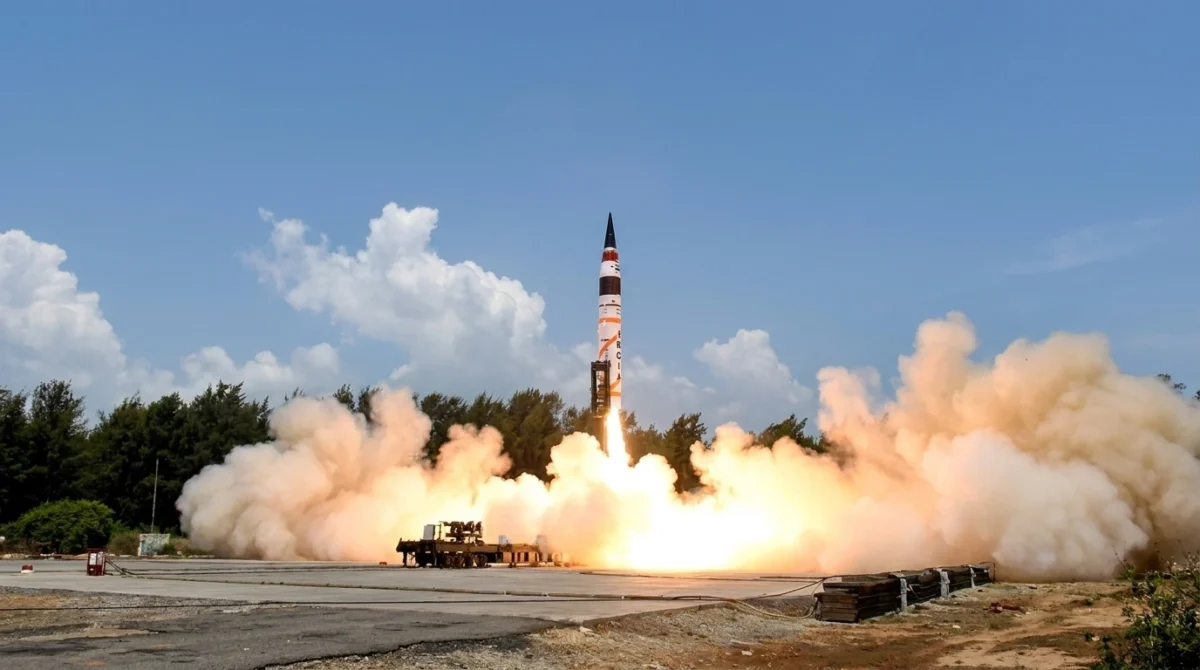
As a three-stage, solid-fuel intercontinental-class ballistic missile, the Agni-V is capable of striking targets more than 5,000 kilometers away.
During the final stages of its flight, defense analysts estimate that its re-entry vehicle reaches speeds between Mach 20 and Mach 24, placing it among the world’s fastest operational missile systems.
Agni-V at a Glance
| Feature | Details |
| Country | India |
| Type | Long-range Ballistic Missile |
| Estimated Top Speed | Mach 20–24 (terminal phase) |
| Estimated Range | Over 5,000 km |
| Launch Platform | Road-mobile launcher |
| Status | Operational |
One of the Agni-V’s biggest advantages is mobility. Mounted on a canisterized road-mobile launcher, the missile can be transported and launched from different locations with relatively little preparation. This mobility enhances survivability because fixed launch sites are generally easier to locate and target.
The missile also benefits from advanced navigation and guidance systems designed to improve accuracy over long distances.
In recent years, reports have suggested continued work on technologies that could expand its strategic capabilities, including multiple independently targetable reentry vehicles (MIRVs). While some of these developments have been publicly demonstrated, many operational details remain undisclosed.
What makes the Agni-V particularly noteworthy is how quickly India’s missile program has matured. Rather than simply increasing speed, engineers have focused on creating a balanced system that combines long range, dependable propulsion, mobility, and precision.
Although it ranks fifth in this list of the fastest missiles in the world, the Agni-V is widely viewed as one of the most significant strategic weapons developed in Asia. Its combination of high speed, growing technological sophistication, and credible deterrent capability ensures it will remain an important part of global defense discussions well beyond 2026.
Comparison Table: Fastest Missiles in the World (2026)
Reading about each missile individually is useful, but placing them side by side paints a much clearer picture. One pattern becomes obvious almost immediately: the fastest missile isn’t always the one with the greatest range, nor is the longest-range system necessarily the most maneuverable.
Every missile on this list was designed to solve a different strategic problem, and its specifications reflect that purpose.
For example, Russia’s Avangard emphasizes unpredictable flight paths at hypersonic speed, while the United States’ Trident II D5 prioritizes survivability by launching from hidden submarines.
China’s DF-41 focuses on long-range strategic deterrence with potential multiple warheads, and India’s Agni-V balances speed with mobility through its road-mobile launcher.
The comparison below highlights the key differences.
| Missile | Country | Type | Approx. Top Speed | Estimated Range | Launch Platform |
| Avangard | Russia | Hypersonic Glide Vehicle | Mach 20–27 | 6,000+ km | ICBM |
| DF-41 | China | ICBM | Mach 25 | 12,000–15,000 km | Road-mobile TEL |
| Trident II D5 | US | SLBM | Mach 24–25 | 12,000 km | Ballistic missile submarine |
| Minuteman III | US | ICBM | Mach 23 | 13,000 km | Underground silo |
| Agni-V | India | Long-range Ballistic Missile | Mach 20–24 | 5,000+ km | Road-mobile launcher |
A quick glance at the table also reveals another important trend. Four of the five entries are ballistic missiles, while only Avangard is a hypersonic glide vehicle.
That distinction matters because ballistic missiles typically achieve their highest speeds while following a predictable trajectory through space, whereas hypersonic glide vehicles trade some of that predictability for the ability to maneuver during flight.
In short, speed is only one measure of capability. Range, launch flexibility, guidance systems, and survivability often determine how effective a missile will be in real-world strategic planning.
Looking at all these factors together provides a much more complete picture than ranking systems by Mach number alone.
