

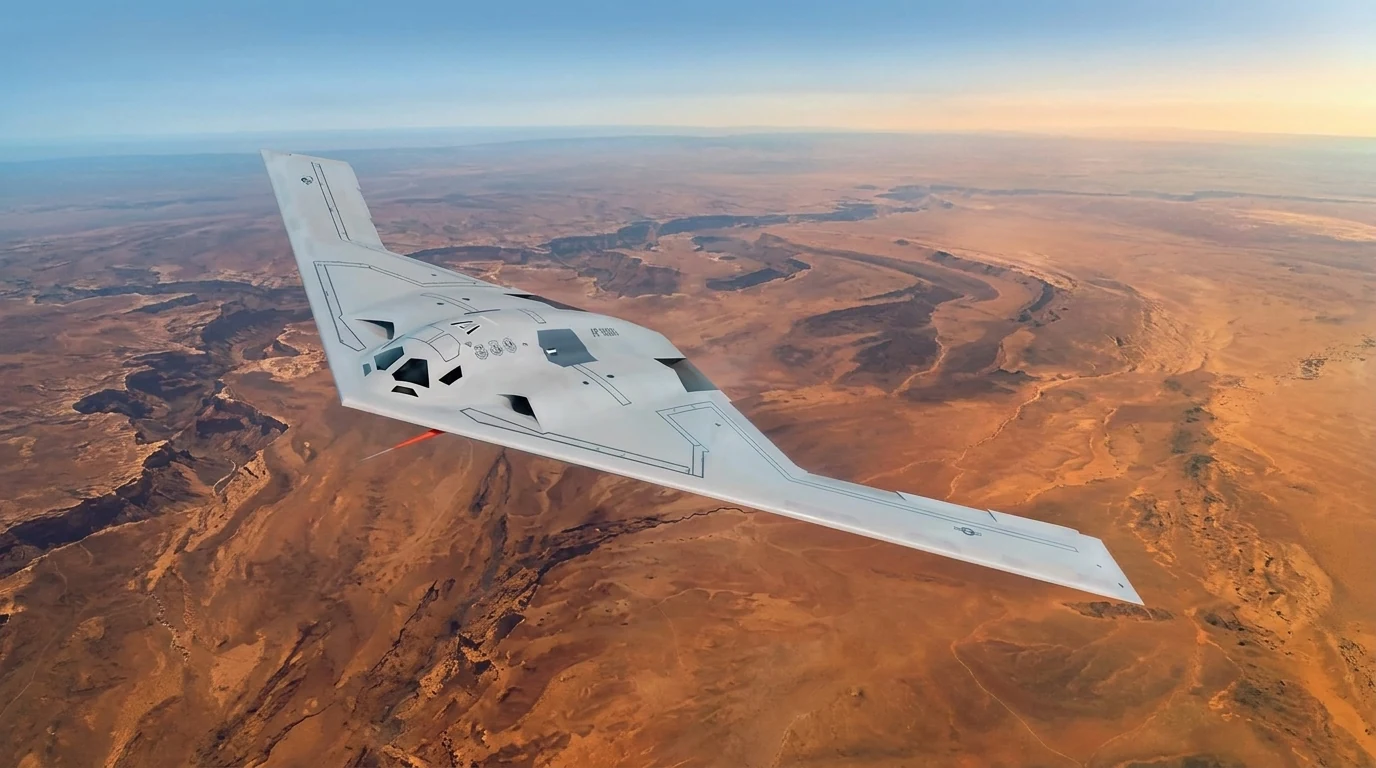
A bomber does not need to be the fastest aircraft in the sky, or carry the biggest payload, to be the most powerful. In modern warfare, the real measure is harder to see: can the aircraft reach a heavily defended target, survive, deliver its weapons, and keep doing it thousands of miles from home?
That changes the conversation.
A Cold War-era giant such as the B-52 can haul an enormous weapons load, while a stealth aircraft like the B-2 is designed to make sophisticated air defenses struggle to detect it in the first place.
Then there is the B-21 Raider, which pushes the idea further with a new-generation approach to stealth, networking, and long-range strike.
So, what qualifies as the most powerful bomber aircraft in the world?
For this ranking, power is not based on one impressive specification. Instead, we look at the combination of stealth, weapons capacity, range, speed, survivability, and mission flexibility.
That matters because a bomber carrying 50,000 pounds of weapons is not necessarily more dangerous than one carrying less if it cannot safely reach its target.
The result is a fascinating mix of proven veterans and newer aircraft. Some rely on brute force. Others rely on disappearing from radar. And a few try to combine both philosophies into one package.
How We Rank the Most Powerful Bomber Aircraft
Calling an aircraft the most powerful bomber aircraft sounds straightforward until you ask a deceptively simple question: powerful in what way?
A bomber can dominate one category and lag in another. The Russian Tu-160, for example, is famous for its speed and huge weapons load, while the B-2 Spirit takes a very different approach by prioritizing stealth and penetration. Treating them as if they were competing on a single scoreboard would be like comparing a race car with an armored truck.
That is why this ranking uses five factors: stealth and survivability, payload and firepower, range, speed, and mission flexibility.
Stealth and Survivability
Modern air defenses can detect, track and engage aircraft from considerable distances. A bomber that can reduce its radar, infrared and other signatures therefore has an enormous advantage.
The B-2 illustrates this philosophy particularly well: its low-observable design combines a flying-wing configuration, specialized materials and coatings, and reduced radar and other signatures.
Payload and Firepower
Payload still matters. The B-2, for instance, has a published payload capacity of 60,000 pounds (27,216 kg) in the current U.S. Air Force fact sheet. But sheer capacity isn’t everything. The type of weapons an aircraft can employ, and whether it can deliver them effectively, matters just as much.
Range, Speed and Flexibility
Long range allows bombers to operate far from their targets without relying entirely on forward bases. Speed can shorten exposure time, while flexible weapons and mission systems allow one aircraft to perform several strategic roles.
The B-21 takes this broader philosophy even further. The U.S. Air Force describes it as a penetrating stealth bomber capable of carrying conventional and nuclear weapons, while its open architecture is intended to make future upgrades easier as threats evolve.
In other words, this isn’t simply a contest of who carries the biggest bomb. The strongest bomber is the one that combines reach, survivability and striking power into a useful package.
1. B-21 Raider — America’s Next-Generation Stealth Bomber
If you judge bomber power by how much destruction an aircraft can carry, the B-21 Raider may not look especially impressive on paper. That’s precisely what makes it interesting.
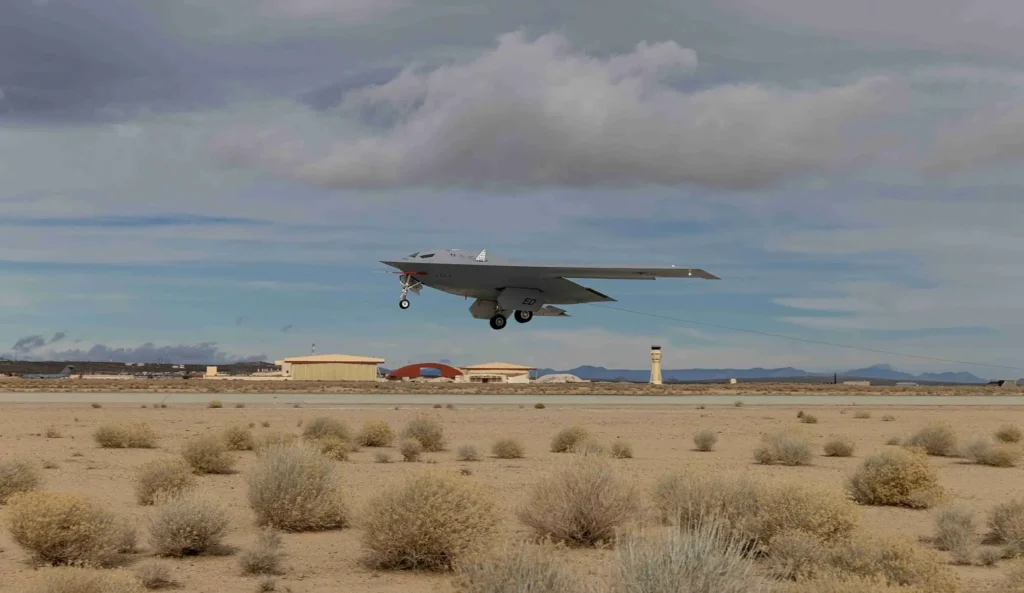
The B-21 Raider is being built around a different idea of power: getting through highly defended airspace, connecting with other systems, and remaining useful as the battlefield changes.
The U.S. Air Force classifies it as a dual-capable penetrating strike stealth bomber, capable of delivering both conventional and nuclear munitions.
B-21 Raider at a Glance
| Specification | B-21 Raider |
| Manufacturer | Northrop Grumman |
| Role | Penetrating strategic bomber |
| Stealth | Yes |
| Weapons | Conventional and nuclear |
| Crew | 2 pilots |
| Planned fleet | Minimum 100 aircraft |
| Operational status | Entering the operational era in the mid-2020s |
| Detailed range/payload | Not publicly disclosed |
The table has an important caveat: many of the numbers enthusiasts want most are classified or have not been officially released. So claims about the B-21 having a particular top speed, combat radius or maximum payload should be treated carefully rather than repeated as established fact.
What is clear is the design philosophy. The Air Force says the B-21 will form the backbone of its future bomber force alongside the B-52 and will be part of a broader network involving intelligence, surveillance, reconnaissance, electronic attack and communications capabilities. It can also employ both stand-off and direct-attack weapons.
That networked approach may be the aircraft’s real advantage. Think of the B-21 less as a flying bomb truck and more as a stealthy node in a much larger combat system.
And the aircraft is not simply intended to arrive with today’s technology and stay frozen in time. Its open systems architecture is designed to make future upgrades and integration of new capabilities easier as threats evolve.
In July 2026, the Air Force also announced that the B-21 will officially operate with a two-pilot crew, reinforcing its focus on long-duration missions in highly contested environments.
That combination of stealth, adaptability, nuclear and conventional capability, and long-range penetration is why the B-21 earns the No. 1 position among the most powerful bomber aircraft on this list, not because it has the biggest numbers, but because it is designed for the battlefield that comes next.
2. B-2 Spirit — The Proven Stealth Powerhouse
Before the B-21 Raider arrived on the scene, the B-2 Spirit was the aircraft that most clearly demonstrated why stealth could be more valuable than raw size. Its unusual flying-wing shape still looks futuristic decades after its first flight, and that shape is functional, not just futuristic styling.

The B-2 entered operational service in the late 1990s as a multi-role heavy bomber capable of carrying both conventional and nuclear weapons. Its greatest advantage is its low-observable design, which reduces several signatures, including radar, infrared, acoustic and electromagnetic signatures. That makes it considerably harder for sophisticated air-defense systems to detect, track and engage.
B-2 Spirit at a Glance
| Specification | B-2 Spirit |
| Manufacturer | Northrop Grumman and contractor team |
| Role | Multi-role heavy bomber |
| Crew | 2 pilots |
| Engines | 4 × GE F118-GE-100 |
| Payload | 60,000 lb (27,216 kg) |
| Unrefueled range | Approx. 6,000 nautical miles (9,600 km) |
| Speed | High subsonic |
| Service ceiling | 50,000 ft (15,240 m) |
| Weapons | Conventional and nuclear |
| Initial operational capability | 1997 |
| Current inventory | 20 active aircraft, including 1 test aircraft |
One detail stands out: 60,000 pounds of payload. That’s an enormous weapons capacity, but payload alone doesn’t explain the B-2’s reputation. The aircraft’s real trick is combining that capacity with stealth and intercontinental reach.
Its combat history also gives it something newer aircraft don’t yet possess: experience. During Operation Allied Force in 1999, B-2s flew missions from Missouri to Kosovo and back, demonstrating the aircraft’s ability to conduct extremely long-range operations.
The Air Force says B-2s also flew combat missions during Operation Iraqi Freedom, where they released more than 1.5 million pounds of munitions.
That combination is why the B-2 remains a benchmark among the most powerful bombers in the world. It doesn’t need to outrun every fighter or carry the largest possible arsenal.
Its strength comes from something subtler: carrying a heavy punch while making the journey to the target exceptionally difficult to stop.
3. Tu-160M Blackjack — The Supersonic Heavyweight
If the B-2 represents the art of being difficult to find, the Tu-160M takes almost the opposite route: build an enormous bomber that can travel exceptionally fast, carry a huge weapons load, and cover vast distances.

The Russian Tu-160 Blackjack is the largest and heaviest supersonic military aircraft ever built in series production, and its variable-sweep wings give it a distinctive advantage across different phases of flight.
The modernized Tu-160M retains the aircraft’s basic design while receiving updated engines, avionics and mission systems.
Tu-160M at a Glance
| Specification | Tu-160M |
| NATO designation | Blackjack |
| Role | Strategic heavy bomber |
| Crew | 4 |
| Engines | 4 × NK-32 turbofans |
| Maximum speed | About Mach 2 |
| Range | More than 12,000 km |
| Maximum payload | Up to 40,000 kg |
| Wing configuration | Variable-sweep |
| Weapons | Air-launched cruise missiles and bombs |
| Primary strength | Speed, range and payload |
The numbers explain why the Tu-160 belongs in any discussion of the most powerful bomber aircraft. Its combination of roughly 40 tonnes of payload and supersonic speed is unusual.
The aircraft can also carry long-range cruise missiles, allowing it to attack from well outside the immediate envelope of many battlefield air defenses.
That creates an interesting contrast with the B-2. The Spirit’s advantage comes from reducing its detectability, whereas the Tu-160’s traditional philosophy leans heavily on distance, speed and stand-off weapons.
The Tu-160M modernization is particularly important because Russia isn’t simply preserving an old Cold War aircraft. The updated version incorporates modernized systems and the newer NK-32-02 engine, intended to improve performance and efficiency.
Still, the Blackjack has a major weakness compared with modern stealth bombers: it is not a stealth aircraft. Its huge airframe and conventional design make survivability in heavily defended airspace a different proposition from the B-2 or B-21.
That doesn’t make it obsolete. Quite the opposite. When armed with long-range weapons, the Tu-160 can function less like a bomber that must fly directly over a target and more like a high-speed missile-launching platform.
And that’s the key to its place on this list: enormous size, remarkable speed and substantial weapons capacity give the Tu-160 a very different kind of power.
4. B-52H Stratofortress — The Long-Range Bomber That Refuses to Retire
Some aircraft become famous because they are technologically revolutionary. The B-52H Stratofortress became famous for something arguably harder: staying useful.

The B-52 first entered U.S. Air Force service in 1955, yet the H model remains an operational long-range heavy bomber more than seven decades later. That longevity isn’t simply nostalgia.
The aircraft has repeatedly been upgraded to keep pace with changing weapons, sensors and missions.
B-52H Stratofortress at a Glance
| Specification | B-52H Stratofortress |
| Manufacturer | Boeing |
| Role | Long-range heavy bomber |
| Engines | 8 × Pratt & Whitney TF33 turbofans |
| Maximum payload | 70,000 lb (31,500 kg) |
| Maximum speed | 650 mph (Mach 0.84) |
| Unrefueled range | 8,800 miles (14,160 km) |
| Service ceiling | 50,000 ft (15,152 m) |
| Weapons | Conventional and nuclear |
| Initial service | 1955 |
| Current status | Operational |
The numbers tell an interesting story. Its 70,000-pound payload is larger than the B-2’s published 60,000-pound figure, while its 8,800-mile unrefueled range gives the Stratofortress remarkable reach.
But here’s the catch: the B-52 is not stealthy and isn’t a supersonic aircraft. Its value comes from carrying large quantities of weapons over enormous distances and increasingly relying on precision and stand-off weapons rather than simply flying directly into the most dangerous airspace.
That distinction is crucial. A bomber doesn’t always need to enter the target’s defensive bubble if its weapons can travel there instead.
The B-52 has also accumulated substantial operational experience. During operations against ISIS in Syria and Iraq, B-52s flew approximately 1,800 combat sorties, demonstrating that this Cold War-era aircraft could still perform useful missions in a modern conflict.
So why include it among the most powerful bomber aircraft? Because the B-52 proves that raw age matters less than adaptability. Few aircraft combine its payload, range, weapons flexibility and modernization potential.
It may look like a relic beside the B-21. In practical terms, though, this old giant still has plenty of fight left in its wings.
5. B-1B Lancer — America’s High-Speed Conventional Bomber
The B-1B Lancer is the oddball of this group. It isn’t a stealth bomber like the B-2 or B-21, and it doesn’t have the sheer size of the Tu-160.
Yet when the mission calls for carrying a huge conventional weapons load over long distances, the B-1B remains a remarkably capable aircraft.
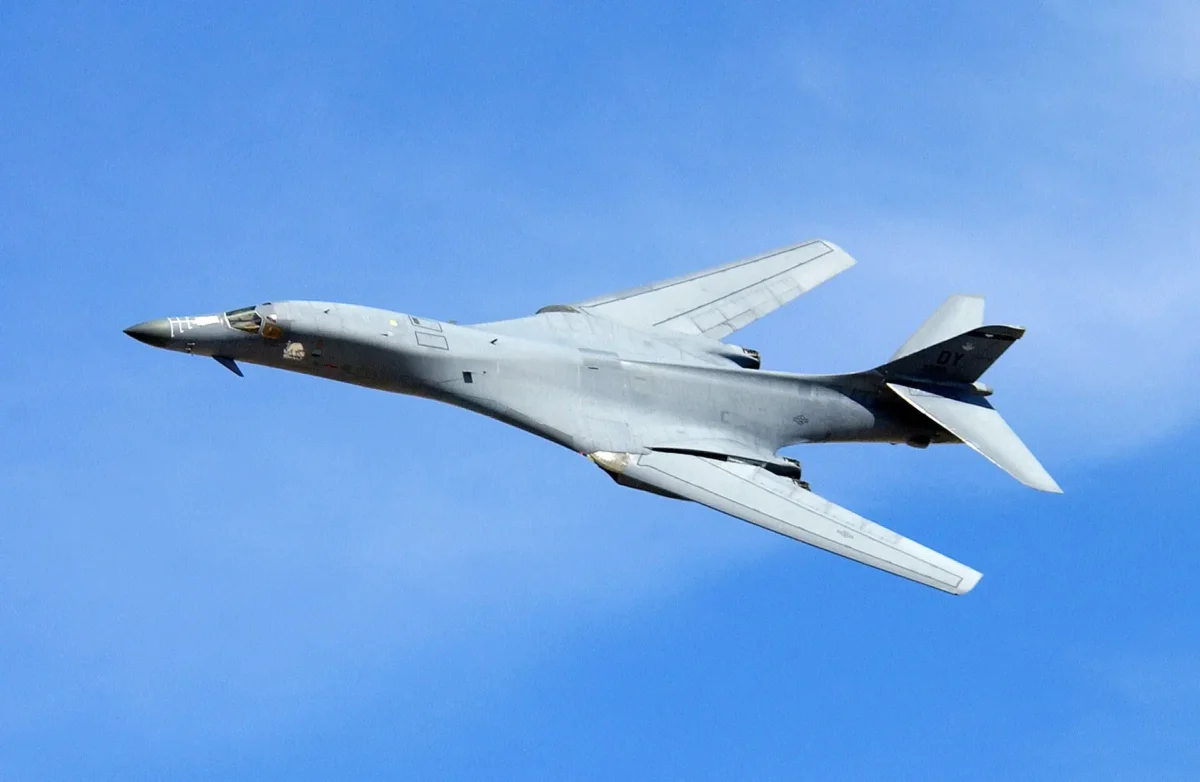
Its most distinctive feature is the variable-geometry wing. The wings can extend for takeoff and landing, then sweep backward for high-speed flight. Combined with four afterburning engines, the design gives the Lancer a published top speed of more than 900 mph (Mach 1.2) at sea level.
B-1B Lancer at a Glance
| Specification | B-1B Lancer |
| Manufacturer | Rockwell International / Boeing |
| Role | Long-range, multi-role heavy bomber |
| Crew | 4 |
| Engines | 4 × GE F101-GE-102 |
| Maximum payload | 75,000 lb (34,019 kg) |
| Maximum speed | 900+ mph (Mach 1.2) |
| Range | Intercontinental |
| Service ceiling | More than 30,000 ft |
| Weapons | Conventional precision and non-precision weapons |
| Stealth | Low-observable design |
| Initial operational capability | 1986 |
One number deserves special attention: 75,000 pounds of payload. According to Air Force Global Strike Command, the B-1B carries the largest conventional payload of guided and unguided weapons in the U.S. Air Force inventory.
The aircraft is also far more than a fast bomb carrier. Its radar and navigation systems allow it to locate and engage targets, while its long endurance gives crews the ability to remain available over an area rather than simply racing toward a target and immediately leaving.
There is an interesting twist to its history, too. The B-1B originally had a nuclear role, but the United States removed that mission, completing its conversion to a conventional-only bomber in 2011 under arms-control requirements.
That makes the B-1B’s place among the most powerful bomber aircraft somewhat different from the B-2 or B-21. Its strength isn’t primarily about sneaking deep into defended territory. Instead, it combines speed, substantial payload, long range, maneuverability, and conventional strike flexibility.
In a bomber lineup dominated by stealth and strategic deterrence, the Lancer is the bruiser, fast, heavily loaded and still surprisingly versatile.
Which Is the Most Powerful Bomber in the World?
So, which aircraft deserves the title of the most powerful bomber aircraft in the world?
For this ranking, the answer is the B-21 Raider, but with an important qualification. The Raider is not yet the most combat-proven bomber on this list.
As of 2026, it remains in flight testing and is moving toward operational fielding, with the U.S. Air Force Global Strike Command identifying 2028 as its initial capability target.
What puts the B-21 at No. 1 is its combination of stealth, survivability, networking, weapons flexibility, and growth potential. The Air Force describes it as a dual-capable penetrating strike bomber designed for highly contested environments. It can carry conventional and nuclear weapons and is being developed with an open architecture so future technologies can be integrated more easily.
That does not make the B-2 irrelevant. Quite the opposite. If the question were “What is the most powerful proven stealth bomber in operational service?”, the B-2 Spirit would have an extremely strong claim. Its low-observable design, 60,000-pound payload, intercontinental reach, and combat history give it a combination that few aircraft can match.
The other aircraft dominate in different categories. The Tu-160M is the speed champion, combining a huge weapons load with supersonic performance.
The B-52H remains exceptionally valuable because of its range, weapons capacity, and ability to employ modern stand-off weapons. Meanwhile, the B-1B remains one of the strongest conventional bomb carriers in the U.S. inventory.
Ultimately, “most powerful” depends on what matters most. For future high-end penetration, the B-21 leads. For proven stealth, the B-2 leads. For raw speed, the Tu-160M stands apart. That is why no single statistic can settle the debate.
