

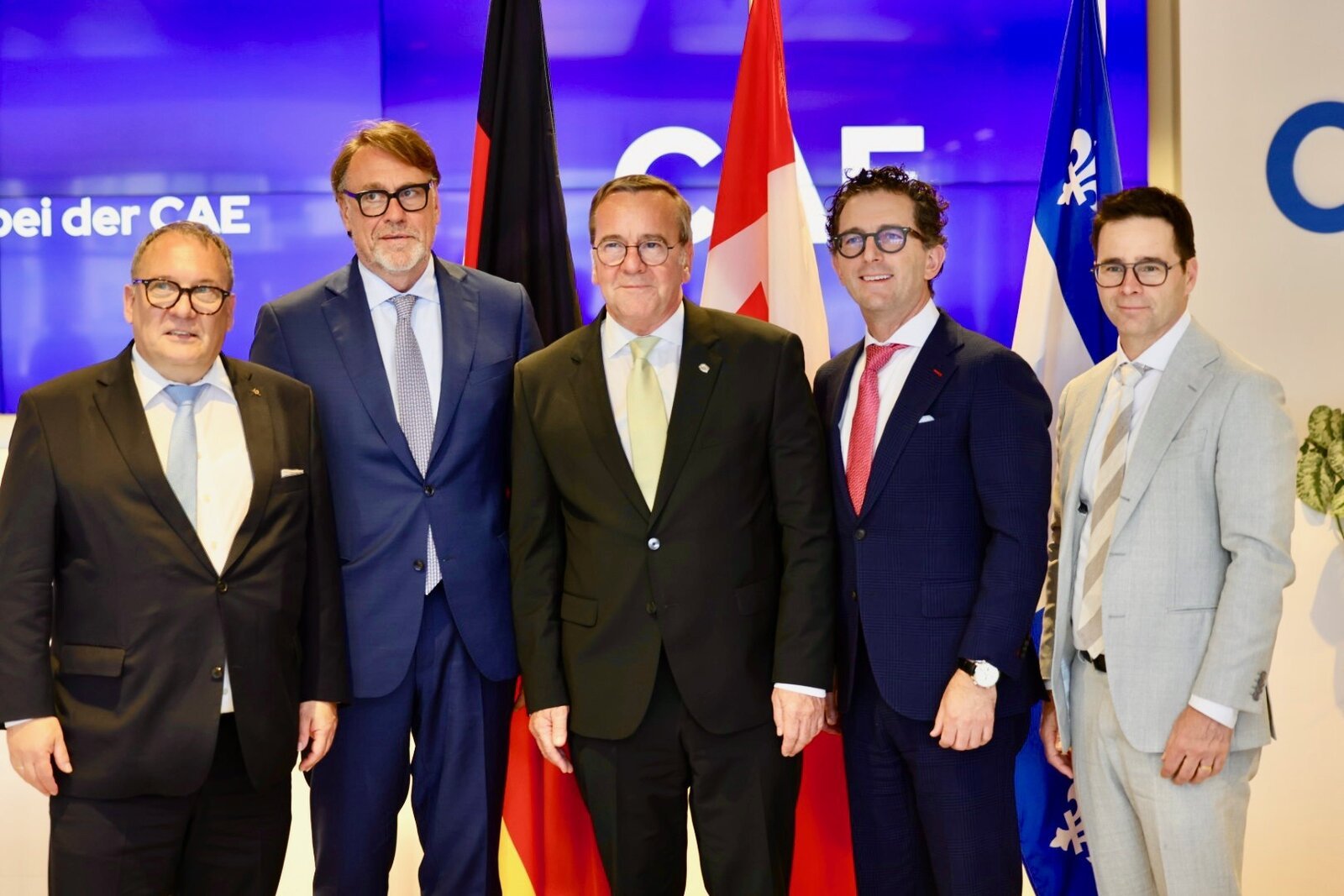

- The agreement creates a framework for TKMS and CAE to expand their collaboration on advanced naval training and simulation solutions.
- The cooperation brings together TKMS’s expertise in naval platform design with CAE’s global leadership in advanced training, simulation, and mission readiness capabilities.
- The agreement builds on the companies’ existing cooperation under the Canadian Patrol Submarine Project (CPSP) and supports future collaboration opportunities.
TKMS and CAE signed an agreement aimed at strengthening their collaboration on naval training, simulation and operational readiness solutions. The agreement supports ongoing cooperation between the two companies, including activities related to the Canadian Patrol Submarine Project (CPSP) and establishes a pathway for future services and collaboration opportunities.
“Modern naval operations require highly adaptive training environments that evolve alongside emerging threats,” said Oliver Burkhard, CEO at TKMS. “This agreement with CAE represents an important step in strengthening our collaboration and expanding our ability to deliver integrated naval training and simulation solutions. By combining our expertise, we are well positioned to support operational readiness and long-term capability development for naval forces operating in increasingly complex environments.”
The collaboration enables TKMS’s expertise in advanced naval platform design and lifecycle support to be combined with CAE’s capabilities in advanced training, mission system support, and long-term sustainment capabilities simulation. The agreement also allows the parties to work more efficiently in exploring and defining future service arrangements.
“Our priority is to ensure global defence forces, including the Royal Canadian Navy, benefit from advanced training, mission system support, and long-term sustainment capabilities,” said Matthew Bromberg, President and CEO at CAE. “Achieving this objective depends on pairing advanced technology with highly skilled crews who can fully leverage their systems and respond decisively in dynamic environments.”
The collaboration is intended to support the development of advanced training solutions capable of preparing naval personnel to respond to evolving asymmetric threats, including drone swarms, fast inshore attack craft and a growing range of unmanned systems. The companies also plan to explore capabilities that support continuous operational development, advanced tactics testing and preparation for complex maritime scenarios.
