

Abstract
American military units often treat all training as equally valuable, despite clear differences in impact on readiness. This article applies a novel analytical framework designed to identify and isolate low-yield training events, and applies the Pareto Principle—a statistical hypothesis that suggest around 80% of outcomes come from a “vital few” 20% of causes—to show that a small subset of training activities produce most readiness gains. It offers a simple framework: Commanders prioritize high-impact training to improve effectiveness under constraint.
The Problem with How We Prioritize Training
U.S. Military units often overtrain the wrong things simply to train “harder.” Military readiness is therefore degraded not only by insufficient training, but by exhaustion associated with the inability to distinguish high-impact training from low-yield activity. In an environment defined by time constraints, competing requirements, and operational pressure, commanders are often forced to treat all training as equally important because they lack an organic ability to evaluate which training provides the highest return on investment (ROI). The result is predictable: diluted effort, inefficient schedules, and missed opportunities to prioritize the activities that actually drive readiness.
Training calendars often attempt to satisfy all requirements equally, yet the training ROI which fills the calendar is rarely uniform. Research on organizational training consistently demonstrates that a relatively small number of well designed, mission-relevant training experiences account for many observable performance gains. Similarly, meta-analytic findings indicate that training effectiveness depends more on design quality and alignment with performance outcomes than on sheer training volume.
This deficiency presents an opportunity for improvement. Rather than treating all training categories as equally valuable, military leaders could use analytics to determine which training activities produce disproportionately greater readiness gains. The Pareto Principle, commonly referred to as the 80/20 rule, suggests that a small subset of inputs often drives the majority of outcomes. In performance improvement practice, Pareto analysis is widely used to identify the vital few contributors that produce most organizational results.
Given finite resources (time and money) available for force development and training, applying the Pareto Principle and analytical principles will help commanders deliberately prioritize the small subset of activities that provide the highest readiness-ROI.
The authors’ research analysis suggests that military leaders could use targeted information to prioritize training time more strategically, protect high impact activities during schedule compression, and reduce unnecessary training burdens.
A synthetic dataset was generated to represent a realistic military training and readiness environment because it allows analytic techniques to be demonstrated without exposing operational or classified readiness data. A structured dataset representing training events and readiness outcomes across four units was analyzed to identify patterns in training effectiveness. These training events collectively form the analytic base for evaluating readiness improvement patterns across the four fictitious units.
For this analysis, readiness is operationalized as a monthly readiness score ranging from 0 to 100, and a month-to-month readiness delta measured in points. Training inputs are categorized into six common training types: live exercises, simulation, technical qualifications, classroom instruction, team drills, and administrative or maintenance requirements. This structure aligns with training evaluation frameworks that emphasize linking training inputs to measurable performance outcomes.
What the Data Shows
The analysis focused on a simple question: which training activities drive measurable readiness gains, and which do not?
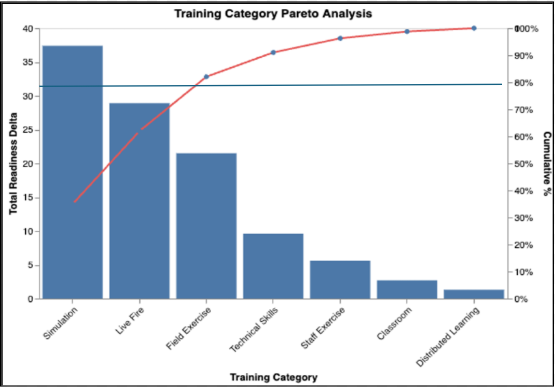
Figure 1: Training category pareto analysis
The results were clear. A small number of training activities accounted for the overwhelming majority of readiness gains. As shown in Figure 1 above, simulation, live fire, and field exercises together produced more than 80 percent of total improvement. Most training, in other words, contributed relatively little to measurable readiness. This raises a critical follow-on question: if most training is low yield, what activities actually drive improvement?
For commanders and training officers, this distinction matters. If a small number of activities produce most readiness gains, then protecting those activities should be a deliberate (and a data backed) priority during planning. When time is constrained, training should not be reduced evenly across categories. Instead, lower-yield activities should be adjusted or consolidated to preserve the training that actually drives performance. The key here is knowing where the value is.
A Simple Framework for Training Prioritization
The analysis presented here is not just descriptive; it can be operationalized. Training teams can apply a simple analytic framework to evaluate training effectiveness and prioritize effort based on measurable outcomes rather than assumptions or tradition.
At its core, the Training Teams framework focuses on identifying which training activities produce the greatest impact on readiness, which consume time without measurable return, and where execution differences influence outcomes. It does not require complex tools—only consistent tracking of training inputs and observable performance outcomes.
Training Teams should be asking:
- Which training activities consistently produce measurable improvements in readiness?
- Which activities consume significant time, but show little impact on performance?
- If training time were reduced by 20 percent, which activities must be protected to preserve readiness?
- Where do performance differences across units suggest variation in execution rather than resources?
- Are we evaluating training success based on completion, or on demonstrated outcomes?
These questions shift the focus from completing training to understanding its impact. Over time, this approach allows leaders to refine training plans based on evidence, not assumptions. It also does not require advanced tools to begin and is highly scalable.
The same framework could be supported by artificial intelligence (AI) systems capable of ingesting training data, applying consistent evaluation criteria, and identifying high-impact activities across units. Importantly, AI will not replace a Commander’s judgment. AI will be used to accelerate a commander’s ability to recognize complex patterns and make informed decisions at scale.
Why Time Training Is the Wrong Metric
Applying this framework also challenges a deeply held assumption in military training: that more time training leads to better outcomes. That assumption deserves closer scrutiny. The analysis does not support it. Training duration shows only a weak relationship with readiness improvement, suggesting that time alone is a poor predictor of effective training systems.
A closer look at the highest-impact training categories reinforced this finding. Duration did not meaningfully predict outcomes within these activities. Instead, the results suggest that quality—factors such as realism, intensity, and instructional execution—drives readiness gains far more than time spent. This indicates that the length of a training event is a poor predictor of its impact and is not what military leadership should focus on to optimize training outcomes.
Execution Matters More Than Structure
If training type and duration do not fully explain outcomes, differences in performance must come from somewhere else. Not all units performed equally, despite operating under the same training structure within a controlled dataset designed to isolate training effects.
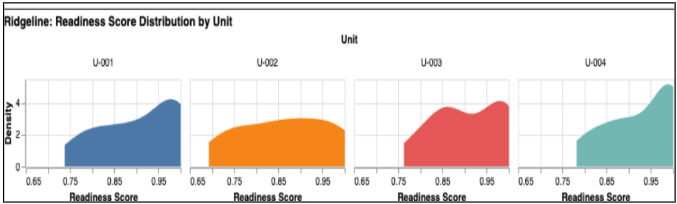
Figure 2: Readiness Score Distribution by Unit
As shown in Figure 2, one unit consistently outperformed the others, while another lagged behind. Because all units were modeled under the same assumptions and training categories, the differences observed in Figure 2 are unlikely to be driven by resources alone. Instead, it points to execution—how training is conducted—as a key differentiator.
These findings should be interpreted with appropriate caution. This analysis is based on a simulated dataset, which limits direct generalization to operational environments. Real-world readiness is influenced by additional factors such as personnel turnover, equipment availability, and mission demands. However, the patterns observed here align with established training research and suggest a useful framework for prioritizing training effort.
Conclusion: Training Priorities Under Constraint & Outcomes
The military does not suffer from a lack of training. It suffers from a lack of prioritization and an inability to distinguish effort from impact. In an environment defined by constraint, continuing to treat all training as equally valuable is inefficient, costly and increasingly unsustainable. This analysis suggests that a small subset of training activities is responsible for the majority of readiness gains. If validated with operational data, this approach offers a practical path toward more efficient, focused, and effective training systems. Analytics does not replace leadership judgment, but strengthens it by making the difference between effort and impact visible.
