

Charles Wintermeyer, a retired Air Force officer and State Department Foreign Service officer, offers 2 ideas for helping former allies in Afghanistan.
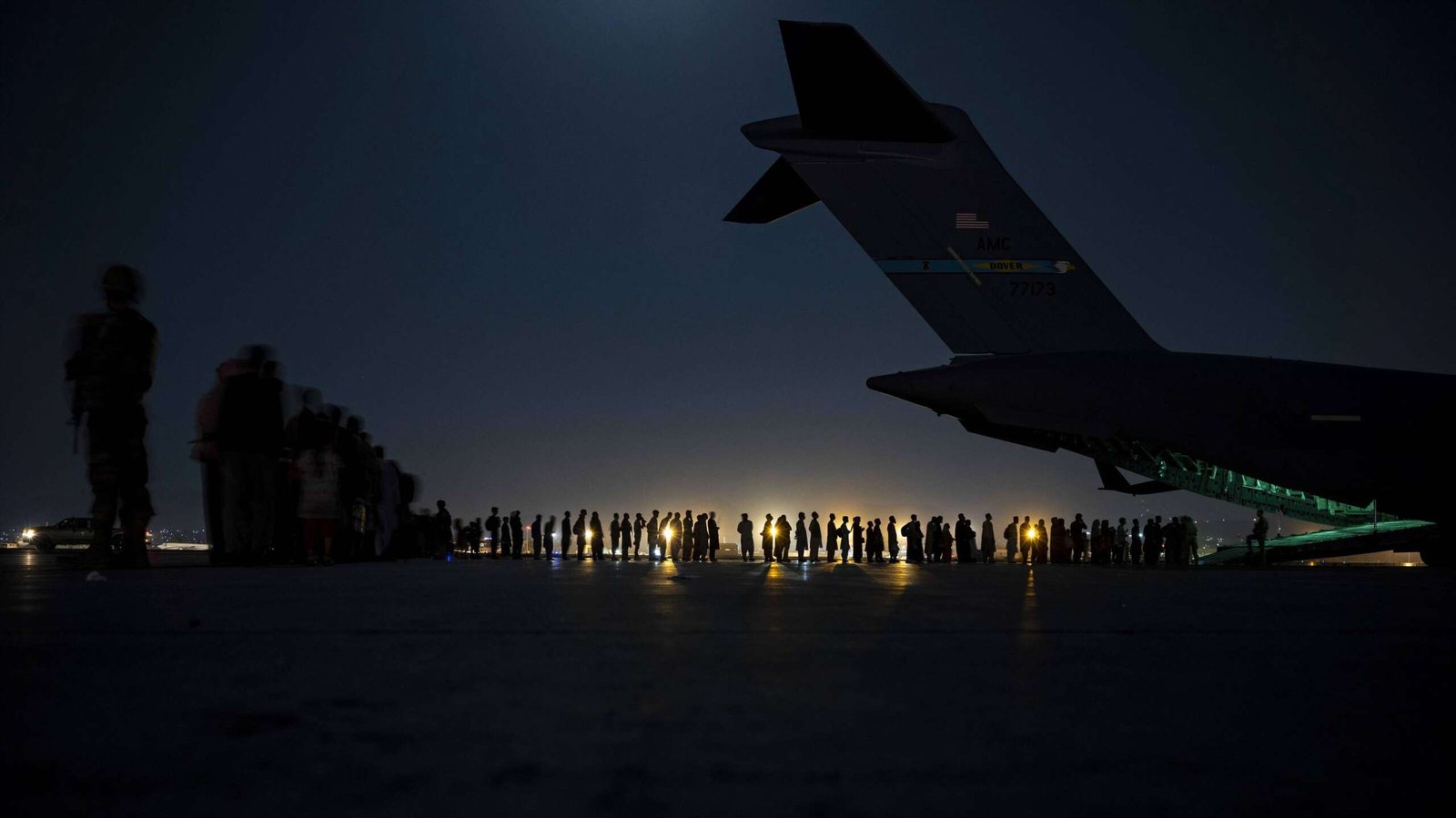
Five years ago this Sunday, the last U.S. military aircraft left Kabul. Does anyone still care about the Afghans who worked with us and were left behind?
It may sound like a rhetorical question, but it is a very frustrating one for those of us who served in Afghanistan and relied so much on our Afghan colleagues.
Some Senators and Congressmen from both parties support the Afghan Special Immigrant Visa (SIV) Program and are trying to keep it functioning, and we thank them for their support.
However, the Trump administration appears to care as little about the safety of these allies as the Biden administration did. Our military did an incredible job evacuating people out of Kabul after the August 2021 debacle. However, they could only fly out people who could get to the airport, not necessarily those whose lives were at risk because they worked with us and supported us in Afghanistan. Even normal Afghans at the airport were handing their babies over an airport fence, never to see them again, in the hope that they could get on a flight and grow up with a decent future, instead of growing up under the Taliban. The most heartbreaking photos were of the Afghans desperately clinging onto the wheels of a C-17 aircraft taking off and falling to certain death.
The Afghan SIV Program exists to help the Afghans at risk from the Taliban because they worked with us during our long involvement there. I spent four years trying to help an Afghan colleague I had worked with in southern Afghanistan and saw first-hand the bureaucratic obstacles and systemic problems that they faced, which led me to get involved with No One Left Behind, a wonderful organization that does care about our Afghan colleagues still in danger.
While the Afghan SIV Program still exists on paper, it has functionally been eviscerated. Among other provisions, Presidential Proclamation 10998 stopped visa issuance to all Afghans, including eligible Afghan SIV applicants.
As a former U.S. military officer and State Department Foreign Service Officer, I definitely appreciate the need to counter fraud and the need to vet people, especially after the horrible shooting in Washington of the National Guard soldiers.
However, the Afghan SIV Program already delivers that. It is the most heavily screened immigration pathway that we have, and we owe it to our colleagues to keep the Afghan SIV Program viable. I would recommend two changes: First, that the U.S. allow continued Afghan SIV issuance when cases are approved.
Secondly, the systemic “elephant in the room” is that after our long involvement in Afghanistan, many of the U.S. corporations that hired Afghans have merged, or been bought out, or gone out of business. While the US government has kept good records of Afghans it employed directly, the vast majority of the Afghans who worked for us were hired by Defense Department contractors and worked “on behalf of” the U.S. government, rather than directly for the government, and their Afghan employment records are very incomplete after so many years, as well as records the military retained in “Project Rabbit.” Most of the four years I spent trying to help my colleague was trying to track down what had happened to his company and did the successor company, after a buyout and a merger, have any records. My colleague was fortunate in that some records existed for him, but I also realized it was a huge systemic issue affecting thousands of other eligible Afghan SIV applicants. Because of incomplete employment records, through no fault of the faithful employees now left in danger, they cannot obtain an HR Employment Verification Letter or some other required proof of employment.
I recommend an alternative in the case of missing employment records, such as an affidavit from a U.S. military or civilian officer who personally served with the Afghan applicant in country.
Even marginal improvements cannot advance until the administration engages meaningfully to bring our closest allies to safety. The full suspension of Afghan SIV issuance keeps the Afghan allies who participated in U.S. interventions and served alongside U.S. troops in harm’s way. It is time to resume SIV issuance to our fully vetted, eligible allies left behind. For those whose employment records no longer exist, we also owe them an alternative form to proof to verify their employment for us, from the very Americans that they served with.
Charles Wintermeyer is a retired Air Force officer and State Department Foreign Service officer living in Northern Virginia.
Copyright
© 2026 Federal News Network. All rights reserved. This website is not intended for users located within the European Economic Area.
