

Since its designation as a UNESCO Intangible Cultural Heritage in 2013, washoku has become synonymous with values such as authenticity, seasonal harmony, integrity, and ingredient purity. This is evident in three key trends: first, 11 consecutive years of growth in food exports; second, the arrival of 36.8 million visitors to Japan in 2024; and third, tourism spending totaling JPY 1.2 trillion on food, beverages, and snacks. How do you explain the continued rise and record-breaking popularity of washoku in recent years? And what role do Japanese snacks play in these trends?
Japanese cuisine is widely recognized for its health benefits, giving it a unique position in the global market. It’s difficult to articulate, but I believe Japanese food has played a significant role in raising the overall quality of cuisine worldwide. This largely stems from the Japanese people’s deep sensitivity to the appearance, flavor, and texture of food. I’ve traveled extensively, and while other cuisines have much to offer, I find Japanese cuisine truly special.
Japan is currently grappling with a population crisis, with experts projecting a labor shortage of 11 million people by 2040. If current trends continue, the national population is expected to fall below 100 million by 2050 and decline further to around 60 million by the end of the century. One way your company is addressing this challenge is through digital transformation (DX). . Key initiatives include barcode-based production management and automated packaging lines. How do you see AI-driven automation reshaping the future of food manufacturing, and how is your company positioned to lead or adapt to this shift?
It’s clear that this kind of environment is unavoidable in the future. At present, we have around 110 full-time employees and approximately 250 part-time workers across morning and evening shifts. However, a shrinking workforce is inevitable, so we must build production lines that can operate effectively even with fewer staff.
The most labor-intensive part of our current production process is stretching the squid, frying it, and managing the packaging line. This issue didn’t arise overnight — we’ve been aware of Japan’s demographic challenges for more than a decade. Over the past ten years, we’ve proactively adjusted our operations in anticipation of this shift. For example, we have deployed an automated inspection robot on our packaging line, introducing automated inspection and reducing the number of workers from seven to six.
We introduced a robot into the packaging process and added a bridging line between the frying and packaging stages to eliminate the need for manual transport of products between them. We are now developing a network-integrated control system that allows us to monitor inventory and manage production in real time. This will form the basis of an AI-driven production system — a necessary evolution, as we remain committed to delivering our snacks to as many people as possible around the world, even with fewer hands.
You mentioned your mission to deliver snacks to people around the world — a mission that, of course, includes Japan. However, with a declining population driven by low birthrates and an aging society, Japan’s domestic consumer market is expected to shrink. What steps is your company taking to mitigate the impact of this demographic shift on your business?
You’re absolutely right — we’ve been monitoring this trend for at least the past ten years. Japan’s population continues to decline year after year. As a result, expanding globally has become essential, especially when it comes to our marketing strategy. To that end, we established a sales company in Thailand, exporting our products from Japan to begin building our presence there. We see Thailand as a strategic base for accessing the vast Southeast Asian market. While Japan’s population is in sharp decline, ASEAN countries are home to billions of people.
Over the past five years, we’ve been studying Thai consumer preferences, and in 2025, we plan to launch ten product lines produced locally in Thailand for the domestic market. Looking ahead, we’re exploring the possibility of exporting these Thai-made products to other markets around the world.
Could you explain what otsumami snacks are, and share a bit more about the specific otsumami products your company produces?
Otsumami pairs well with beverages like sake or beer, which are often enjoyed for stress relief and socializing. As such, otsumami is ideal for gatherings and can be seen as a tool for encouraging smooth communication. I see otsumami as distinct from regular snacks — it’s something deeply rooted in Japanese culture.
Stress exists everywhere, and people gather and socialize in every culture. We believe it would be wonderful to create environments where otsumami can be adapted to fit the local context of each country. That said, I recognize that establishing a new cultural practice is not an easy task.
How do you ensure that the quality of production in Thailand matches the standards you maintain in Japan?
In overseas markets, it is important to find the right balance between taste, price, and quality. In Japan, sensitivity and quality are strongly emphasized, which naturally increases production costs. In Thailand, we make adjustments to our products to keep prices affordable for the local market, while ensuring that the essence of Japanese quality is maintained. This balance is essential, and we carefully monitor production to make sure it aligns with the standards we uphold in Japan.
In addition to your presence in Thailand, we understand that you operate in the U.S. through Maruesu America and have offices in the Philippines and Malaysia. Which other countries have you identified as targets for future expansion?
From our base in Thailand, we export to Singapore, Taiwan, and Korea. As you mentioned, we also have a presence in the U.S. and export across North America, including Canada. Currently, our exports to Australia and Europe are limited, partly due to the strict food regulations. In the near future, we plan to focus on nearby markets such as Indonesia and Malaysia. China also holds significant potential and may become a key focus area. Looking further ahead, we’re considering expanding into markets like Dubai and India.
Strategic investment has become a core pillar of your company’s growth, including several completed deals. What value have these investments brought to Maruesu? And are you actively exploring new strategic investment opportunities internationally?
OKUNI is a packaging company, and we believe it’s important to keep it as a separate entity. This structure allows us to invest in OKUNI strategically, ensuring we’re prepared for a future with a significantly reduced workforce. Handling all packaging in-house would be extremely challenging, so our investment in OKUNI serves as a hedge against that risk.
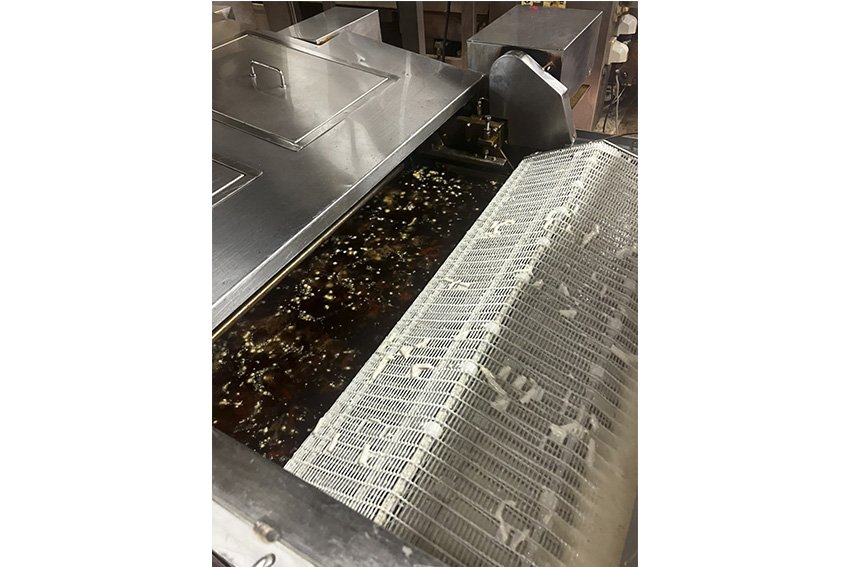
Spiral freezers are used to quickly freeze large quantities of food products
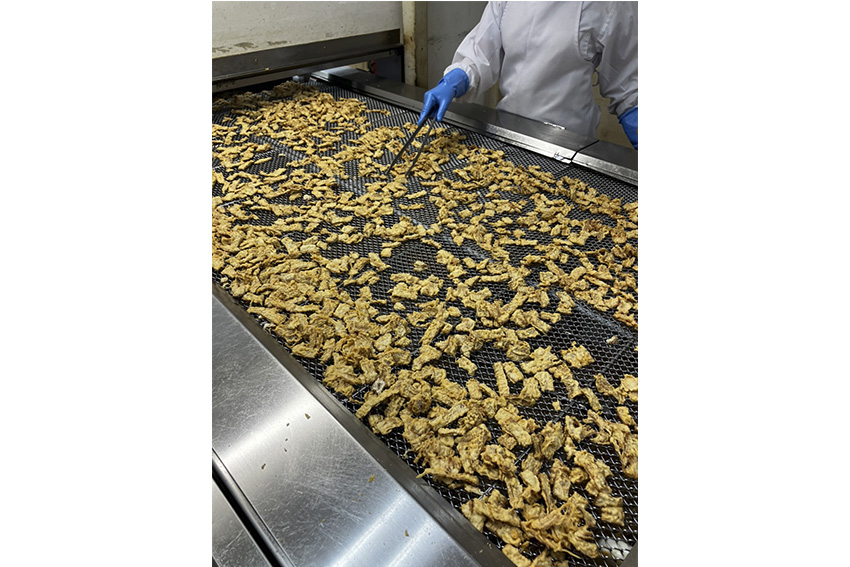
Food production environment
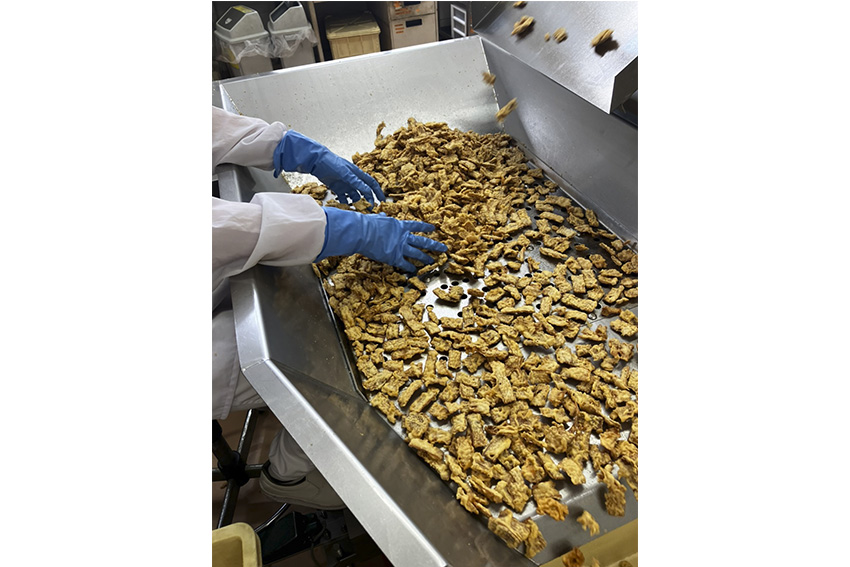
Food processing
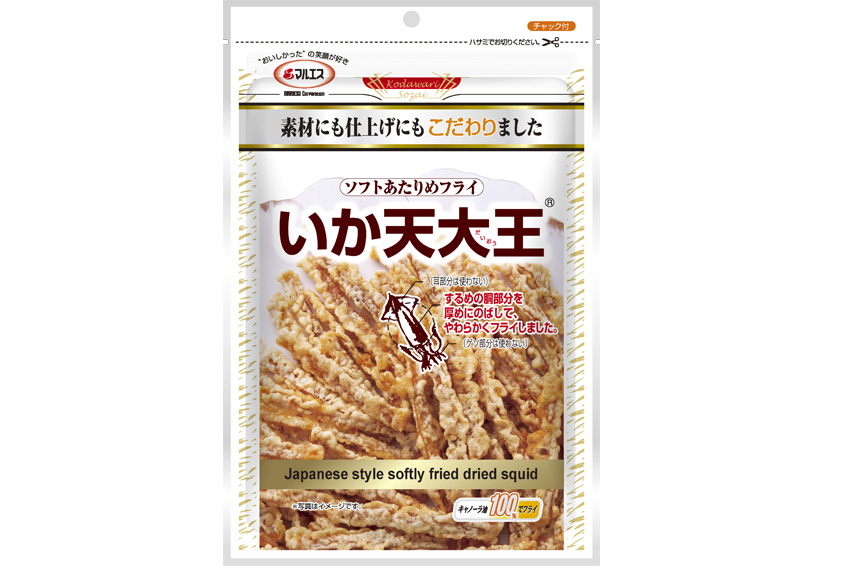
Maruesu Ikaten Daiou
Founded in 1947, Maruesu began in Osaka as a manufacturer and seller of tsukudani — a traditional Japanese dish made by simmering ingredients such as seafood, seaweed, or meat in a soy sauce and mirin mixture until the liquid evaporates, resulting in a concentrated, salty-sweet flavor. Today, the company is a vertically integrated food manufacturer specializing in seafood snacks, with in-house R&D and production capabilities. Maruesu operates across both B2B and B2C channels. Looking ahead, which of these segments do you see as the stronger driver of future revenue: B2B or B2C?
B2B represents an important pillar of our business. At the same time, we recognize the significance of the B2C segment and have been operating Otsumami Café since 2009, with a dedicated team to promote these products. Moreover, many of our B2B customers, such as Costco, Amazon, and AEON, run e-commerce platforms that cater to B2C. While we focus on developing our own B2C platform, our B2B partners are also expanding their platforms, and both the growth of this segment and collaboration with them in B2C will become increasingly important moving forward.
What are Maruesu’s competitive advantages?
First and foremost, our company has the technology to transform seafood and vegetables into value-added snack products. Our capabilities include frying, baking and simmering,, along with in-house R&D and packaging. Keeping everything under one roof is, I believe, one of our greatest strengths.
Your deep-fried squid chips are made using flour-blending and pressing technology, and your product lineup also includes more premium offerings, such as smoked oyster with miso snacks. From an international perspective, which of your products do you believe have the strongest potential for success?
When you asked that question, the first products that came to mind were our Kodawari Series and Tabekiri Series. Both are already performing well in Japan and in international markets.
One reason washoku has been so well received globally is its reputation for healthiness. Around the world, there’s a growing shift in mindset as people seek healthier diets, and Japanese cuisine is often viewed as the ideal diet for longevity and well-being. How is your company adapting its snacks to better align with the preferences of today’s health-conscious consumers?
Our business has traditionally focused on squid, but as it becomes less readily available, we’re adapting to meet the needs of health-conscious consumers by shifting some of our product lines toward alternative ingredients. These include vegetables like okra, as well as sliced lemon.
Last year, Japan welcomed 36.8 million inbound tourists, many of whom came seeking authentic Japanese cuisine and snacks. Experts now predict that this number could soar to 60 million by 2030. Could you share some of your personal favorite snacks or dishes that you feel best represent authentic Japanese food?
There’s a lot I could recommend, but first and foremost is our Ikaten Daio — our tempura-fried squid snack. It’s our most popular product and something we’re extremely proud of. This snack embodies all of our technology and expertise in a single item. While crispiness is often preferred globally, Ikaten Daio offers a uniquely soft texture with a rich umami flavor. We maintain high quality while preserving a higher level of moisture in the packaging, allowing consumers to enjoy the snack at its optimal taste.
What does a partner of choice look like for Maruesu?
It really depends on the country. In the U.S., for example, it would be difficult for us to sell directly, so we work through a broker. We supply the products, and they handle the sales in the market. In Thailand, however, we have our own sales company and manage sales directly.
When it comes to Korea and China, there are political risks to consider, so we work in collaboration with local distributors to handle sales to consumers. Overall, we take a flexible approach to partnerships and tailor our strategy based on the specific conditions of each market.
If you had to define your company in a single sentence, what would it be?
We love seeing the smile on someone’s face when they taste something delicious. While health is certainly important, bringing happiness to people is at the heart of what we do — and that’s what we focus on.
If we were to return two years from now for a follow-up interview, what goals or dreams would you hope to have achieved by then?
My current mission is to bring our products to international markets, and we will continue pursuing that goal from our bases in Japan and Thailand. I believe that in two years, you’ll see our products widely available across Southeast Asia.
For more information, please visit their website at: https://www.maruesu-web.co.jp/en/
