

Most federal employees don’t realize they’re one unexpected expense away from financial crisis. And even fewer know there’s a nonprofit built specifically to help them before things go from bad to worse.
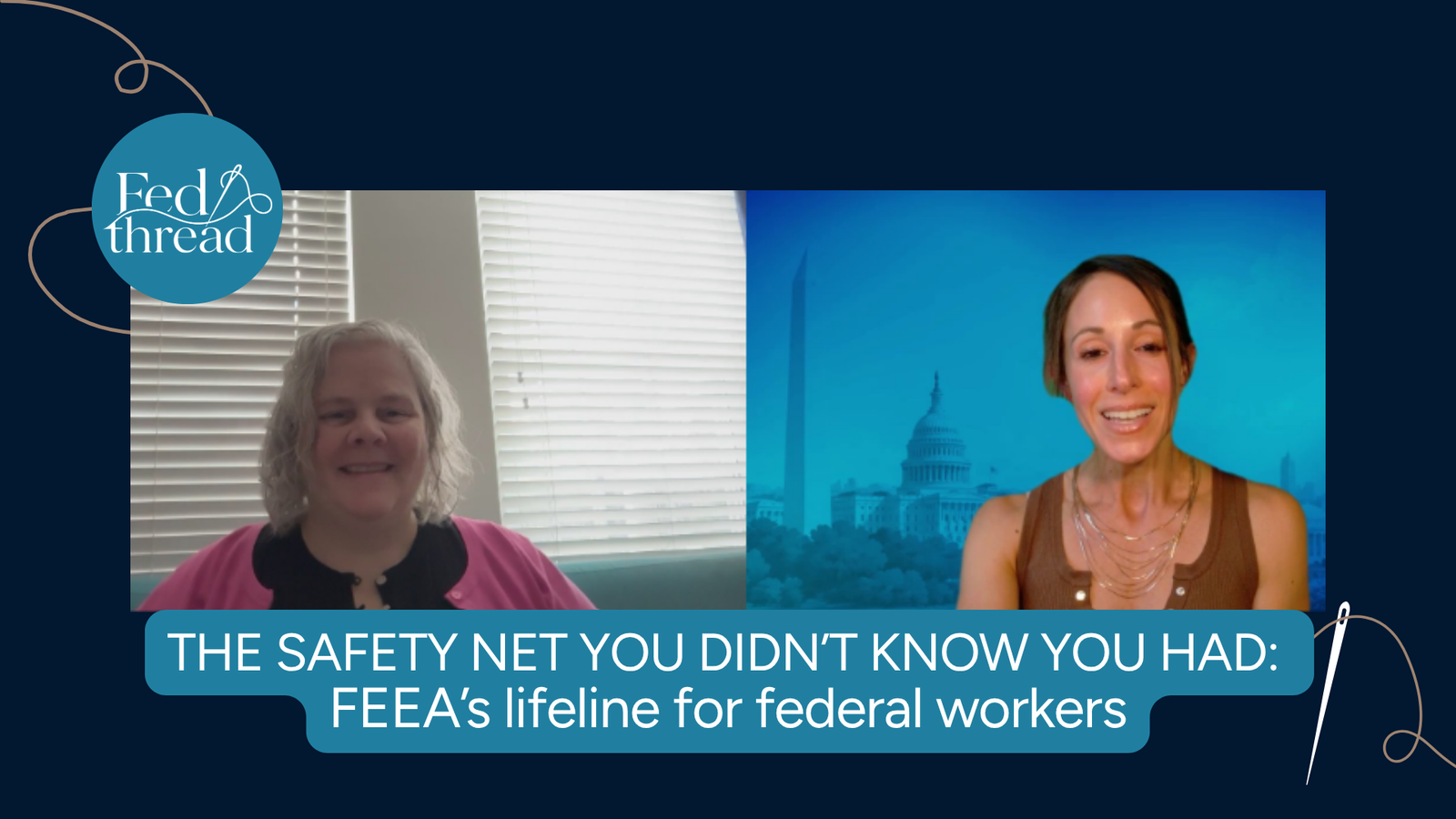
On this episode of Fed Thread, I sat down with Robyn Kehoe, executive director of the Federal Employee Education and Assistance Fund (FEEA). It’s an organization that’s flown under the radar, supporting federal employees for four decades. Despite its longevity, most feds have never heard of it. And that’s exactly the problem.
The hidden vulnerabilities of federal life
Federal employees are often seen as insulated from financial shocks. But as Kehoe points out, “feds are just like every other American.” They face cancer diagnoses, car accidents, chronic illnesses, caregiving demands, mental health crises and natural disasters, often while being the primary helper in their family and community.
Many don’t seek help until they’re already underwater, explains Kehoe. They miss a rent payment, then another, then another—until the problem is too large for FEEA’s emergency loan program to solve. The organization’s $2,000 interest‑free hardship loans can stabilize a crisis, but they can’t unwind months of compounding fees, penalties and overdue bills.
Kehoe’s message is clear: reach out early, not at the breaking point.
How FEEA helps
FEEA provides interest‑free emergency hardship loans for situations like:
- Illness that causes unpaid leave
- Caring for an immediate family member
- Dental emergencies
- Home disasters like kitchen fires
These loans go directly to the creditor (landlords, utility companies, medical providers, etc.) so the help is immediate and targeted.
FEEA also provides small disaster relief grants of usually $500 for federal employees affected by federally declared disasters. These help cover temporary lodging, repairs, or essential expenses while insurance claims are pending.
In the event the need exceeds what FEEA can do, they’ll provide feds with vetted resource lists and educational materials on federal benefits and financial resilience, which can be critical tools for those who often don’t know where else to turn.
What a surge in need reveals
In a typical year, FEEA helps around 500 federal employees. But during the shutdown last fall, that assistance spiked to more than 7,000 cases, when many feds earning $50,000 or less were suddenly working without pay or were furloughed entirely. They still had to buy diapers, gas, groceries and medicine. And FEEA became a lifeline.
These numbers underscore a reality many overlook: the federal workforce is not monolithic, wealthy or insulated. It’s diverse, geographically dispersed, and often living paycheck to paycheck.
The human impact
Kehoe is acutely aware of the human side to these huge numbers of feds in need. She shared a story that stuck with her about a mother whose 11‑year‑old was battling cancer. After multiple rounds of treatment, the mother’s leave was used up, and every weekly appointment meant unpaid time off. The family was slipping toward eviction, when all they needed was one month of rent covered, just enough breathing room to keep their home stable while they fought for their child’s life. And FEEA made that possible.
Why awareness matters
FEEA’s biggest challenge isn’t demand, it’s visibility. Many feds don’t know the organization exists. Others feel ashamed to ask for help.
Some simply don’t recognize the signs of a struggling colleague, which could take the form of a distracted coworker, or a teammate suddenly burning through their leave. Sometimes the person just seems “off” but won’t say why. These small signals may be the doorway to a conversation that changes everything.
This episode highlights not only the financial fragility many feds quietly contend with, but the profound impact of community, compassion and early intervention. Listen to the full conversation on Fed Thread and learn how you can support FEEA’s mission.
Copyright
© 2026 Federal News Network. All rights reserved. This website is not intended for users located within the European Economic Area.
