

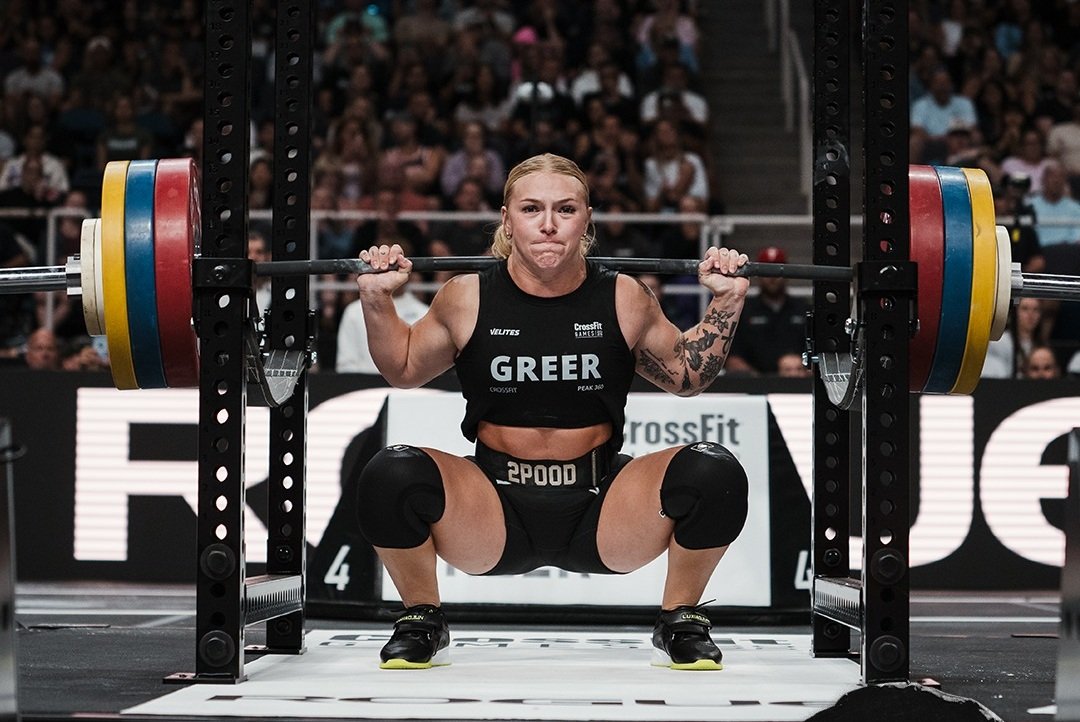
The squat is one of the most fundamental movements in strength training. It builds muscle, improves athletic performance, and carries over into everyday life. Yet many people struggle to make progress with it. You might feel stuck at the same weight for months, experience discomfort, or simply feel like your squat never gets stronger no matter how hard you try.
The truth is that a weak squat is rarely caused by a lack of effort. More often, it comes down to a combination of biomechanics, neuromuscular coordination, and programming mistakes. When you understand what is actually limiting your squat, you can fix it quickly and effectively.
Why Your Squat Is Weak
Before jumping into solutions, it is important to understand the root causes. Weakness in the squat usually comes from one or more of the following factors.
Poor Force Production
Squatting is about generating force through the ground. If your muscles cannot produce enough force, the bar will not move efficiently.
Force production depends on muscle cross sectional area, motor unit recruitment, and rate of force development. Strength training increases all three, but only when it is programmed correctly. Research shows that maximal strength is closely related to neural adaptations, especially in the early stages of training.

If your training lacks intensity or progression, your nervous system never learns to recruit high threshold motor units effectively.
Weak Link in the Kinetic Chain
The squat is a compound movement involving multiple joints and muscle groups. If one link in the chain is weak, the entire movement suffers.
Common weak points include:
- Quadriceps weakness leading to difficulty out of the bottom
- Glute weakness reducing hip extension power
- Core instability causing loss of position
- Adductor weakness limiting control and force transfer
Studies on resistance training show that strength imbalances can significantly reduce performance in multi joint movements.
Inefficient Technique
Technique plays a massive role in squat performance. Even strong athletes can lift less weight if their movement pattern is inefficient.
Common technique issues include:
- Forward torso collapse
- Knees caving inward
- Poor bar path
- Limited depth or inconsistent positioning
Biomechanical analyses of the squat show that joint angles and bar positioning directly affect force output and muscle activation patterns.
Protein Calculator
Limited Mobility
Mobility restrictions can prevent you from achieving optimal squat depth and positioning.
Key areas include:
- Ankle dorsiflexion
- Hip external rotation
- Thoracic spine extension
If mobility is limited, your body compensates by altering movement patterns, which reduces efficiency and increases injury risk. Research has shown that reduced ankle mobility is strongly associated with poor squat mechanics and increased forward lean.

Fatigue and Poor Recovery
Strength gains occur during recovery, not during training. If you are constantly fatigued, your performance will plateau.
Sleep deprivation, inadequate nutrition, and excessive training volume can all impair strength development. Studies show that lack of sleep reduces maximal strength and power output.
Lack of Specificity
If you want to improve your squat, you need to squat. While accessory exercises are useful, they cannot replace the movement itself.
The principle of specificity states that adaptations are specific to the demands placed on the body. This means that improving your squat requires practicing the squat with sufficient load and frequency.
The Real Reason Most Squats Stay Weak
While all the factors above matter, the most common underlying issue is a mismatch between your current capacity and your training approach.
In simple terms, you are either:
- Not training hard enough to stimulate adaptation
- Training too hard to recover properly
- Practicing the movement inefficiently
Fixing your squat means aligning your training with your actual needs. Now let’s get into the three most effective ways to do that.
Tip 1: Fix Your Technique First
Why Technique Matters
Technique determines how efficiently you apply force. Even small improvements can lead to significant increases in strength. Research using motion analysis shows that experienced lifters have more consistent bar paths and better joint coordination compared to novices. This leads to greater force production and reduced energy loss.
Key Technical Principles
To improve your squat, focus on the following fundamentals:
- Maintain a stable midfoot balance throughout the movement
- Keep the bar path vertical over the center of your foot
- Brace your core to create intra abdominal pressure
- Push your knees outward to maintain alignment
- Control the descent and avoid dropping too quickly
Practical Fixes
Use these strategies to improve technique:
- Film your squats from the side and front
- Practice tempo squats to build control
- Use pause squats to improve positioning at the bottom
- Reduce the weight and rebuild your movement pattern
Slowing down the movement increases motor learning and helps reinforce proper mechanics.
The Science Behind It
Motor learning research shows that deliberate practice with feedback leads to faster skill acquisition. This is especially important for complex movements like the squat.
Improving technique increases mechanical efficiency, allowing you to lift more weight without necessarily increasing muscle mass.
Tip 2: Build Strength Where You Are Weak
Identify Your Weak Point
Every lifter has a sticking point in the squat. This is the part of the movement where the bar slows down or stops. Common sticking points include:
- Bottom position
- Just above parallel
- Lockout phase
Each sticking point corresponds to specific muscle groups and joint angles.
Targeted Strength Work
Once you identify your weak point, you can use specific exercises to address it. For example, if you struggle out of the bottom:
- Pause squats
- Front squats
- Goblet squats
If you struggle above parallel:
- Box squats
- Pin squats
- Tempo squats
If you struggle at lockout:
- Hip thrusts
- Romanian deadlifts
- Back extensions
Why This Works
Strength is joint angle specific. Research shows that strength gains are greatest at the angles you train. This means that targeting weak positions directly leads to faster improvements.
Accessory Exercises That Actually Help
Focus on movements that carry over to the squat:
- Split squats for unilateral strength
- Leg press for additional volume
- Hamstring curls for knee stability
- Core exercises for bracing strength
Studies on resistance training show that accessory work improves overall performance when it addresses specific weaknesses.
Avoid Common Mistakes
Do not:
- Overload accessories at the expense of your main lifts
- Ignore technique while chasing heavier weights
- Use random exercises without a clear purpose
Every exercise should have a reason tied to your squat performance.
Tip 3: Train Smarter, Not Just Harder
The Role of Programming
Your training program determines whether you get stronger or stay stuck. Key variables include:
- Intensity
- Volume
- Frequency
- Rest
Research consistently shows that progressive overload is essential for strength gains.
How to Apply Progressive Overload
You can increase training stimulus by:
- Adding weight to the bar
- Increasing repetitions
- Improving technique
- Increasing training frequency
The goal is gradual progression over time.
Optimal Training Frequency
Training the squat more often can improve performance. Studies suggest that training a muscle group two to three times per week leads to greater strength gains compared to once per week. This allows for more practice and better recovery between sessions.
Managing Fatigue
Fatigue is the hidden enemy of strength. To manage it:
- Keep most sets a few reps away from failure
- Use deload weeks every four to six weeks
- Prioritize sleep and nutrition
Research shows that excessive fatigue reduces force production and increases injury risk.
The Importance of Recovery
Recovery is not optional. It is part of the training process. Key factors include:
- Sleep duration and quality
- Protein intake
- Overall calorie intake
Studies show that inadequate protein intake limits muscle growth and strength development.
Periodization for Long Term Progress
Periodization involves varying training intensity and volume over time. A simple approach:
- Build phase with higher volume
- Strength phase with heavier loads
- Deload phase for recovery
This helps prevent plateaus and keeps progress consistent.
Putting It All Together
Improving your squat is not about one magic fix. It is about addressing the real limitations in your training. Here is a simple plan:
- Fix your technique with lighter weights
- Identify and strengthen your weak points
- Follow a structured program with progressive overload
- Prioritize recovery and consistency
When these elements are aligned, your squat will improve.
Common Myths About Squat Strength
Myth 1: You Just Need to Try Harder
Effort matters, but it is not enough. Without proper technique and programming, more effort can actually slow progress.
Myth 2: More Volume Is Always Better
Too much volume leads to fatigue and reduces performance. Balance is key.
Myth 3: Mobility Is the Only Issue
Mobility matters, but strength and coordination are often more important.
Myth 4: You Need Perfect Form Before Adding Weight
Perfection is not required. Good technique combined with progressive loading is the goal.
Final Thoughts
A weak squat is not a mystery. It is the result of specific limitations that can be identified and fixed.
Focus on improving technique, building strength in weak areas, and training intelligently. These three strategies are backed by science and proven in practice. If you apply them consistently, your squat will get stronger.
Key Takeaways
| Problem | Cause | Solution |
|---|---|---|
| Weak squat overall | Poor force production and technique | Improve movement efficiency and train with progressive overload |
| Sticking point in squat | Weak muscle group at specific joint angle | Use targeted exercises like pause or pin squats |
| Poor depth or instability | Limited mobility or weak core | Improve ankle and hip mobility and strengthen core |
| Plateau in strength | Poor programming or fatigue | Adjust volume, intensity, and recovery |
| Inconsistent performance | Lack of practice and specificity | Squat more frequently with proper technique |
References
- Aagaard, P., Simonsen, E.B., Andersen, J.L., Magnusson, P. and Dyhre Poulsen, P. (2002). Increased rate of force development and neural drive of human skeletal muscle following resistance training. Journal of Applied Physiology, 93(4), pp.1318 to 1326.
- Behm, D.G. and Sale, D.G. (1993). Intended rather than actual movement velocity determines velocity specific training response. Journal of Applied Physiology, 74(1), pp.359 to 368.
- Bird, S.P., Tarpenning, K.M. and Marino, F.E. (2005). Designing resistance training programmes to enhance muscular fitness. Sports Medicine, 35(10), pp.841 to 851.
- Escamilla, R.F. (2001). Knee biomechanics of the dynamic squat exercise. Medicine and Science in Sports and Exercise, 33(1), pp.127 to 141.
- Hartmann, H., Wirth, K. and Klusemann, M. (2013). Analysis of the load on the knee joint and vertebral column with changes in squatting depth and weight load. Sports Medicine, 43(10), pp.993 to 1008.
- Helms, E.R., Fitschen, P.J., Aragon, A.A., Cronin, J. and Schoenfeld, B.J. (2014). Recommendations for natural bodybuilding contest preparation. Journal of Sports Medicine, 2014, pp.1 to 20.
- Schoenfeld, B.J. (2010). The mechanisms of muscle hypertrophy and their application to resistance training. Journal of Strength and Conditioning Research, 24(10), pp.2857 to 2872.
