

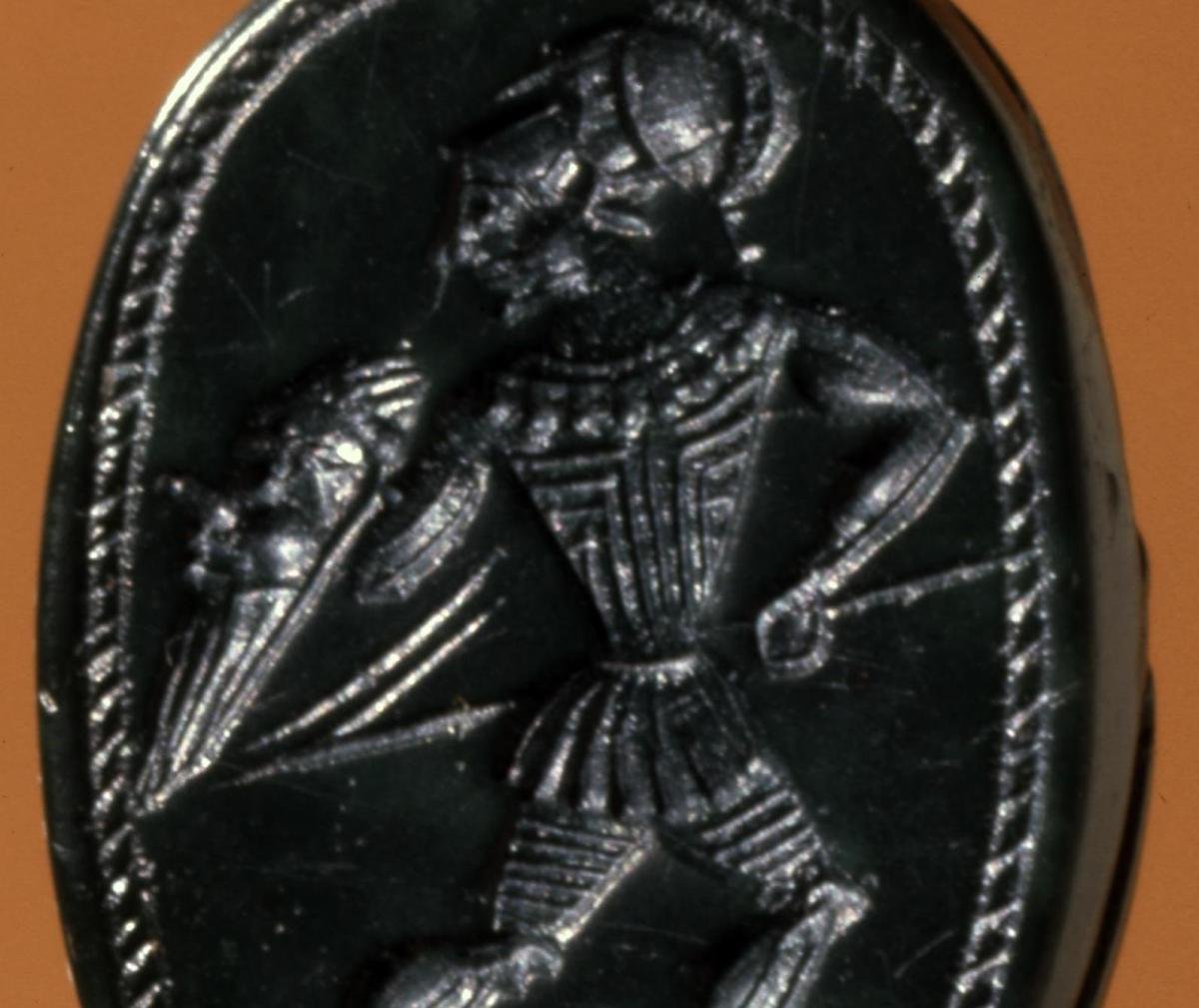
This is the second part (I) of our series looking at the structure of the Carthaginian army. As we discussed last time, while Carthage has an unfair reputation for being an ‘un-military’ society, its military system was one of the highest performing in the ancient Mediterranean, able to produce vast and effective armies waging war on multiple fronts for prolonged periods.
Last time we surveyed the components of that military and then took a closer look at the role of Carthaginian citizen soldiers. What we noted was that Carthaginian citizen soldiers formed an important part of Carthage’s armies early in its history, and in its last decade, but at its height were generally not include in ‘expeditionary’ Carthaginian armies. I supposed that this is because Carthaginian citizen soldiers had their service restricted to Carthage’s North African homeland – because almost every time we gain visibility into Carthage’s wars there, we see citizen soldiers – but the evidence for this is extremely limited. What matters for us is that by the third century, Carthaginian citizens no longer make up a significant amount of Carthage’s military force outside of North Africa (though a handful still serve as officers).
That of course leads to the question: if Carthaginians weren’t the bedrock foundation of Carthage’s armies, who was? And this week, we’ll get to that answer, looking at the forces Carthage drew from North Africa. Our sources term them mercenaries, but we have more than enough reason to doubt that.
But first, as always, raising large armies of mercenaries, subject conscripts, vassal warlords and allies is expensive! If you too want to help me invade Italy with a multi-ethnic army of diverse origins in a doomed effort to stop the Roman Republic, you can help by supporting this project over at Patreon. If you want updates whenever a new post appears or want to hear my more bite-sized musings on history, security affairs and current events, you can follow me on Bluesky (@bretdevereaux.bsky.social). I am also active on Threads (bretdevereaux) and maintain a de minimis presence on Twitter (@bretdevereaux).
Conscripting Africans
Returning briefly to our schematic of the Carthaginian army in 215, the second largest single component of Carthage’s roughly 160,000 men under arms in that year were 50,000 African infantry, joined by at least 11,000 African and Numidian cavalry. We’ll discuss the Numidians next week for reasons that will be clear then. But it is clear that the backbone of Carthage’s armies were these African infantrymen.
Our Latin sources (like Livy) term these fellows Afri, ‘Africans,’ while our Greek sources, like Diodorus and Polybius, will call generally them λίβυες, ‘Libyans,’ though we ought to be clear here that most of these men are coming from what today is Tunisia, rather than Libya. At the end of the First Punic War, Polybius notes that these men made up the largest part of Carthage’s army, returning in defeat from Sicily (Polyb. 1.67.7) and as noted above they are present in substantial numbers in Carthage’s armies in the Second Punic War. It is hardly the first time for these fellows, though: North Africans are reported in Carthage’s armies from the Battle of Himera on forward.
I should note, I am going to pretty consistently call these fellows from here on in ‘Africans’ or ‘North Africans.’ First off, it is very clear that when our Greek sources say λίβυες, they mean the same thing as our Latin sources saying Afri (indeed, often in cases where Livy is just straight up translating passages of Polybius with only modest embroidering, the equivalence is clear); these are just two different languages’ terms for the same people. But I think ‘Africans’ may be more helpful here for the modern reader for two reasons: first, most of Carthage’s African infantry does not come from the territory of the modern country of Libya; most of them come from what today is Tunisia, so one doesn’t want to give the incorrect sense that these troops are ‘Libyan’ in the modern sense of the country of Libya (some of them are, but most are not). Second, I think ‘African’ also gives a sense of the wider notion of these fellows as primarily being from Africa – some are indigenous Berbers, some are Phoenician settlers, some are of mixed heritage and – to go by recent DNA studies – some are likely settlers of Aegean extraction, who have substantially adopted Punic (=Phoenician) culture. So they’re all Africans in the sense that they live in Africa (both in the modern sense of the continent and the ancient sense of the region around Carthage), but a relatively diverse group.
Our reception of these troops is, alas, I think quite badly bent by Polybius who – in driving some of his own arguments – allows some critical misconceptions to fester in his writing. Polybius, as a source, is usually relatively trustworthy, but while Polybius will almost never lie to you, he will often allow you to believe things that aren’t strictly speaking true – Polybius is a master of ‘lying with the truth,’ as it were and this is one case.
We’ve actually discussed this before, but to recap briefly: Polybius describes Carthage’s African troops as μισθοφόροι, misthophoroi, which has a broad meaning (‘wage-bearing, wage-receiving’) and a narrow meaning (‘mercenary’) and here, as in a few other places, Polybius is happy to be technically correct with the first meaning and then let the reader assume the second meaning (which is wrong). That’s because Polybius seems to be – we don’t have all of his work, but this seems to be a thread of it – arguing for the superiority of citizen soldiers over mercenaries in an effort to get the Greeks of his own day to reform their own militaries to rely more on the former than the latter. Carthage thus provides an opportunity for Polybius to drive his ‘mercenaries are bad’ argument and he does so, fudging the terminology as necessary.
Because Polybius is generally so trusted, that has led generations of scholars to carelessly assume that Carthage’s armies – and their North African components – were mercenary in nature, but that assumption is broadly wrong.
Instead, Diodorus Siculus gives us a remarkable picture of Carthaginian recruitment in the early 400s, describing Carthaginian musters in 410 and 406. In 410 (Diod. Sic. 13.44.6), the Carthaginian muster has three phases: first there is mercenary recruitment in Spain – signaled by the word ξενολογεῖν, xenologein ‘to recruit foreigners.’ Then Carthaginian citizens are mustered with καταγράφειν, katagraphein, ‘to write down, register, record.’ If that seems an odd way to muster someone, it has the same basic meaning and etymology as our own ‘conscript’ which comes from con+scriptus, ‘to write together.’ We actually use the same idioms, we’ve just forgotten that we do: someone who is conscripted is written down (in a list of soldiers), someone who ‘enrolls’ or is ‘enrolled’ in the military is being added to the roll (list) of names. So we would say Carthaginian soldiers here are being enrolled. Finally, Carthage’s North African subjects are mustered with ἐπιλέγειν, epilegein, ‘picked out, called by name.’
That last word is striking, because that isn’t a process of taking volunteers: the North African troops are being picked, in this case by Carthage’s generals. In the muster of 406 (Diod. Sic. 13.80.1-4), Diodorus shifts his vocabulary a bit and this time it is the Africans who are katagraphein‘d into the army, this time explicitly by Carthaginian generals who head out into non-Carthaginian North African subject communities to conscript soldiers. In short these soldiers are paid conscripts, serving (as we’ll see) long terms, their recruitment presumably part of the deal Carthage imposed on subject North African communities.
I should note that older scholarship often supposed that perhaps this system was later superceded, that Carthage may have stopped conscripting Africans and instead imposed harsher taxes and started hiring mercenaries. This would make Polybius right, but the problem is that no source says this and as noted before, it isn’t necessary either: Polybius is generally slippery with the term misthophoros. As a result, modern scholars tend to reject this argument and instead view Carthage’s African infantry in the third century (that is, during the Punic and Mercenary Wars) as paid conscripts rather than volunteer mercenaries. And I think that is probably correct, that these are troops levied from Carthage’s North African dependencies – probably with a mix of incentives and compulsion – who are then paid for their continued service and loyalty.
In terms of the makeup of these communities, they were clearly a mix: some of these are Phoenician colonial foundations, while others were indigenous Libyan towns, whose population would have been broadly Berber. In terms of the incoming settlers, recent genetic work has suggested that Phoenician colonization drew very widely, with Punic settlements often showing a lot of Sicilian and Aegean (read: Greek) population in the mix too and actually very little Punic ancestry. That latter point puts me a bit on guard, because our sources are very clear that they understand a lot of these populations to be Phoenician (=Punic) by culture and descent and to have cultural and familial ties back to the Levant and Syria and the material culture archaeology seems to confirm this. More work is clearly going to be necessary here: the c. 200 remains analyzed in the above-linked study is a big sample size for this kind of work, but could easily be thrown off by something as simple as different burial practices. That said, we know there was mixing between the indigenous Berber and settler-colonial populations and our sources sometimes pick out specific groups as being ‘Liby-Phoenician’ (λιβυφοίνικες in Greek; libyphoenices in Latin), ethnically blended groups mixing Phoenician and Berber heritage.
Terms of Service
Naturally, given our sources, we don’t have a great window into what the ‘terms’ of this military service were, but there are a few things we can sketch out. First, it seems like Carthage equips these soldiers out of its own stores. Appian (Pun. 80) gives the startlingly figure that prior to the Third Punic War (so Carthage has already been stripped of most of its empire by this point!), Carthage turned out 200,000 military panoplies (that is, sets of equipment); the number is surely exaggerated, but even a tenth of that number would imply large state armories in Carthage for maintaining its armies which – given that Carthaginian citizens don’t really serve outside of Africa – must be intended for this African ‘backbone’ force. It may also explain why, when Carthaginian citizens do serve, they seem indistinguishable from Carthage’s African levies (e.g. Plut. Tim. 27.5): they’re being equipped out of the same armories. So if you want to know what these guys carried, you can largely lean on the previous post for our evidence for Carthaginian citizen troops.

Mostly, this means that Carthage’s African troops served as heavy infantry, like Carthaginian citizens did. That’s certainly how Hannibal uses them: they are his heaviest infantry and form the backbone of his army. It also explains why they could loot Roman heavy infantry equipment and eventually reequip along those lines without a serious change in how they fought (Polyb. 3.114.1; Livy 22.46.4). Beyond that, it is almost impossible to give much detail to their equipment. Plutarch describes the Carthaginian battle line in 341 as having leukaspides, ‘white aspides,’ implying their shields were akin to the Greek aspis (round, dished) which fits with some of the very limited representational evidence we have, but perhaps with covers in hide rather than bronze (Plut. Tim. 27.4; 28.1). Later, Appian describes the Carthaginians during the Third Punic War as having thureoi (= the Roman scutum), so they may have switched to the Gallic/Roman oval shield at some point (App. Pun. 93). But on both cases these writers are not anything like eyewitnesses and give few details, so they could also both be wrong.
Soldiers from Libya also had a reputation as highly capable skirmish troops using javelins and we see hints of this too. Hannibal has a group of soldiers whose origin is never clarified, Polybius refers to as lonchophoroi (λογχοφόροι), lonche-bearers. This term has caused no end of problems, because W.R. Paton translates it as ‘pikemen’ (frustratingly un-fixed in the revised Paton, Walbank and Habicht (2010-2012) translation) leading a range of modern writers, especially popular ones, to misunderstand and imagine these fellows as Hellenistic-style sarisa infantry. But the lonche (λόγχη) is not a sarisa; the Greeks use this word very broadly to describe non-Greek spears, but most often to indicate kinds of dual-purpose thrusting-and-throwing weapons used by lighter infantry and cavalry. Arrian uses the word of the spears wielded by the Tyrians – fellow Phoenicians! – fighting Alexander at Tyre (Arr. Anab. 2.23.5) and Appian reports the Carthaginians preparing lonche for the Third Punic War (App. Pun. 93).
So these aren’t pikes – Carthage never utilized a Hellenistic-style pike formation – but rather a lighter dual-use spear. And let me just repeat that because I encounter this misconception all the time, so for the folks in the back: Carthage never utilized a Hellenistic-style pike formation and indeed, Carthage’s own tradition of close-order heavy infantry may also not have been a direct imitation or development from the Greek hoplite tradition either (the Greeks were hardly the only culture to stumble on the idea of ‘close-order infantry with spears and round shields‘). And indeed, if one looks even a little closely, the lonchophoroi are clearly a light infantry formation, generally deployed in a mixed group with Hannibal’s other elite light infantry, his Balearian slingers. We also get a reference to “light armed Balearians and Africans” at the Battle of Baecula with a different Carthaginian army, suggesting this sort of light infantry pairing may have been something of a standard (Livy 27.18.7).
So while most African infantry in Carthaginian service served as armored heavy infantry fighting in close-order, a small subset served as elite light infantry using lighter spears and often deployed alongside slingers. In this sense, the lonchophoroi may have filled a very similar role to Rome’s own velites: an integrated light-infantry javelin force that might scout or screen the main heavy infantry force. Hannibal’s combined force of Balearians and lonchophoroi at Trebia was 8,000, compared to probably something like 12,000 African ‘heavies,’ so there might have been something like 2 or 3 African ‘heavies’ for each light lonchophoros, which is quite similar to the Roman legion’s ratio of 2.5 heavy infantrymen (hastati, principes, triarii) to each veles.
Once recruited and equipped, these fellows evidently stayed in service for some time, perhaps for the duration of the campaign for which they were raised. They were probably gathered in Carthage itself to be marshaled and equipped. Notably, Polybius tells us that the families and possessions of the Carthaginian army returning from Sicily were initially waiting in Carthage itself (Polyb. 1.66), so it seems like these troops might leave their families in Carthage while out on campaign.
It’s also clear these soldiers were paid, though we don’t know the pay rates. What we do know, again from Polybius, is that like other mercenaries, most of their pay – their misthos (wages) as distinct from their sitos/sitonion/sitometria (maintenance pay) – seems to have been due at discharge, at the end of a campaign. That was, indeed, the problem that Carthage slammed into at the end of the First Punic War which led to the Mercenary War: the war being over, the arrears of their army suddenly came due at a moment when Carthage itself was basically bankrupt. That in turn might explain the willingness of African communities to put up with this conscription regime: at the end of each campaign, their men would normally come back with a whole bunch of cash in their pockets, essentially allowing each individual community to ‘recapture’ part of their tribute as it re-entered the community as settled misthos. That in turn, as Dexter Hoyos notes, might well have exacerbated the revolt against Carthage after the First Punic War: not only were the African troops incensed at not getting paid, but their home communities also felt cheated out of this economic bargain.
What is clear is that African heavy infantry, supported probably in most cases by light infantry lonchophoroi were the backbone of Carthaginian armies. Even when Carthaginian armies are composed primarily of Iberian or Gallic auxiliaries, allies or mercenaries, they are constructed around an African ‘backbone,’ providing generals a reliable and loyal army component as the core of their army.
In battle, the Africans are often deployed in reserved positions. Hannibal tends (at both Trebia and Cannae) to put his Africans on the flanks, where their heavier formation provided strong structure to his army, but also where they avoided the brunt of the casualties. We’re told that Hannibal’s losses at Trasimene were concentrated among his Gallic troops (Polyb. 3.85.5) and at Cannae he evidently exposes his Gauls and Iberians and most of his losses (70%!) at that battle were taken by his Gallic troops, with the rest of the losses concentrated among his Iberians (Polyb. 3.117.6). At the Metaurus, Hasdrubal aims to win by attacking with his Iberian troops, holding his Africans in reserve and with his Gauls deployed simply to hold a hill on his left, suggesting both a lack of trust in his Gallic troops, but also a desire to avoid losses among his Africans (Livy 27.48, but see Lazenby (1978)). At Zama, Hannibal places his Iberians, Gauls and Ligurians (along with his skirmishers and elephants) in the front line, fresh African and Carthaginian troops in the second line and his own veterans in the final line (Polyb. 15.11; Livy 30.33). There’s a pretty clear pattern here in which Carthaginian generals aim to expend their Gauls first, their Iberians second and their Africans last.
Carthage’s African troops are also frequently decisive, one way or the other. They are the heaviest infantry component in Carthage’s armies; our sources lead us to understand that they are as heavily equipped as any other kind of heavy infantry (hoplite, legionary, phalangite) in the Mediterranean at the time. Looking at our army figures from last time, we can also see that they are present in significant numbers in basically every Carthaginian field force during the Second Punic War. Polybius likewise reports that Africans made up the largest component of Carthage’s army at the end of the First Punic War, alongside Iberians, Gauls, Ligurians, Balearians and some Greeks (1.66.7).
It is hard to precisely assess the combat performance of these African troops, because they’re always deployed in mixed units. Certainly, as noted before, during Carthage’s Sicilian Wars, they seem to often be defeated by Greek hoplites, but equally – as noted – Carthage in that narrative seems to almost relentlessly ‘fail upward’ suggesting that perhaps Carthaginian (and thus African) military performance may have been somewhat better than our Greek sources let on. During the First Punic War, the Romans win nearly all of the open field engagements, but we never get a really detailed account of any of these battles, so it is hard to know what components of the Carthaginian army broke first.
During the Second Punic War, however, we do get some detailed battle narratives and what we see is that Carthage’s African infantry appear to be able to hold their own against Roman heavy infantry – quite clearly the best available at the time – pretty well. When Carthaginian armies are defeated, the Africans are generally the last to break; when they win, the Africans are often the key elements doing envelopment or holding key positions. On balance, then, I would say Carthage’s North African troops appear to be quite capable heavy infantry.
What Carthage doesn’t seem to have had was enough of them. We noted last time that at Carthage’s peak mobilization in 215, they had about 50,000 African infantry under arms. Michael Taylor in Soldiers & Silver (2020) looks more broadly at reported Carthaginian armies and estimated populations and concludes (and I think this is probably right) that this figure, around 50,000, probably represented the maximum sustainable mobilization from the North African population available to Carthage. That’s not bad – it’s far more than any Greek polis could manage – but hardly enough to rumble with alliances of Greek states (as in Sicily) or the major powers of the Mediterranean (like Pyrrhus or Rome in the Third Century) and so it would have to be supplemented.
And supplemented it was! And we’ll get to how in the next installment when we look at what we might term Carthaginian ‘vassals.’
