

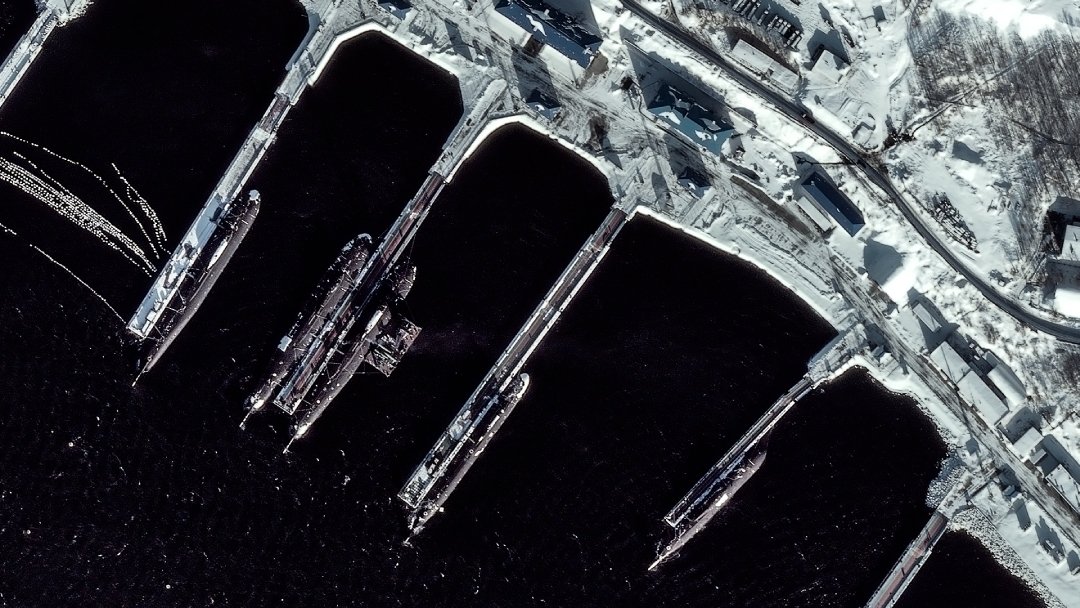
Commercial Earth observation has become foundational to defense and intelligence operations. By nearly every measure—global coverage, revisit rates and ease of tasking—access to space-based imagery is at an all-time high.
Yetfor intelligence, surveillance and reconnaissance (ISR) teams of the tactical and operational level, consistent outcomes remained frustratingly elusive. Collections are missed, delay delayed or delivered informed that do not support the mission at hand. What appears to leadership as “adequate access” can feel, at the working level, like operational uncertainty that must be constantly managed.
In a region where decision timelines, compressed rapidly and information advantage is a critical multiplier, this tension between access and delivered outcomes is one of modern ISR’s defining challenges.
Beyond surface metrics: how ISR “doesn’t show up”
In practice, saying “the imagery didn’t show up” describes several failures that can comprise intelligence outcomes:
- Missed collection opportunities due to orbital geometry, whether or competing priorities
- Delayed delivery outside of mission-defined windows
- Collected imagery that is unusable because of cloud cover, unfavorable sensor, angles or insufficient quality
- Late or degraded intelligence caused by downstream, bottleneck and processing, analytics or dissemination
While the causes differ, the operational consequence is the same: analyst stall, planners, improvise and decision makers receive assessments prefaced with caveats instead of delivered with confidence.
The operational cost of uncertainty
When outcomes cannot be relied upon, ISR workflows adapt accordingly. Teams begin to:
- Extend tasking timelines
- Task multiple providers and revisit windows to hedge risk
- Maintain parallel, workflows, using older imagery or alternative sources
These adaptations may not appear as a failure on paper, but the cost is real. Time is wasted, attention is divided and the value of speed and precision erodes quietly, one decision at a time.
As missions become more time-sensitive and analytics-driven, these hidden costs accumulate, undermining readiness and operational confidence.

Hedge tasking: rational behavior, inefficient result
From the outside, redundant tasking can appear in efficient. From the inside, it is a rational response to unpredictability. When teams cannot depend on a single task delivering the required outcome, they hedge–tasking, multiple satellites, or providers against the same area of interest.
The survival strategy inflates cost and complexity, without proportionate improvement in outcomes, reinforcing a cycle, where uncertainty gets redundancy and redundancy beat gets in efficiency.
Access alone is no longer the problem
There’s no shortage of access to commercial Earth observation imagery these days. But access without predictability, accountability and transparency fails to meet the demands of modern ISR.
Operational effectiveness in space-based intelligence isn’t defined by whether a satellite was available or a task was submitted. Effectiveness is intelligence delivered within a mission-defined window, at usable quality and on-time to support confident decision-making.
The emerging focus: moving beyond access
As defense planners recalibrate expectations, the conversation is shifting beyond raw access to measured, predictable outcomes. This shift reflects the evolving nature of intelligence operations where:
- Decision cycles are compressed
- Multi-domain operations require synchronized data flows
- Analytics engines demand consistent input quality
Access metrics will always be a baseline, but in modern ISR, predictability is the new imperative.
BlackSky recognizes this paradox, and it is advancing approaches to introduce certainty into commercial ISR delivery. By shifting the focus from mere access to outcome, predictability, defense and intelligence organizations gain greater confidence and integrating space-based imagery into mission planning and execution. Learn how BlackSky is redefining reliability in commercial ISR here.
