

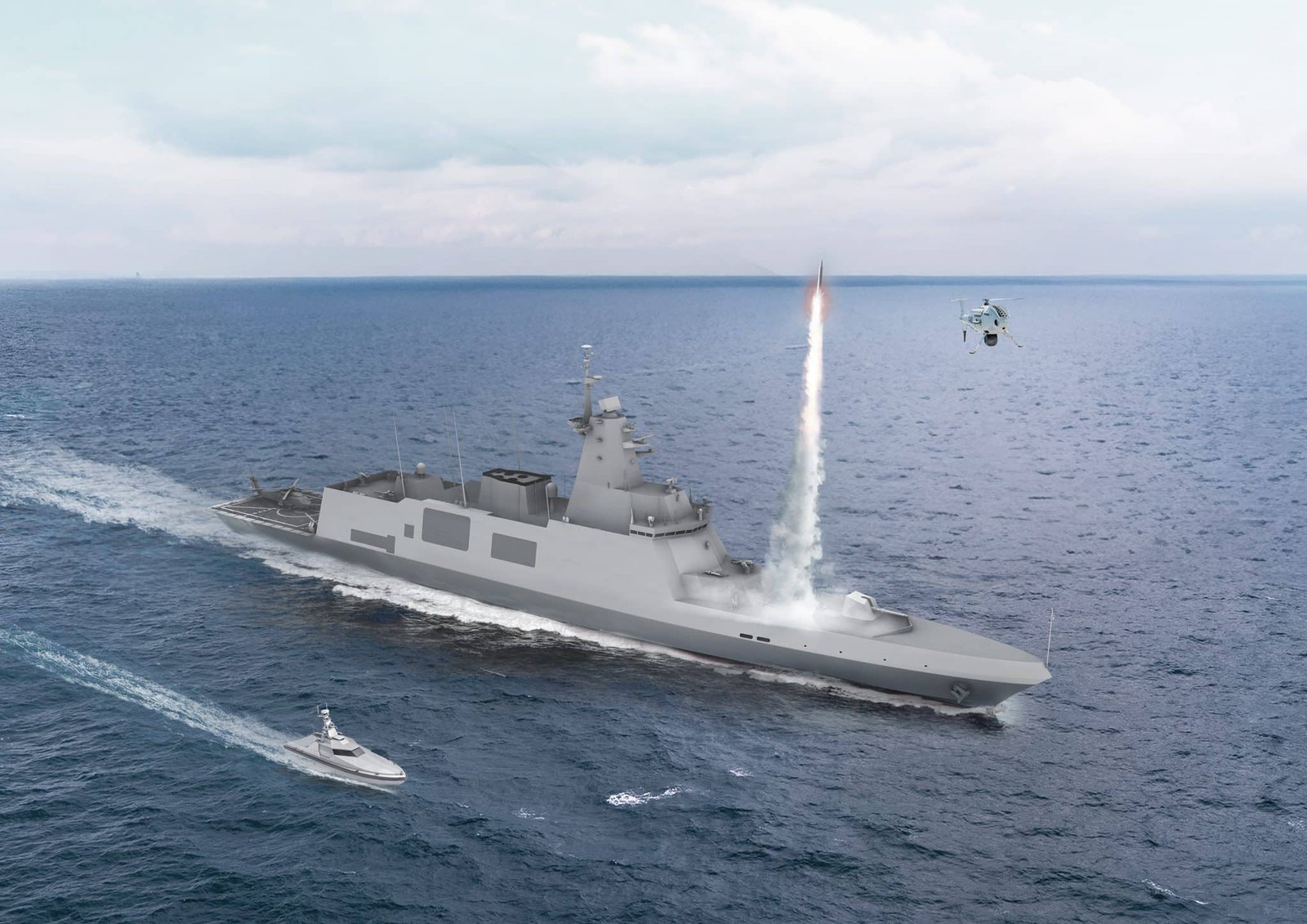
South Korean shipbuilder Hanwha Ocean has been selected as preferred bidder to construct a new frigate for the Royal Thai Navy (RTN). The platform it proffered is known as the Ocean-40F, and the contract is valued at THB16.73 billion (US$508 million).
Thai Prime Minister Anutin Charnvirakul endorsed this selection of Hanwha’s 4,000-tonne frigate in early September 2026, after the RTN delivered the tender result to him several days earlier.
This choice is somewhat understandable, given that Hanwha Ocean’s forerunner – Daewoo Shipbuilding & Marine Engineering – delivered a frigate to Thailand in 2018.
This tender that closed on 21 April attracted stiff competition from six shipbuilders around the world. One reason for the interest from Hanwha and the other shortlisted contenders – ASFAT, Damen, HD Hyundai Heavy Industries (HHI), Navantia, ST Engineering and TAIS – is that this is just the first of up to new four new frigates that the RTN is seeking by 2037.
The RTN has already sought TNB35 billion for the first pair of frigates under the 2026-32 budget commitment.
Thailand has not officially revealed the winner, but Hanwha Ocean disclosed it in a 9 September announcement. It said in a press release, “The selection is a procedural step toward discussing specific terms, including detailed technical specifications and the scope of the programme, ahead of signing a final contract.”
The price tag includes the ship, its systems and equipment, spare parts, tools, documentation, support services, testing and trials, fuel, lubricants, training, acceptance inspections and warranty coverage.
A Thai press release stated, “The Royal Thai Navy recognises that the frigate procurement project has attracted considerable public and societal interest, as it concerns national security, the protection of Thailand’s maritime interests, and the use of public funds. The RTN therefore places the utmost importance on ensuring that every stage of the process is conducted correctly, cost-effectively, transparently and in a manner that is subject to scrutiny.”
To meet this goal, the project immediately entered a statutory period allowing submission of appeals. This opening concludes around 18 September, at which time the winning bidder will be formally declared.

The tender document outlined a minimum level of 20% indigenous content and the transfer of technology, underscoring Bangkok’s desire to boost local industry and skills.
Rather than supplying mostly South Korean systems, the Ocean-40F looks towards mostly European suppliers for key systems and weapons. For example, it appears set to have a Hensoldt TRS-4D radar, plus SeaEagle fire control radar optical and electro-optical sensors from Chess Dynamics. The combat management system could be Naval Group’s SETIS.
As for weapons, the new frigate will carry MBDA Exocet MM40 Block 3C anti-ship missiles, and a 16-cell vertical launch system equipped with MBDA VL MICA NG surface-to-air missiles. There are also two SIMBAD RC launchers. Other weapons include a 76mm naval gun and two MSI-Defence Systems DS-30 Mk2 30mm remote weapon stations.
Interestingly, this is Hanwha Ocean’s first export win of a surface combatant since 2023. This is in contrast to competitor HD HHI, which has won multiple orders from the likes of the Philippines and Peru.
It also makes a mockery of the strategic export agreement brokered by the South Korean authorities to assign specific capabilities to Hanwha Ocean (submarines) and HD HHI (surface combatants) and to avert acrimonious competition. The agreement was supposed to prevent overlaps in foreign tenders, but this has not occurred in the Thai and Saudi markets, for instance.
Hanwha stated: “With its selection as the preferred bidder, Hanwha Ocean plans to strengthen the foundation for long-term naval defence cooperation with Thailand, while continuing to expand business opportunities in the global surface combatant market, including Southeast Asia.”
Thailand needs new warships to help secure both its Andaman and Gulf of Thailand coastlines. However, it is tendering the frigates separately due to budgetary constraints.
It is interesting that Chinese shipbuilders were not in the running, perhaps a reaction to the kerfuffle over Thailand’s purchase of an S26T diesel-electric submarine. Of course, a Chinese-built frigate would add unnecessary complication for the RTN due to it having no commonality with Western sensors and armaments that are already in service.
by Gordon Arthur
